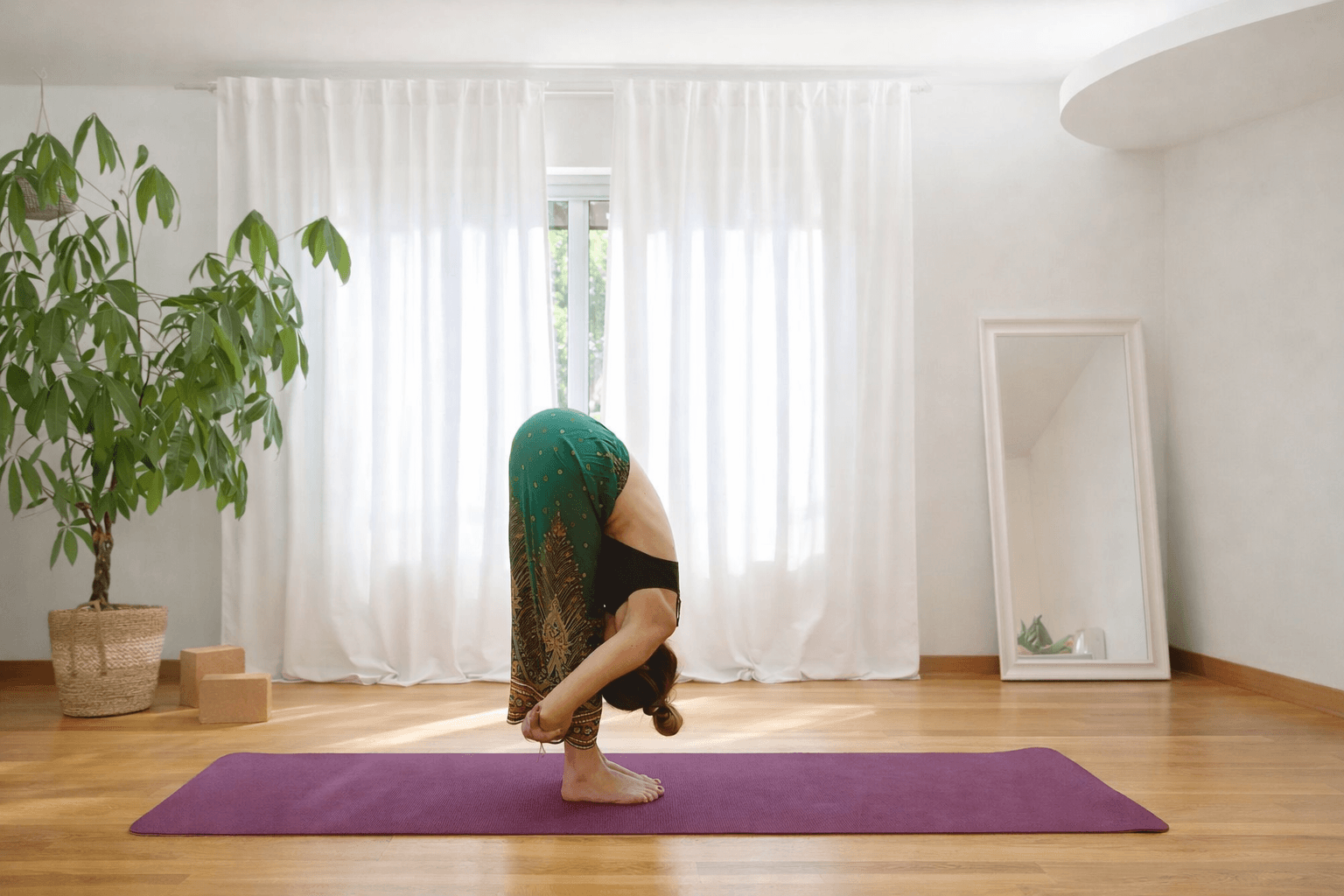
Posterior Chain & Forward Folds — Why They're Essential (and Why You Should Really Work on Them)

Silvia Ghigliazza
Yoga Teacher
If you feel tension behind your legs, stiffness in your back or struggle with forward folds, you're most likely sensing something very specific: a shortened posterior chain.
It's not just a feeling of "pulling". It's a signal.
The posterior chain is a continuous muscular line that starts at the soles of your feet, runs up through the calves and hamstrings, crosses the pelvis and extends along the entire back up to the base of the skull.
When it's stiff, the body moves less. When it's supple, everything changes.
Why the posterior chain shortens
In daily life we tend to carry the body forward: we sit, drive, work at a computer, and move very little.
Over time this creates:
- ●Shortening of the muscles at the back of the legs
- ●Pelvic stiffness
- ●Compression of the lower back
- ●Loss of general mobility
The body compensates — but badly.
And common complaints often appear:
- ●Lower-back tension
- ●Hip discomfort
- ●Difficulty with the simplest movements
Why stretching is essential (even for injury prevention)
Working on the posterior chain isn't just about flexibility. It's prevention.
When the hamstrings are tight, the pelvis loses freedom of movement and the lower back is overloaded. This increases the risk of:
- ●Muscle spasms
- ●Inflammation
- ●Continuous compensatory movement patterns
Stretching correctly means:
- ●Distributing the workload across the body
- ●Reducing excessive tension
- ●Improving movement quality
- ●Making the body more resilient
A supple body isn't just more "open". It's smarter.
Forward folds: how they really work
Forward folds are one of the most effective tools for working on the posterior chain.
But they aren't simply stretching exercises. They are deep work involving:
- ●Control
- ●Adaptation
- ●Listening
Entering a forward fold doesn't mean going lower. It means creating space along the entire posterior line, without forcing.
When you push too hard, the body resists. When you breathe and stay, the body opens.
Common mistakes in forward folds
- ●Forcing to "reach" the position
- ●Pulling without pelvic control
- ●Holding the breath
- ●Remaining passive without awareness
The result is always the same: more stiffness, not less.
Effective work is progressive. And above all, conscious.
Key asanas for the posterior chain
In my practice, when I want to work on this line in a complete way, I always use a few key postures:
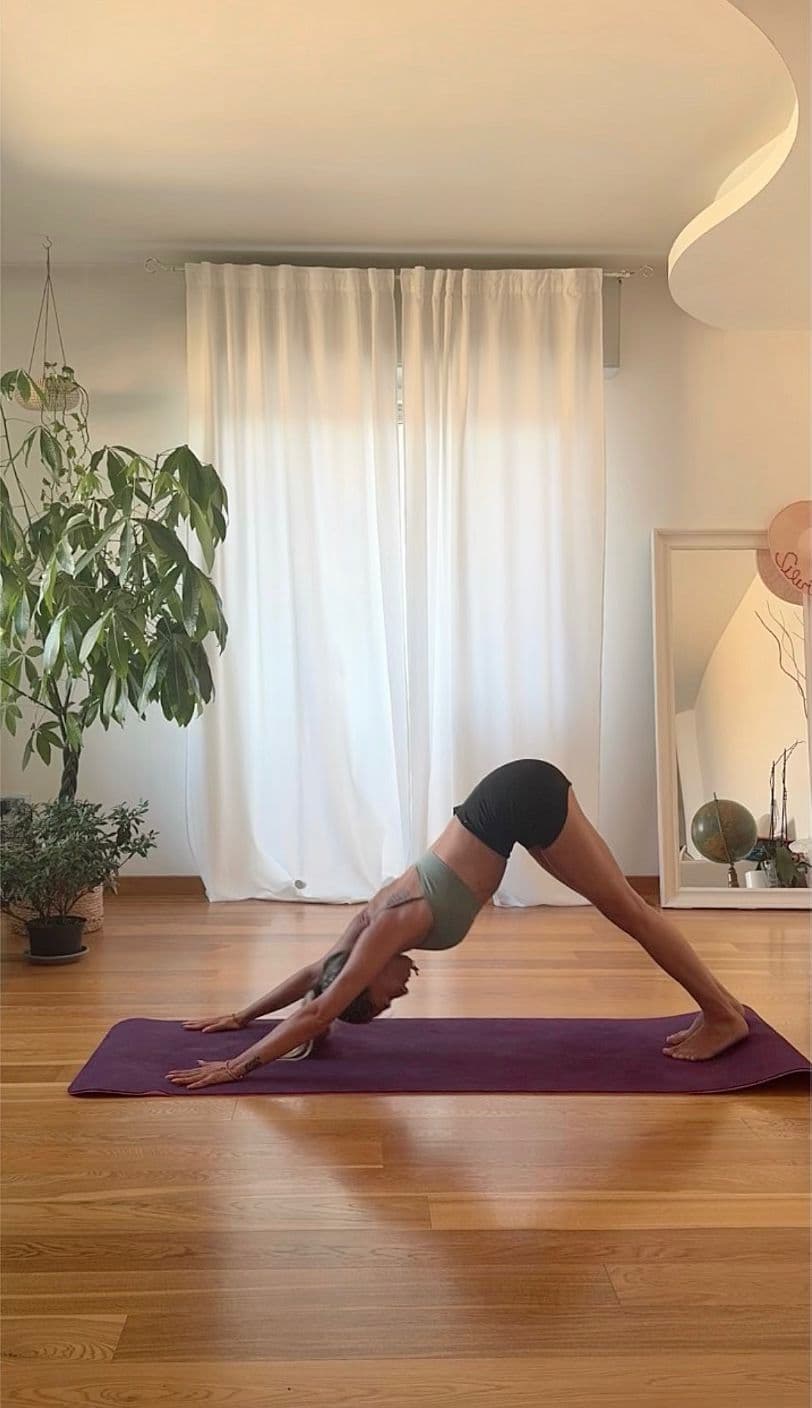
- ●Uttanasana (Forward Fold) — A global stretch for the posterior chain. Done with control, it decompresses the back and teaches release.
- ●Prasarita Padottanasana — Broadens the work to the inner thighs and back, creating space in a more intense but distributed way.
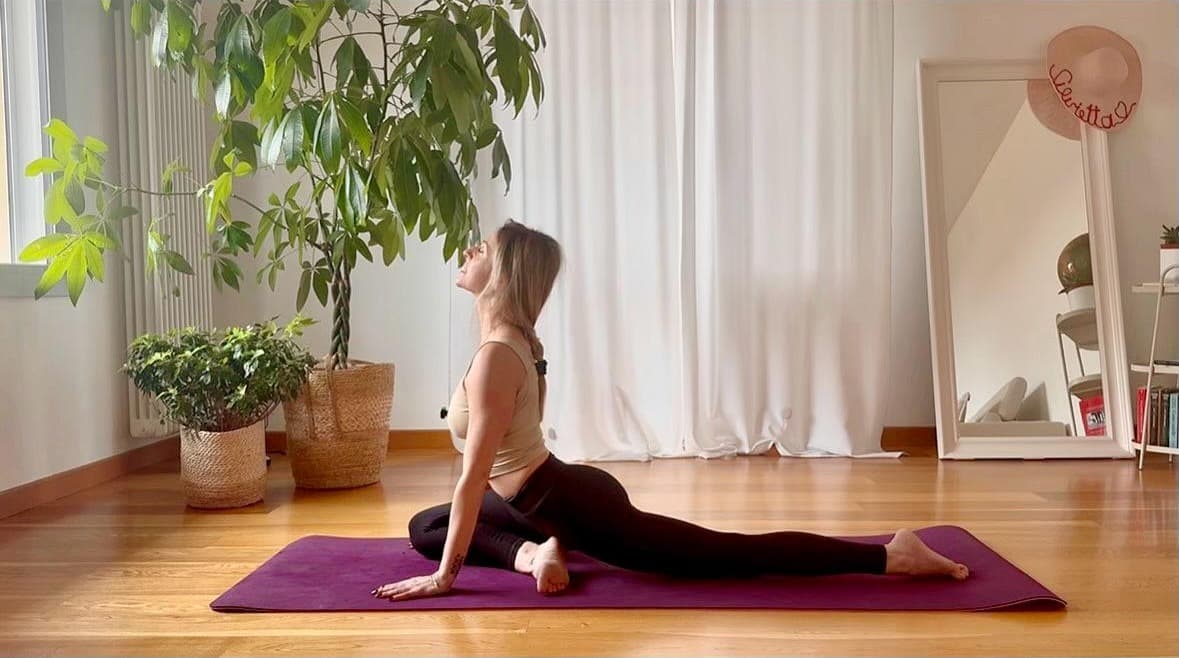
- ●Ardha Hanumanasana (Half Split) — Direct, deep work on the hamstrings. It helps you understand exactly where the body is tight.
- ●Upavistha Konasana — Progressive opening of the legs and pelvis. It takes time but builds real mobility.
How to enter stretches effectively
The point isn't to push. It's to stay.
When you meet tension:
- ●Slow down
- ●Breathe
- ●Let the body adapt
That's where the change happens.
Over time, stretches become deeper not because you push harder, but because the body offers less resistance.
An important point
If you feel sharp pain, very intense stiffness or tension that doesn't improve over time, it's always wise to consult a professional.
Yoga is an extremely effective tool, but it must be used consciously and adapted to your body.
Bring it into your practice
Incorporating consistent work on the posterior chain truly changes the way you move.
You don't need to do a lot. You need to do it well.
Even just a few minutes, with presence, make the difference.
The next time you enter a forward fold, pause just before your limit. Breathe. Stay there.
It's in that space that the body truly begins to open.
Want to work on it together?
If you feel your posterior chain is tight, or you want to deepen your forward-fold practice in a safe and progressive way, I can guide you through a specific sequence. A practice designed to improve flexibility, mobility and prevent tension and injuries.
Request the protocol →It depends on where you start, but with consistent practice (even 10-15 minutes a day) you can notice significant improvements in 4-6 weeks. The key is regularity, not intensity.
Yes, but it's important to work with awareness. Bend your knees slightly, keep the pelvis free and never force. For specific conditions, always consult a professional before starting.
Classic stretching tends to target single muscles in isolation. Yoga integrates breath, awareness and control, working on the chain as a whole. The result is a deeper and longer-lasting stretch.
After a brief warm-up is ideal — the body is more receptive and the risk of injury is lower. But even cold, with slow, controlled movements, you can work safely.
The body should not be forced. It should be guided. And when we truly start to listen, even pain often changes its language. With care and presence — Silvia