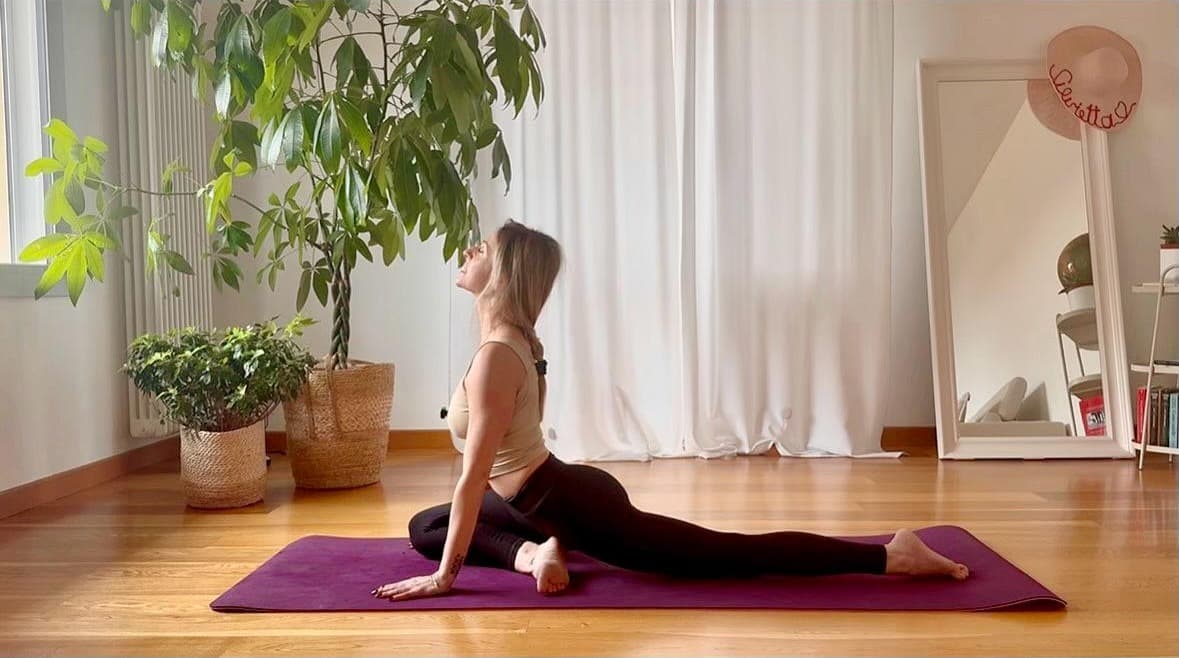
Sciatica and Piriformis Syndrome — how to recognise them and how Yoga can truly help

Silvia Ghigliazza
Yoga Teacher
Lower back pain that radiates down the leg isn't simply "back pain." When you feel a deep twinge in your glute, tension that continues along the thigh, or discomfort that can reach all the way to your foot, we're often dealing with what we call sciatica.
It's important to clarify right away that sciatica isn't a clinical diagnosis in itself, but a set of symptoms linked to irritation or compression of the sciatic nerve — the longest and largest nerve in the body.
Sciatica can present with: deep, dull pain in the lower back or glute area, burning or tingling along the leg, difficulty with bending or stretching movements, and a feeling of weakness when walking or changing position.
The causes can vary: disc protrusions or herniations, chronic lower back tension, postural imbalances. But very often the hidden protagonist is a small, deep muscle in the glute: the piriformis.
What is the Piriformis and why it matters
The piriformis is a deep muscle located in the gluteal region. It originates from the sacrum and inserts on the femur. Its main function is to externally rotate the hip, assist in abduction, and stabilise the pelvis during movement.
The sciatic nerve passes very close to this muscle and, in some people, runs through its fibres. When the piriformis is contracted, stiff, or inflamed, it can compress or irritate the sciatic nerve, giving rise to piriformis syndrome.
Why the Piriformis becomes inflamed
In my experience, the most frequent causes of piriformis tension or inflammation are:
- ●Sedentary lifestyle and many hours sitting, which shorten and compress the deep pelvic muscles
- ●Weak glutes, leading to compensation and overload on the piriformis
- ●Excessive hamstring tightness, which alters pelvic balance
- ●Postural imbalances, such as pronounced anterior or posterior pelvic tilt
- ●Stress and emotional tension, which often accumulate in the pelvic area
Mistakes to avoid with sciatica or piriformis pain
- ●Forcing intense stretches during peak pain
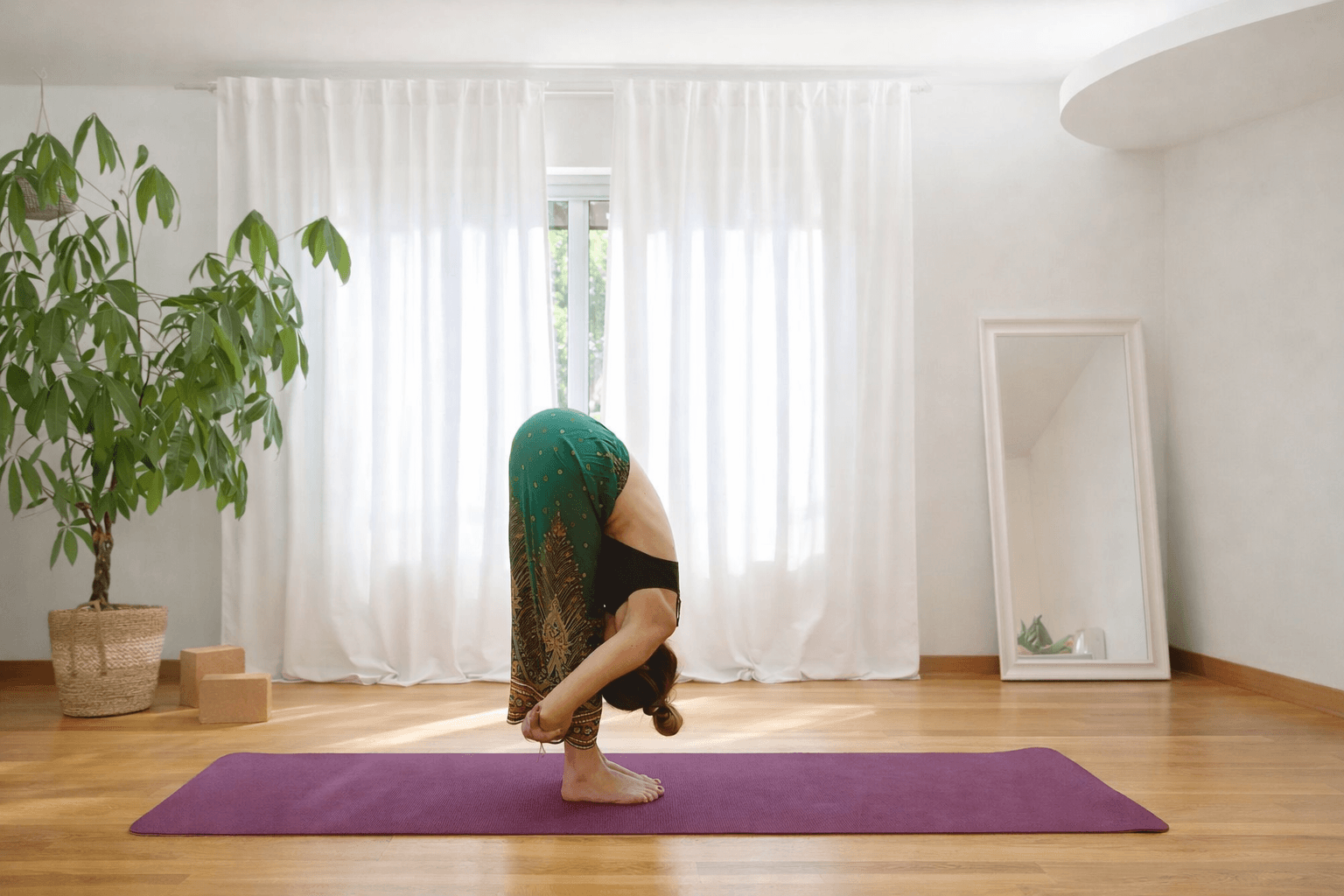
- ●Staying too long in passive forward folds
- ●Completely avoiding movement out of fear of making it worse
- ●Neglecting stability and strengthening work
Pain doesn't ask for aggression. It asks for listening, gradual progression, and consistency over time.
How Yoga can help you
Yoga can be a concrete help, but only when practised with intelligence and awareness. It's not simply stretching: it's gentle mobility, functional stability, breathing that creates space, and body awareness.
When I work on these issues, I always integrate three fundamental elements:
- ●Gentle spinal mobility, to decompress and nourish the vertebral discs
- ●Targeted stretching of glutes, piriformis and posterior chain without forcing
- ●Pelvic stability and deep core work, to reduce continuous compensations
Some useful poses
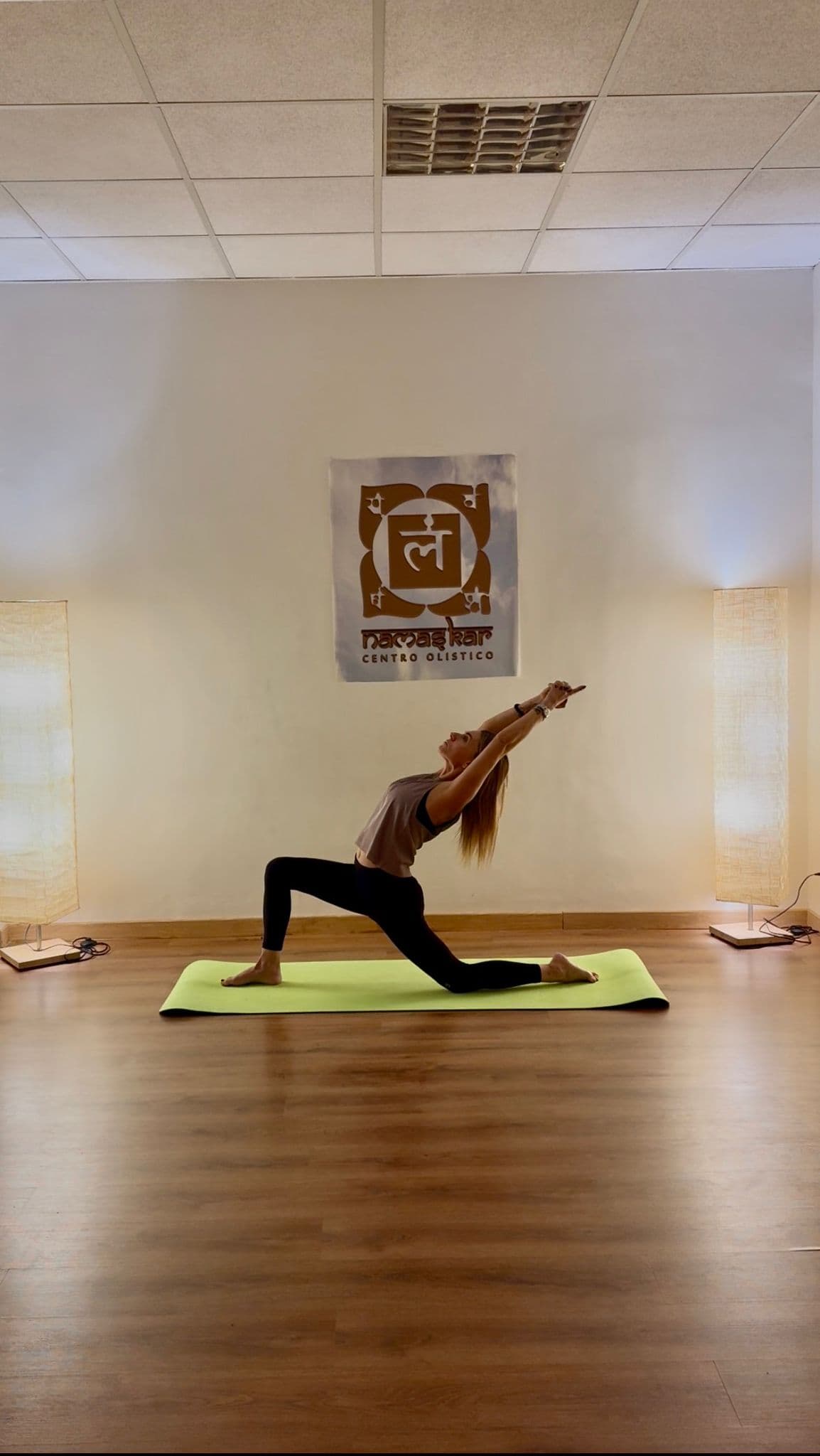
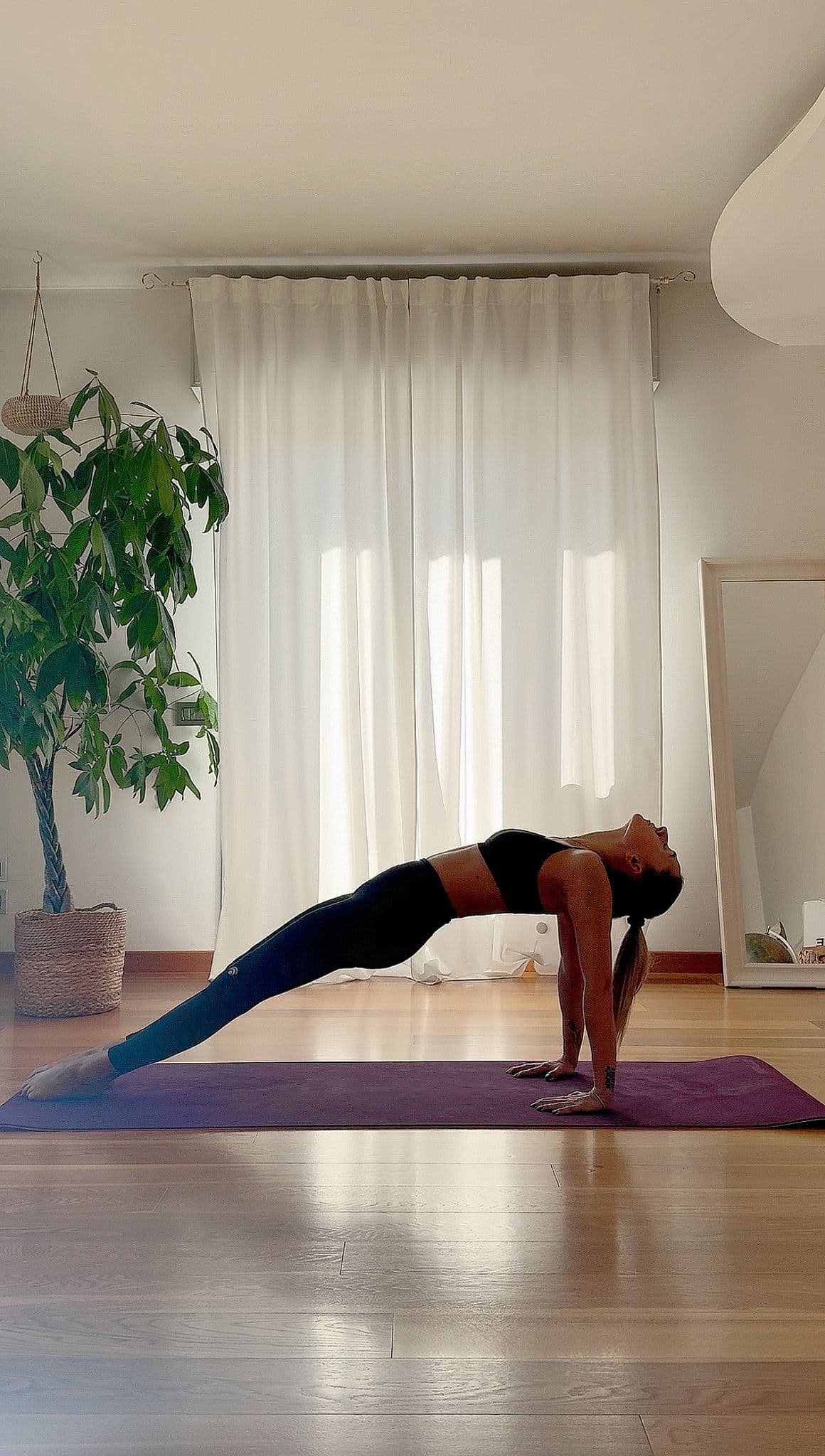
These are some of the postures I use in my class focused on the lower back, piriformis and sciatica:
- ●Cat-Cow (Marjaryasana/Bitilasana) — Fluid spinal mobilisation to decompress the lower back and release deep tension.
- ●Half Bridge (Setu Bandha Sarvangasana) — With slow, controlled variations, it promotes glute activation and pelvic stability.
- ●Supine Twists (Supta Matsyendrasana) — Help release the deep muscles of the sacral area.
- ●Knees to Chest (Apanasana) — Stretches the lower back and creates an initial sense of relief.
- ●Supine Figure 4 — Targeted piriformis stretch in a controlled way, without forcing.
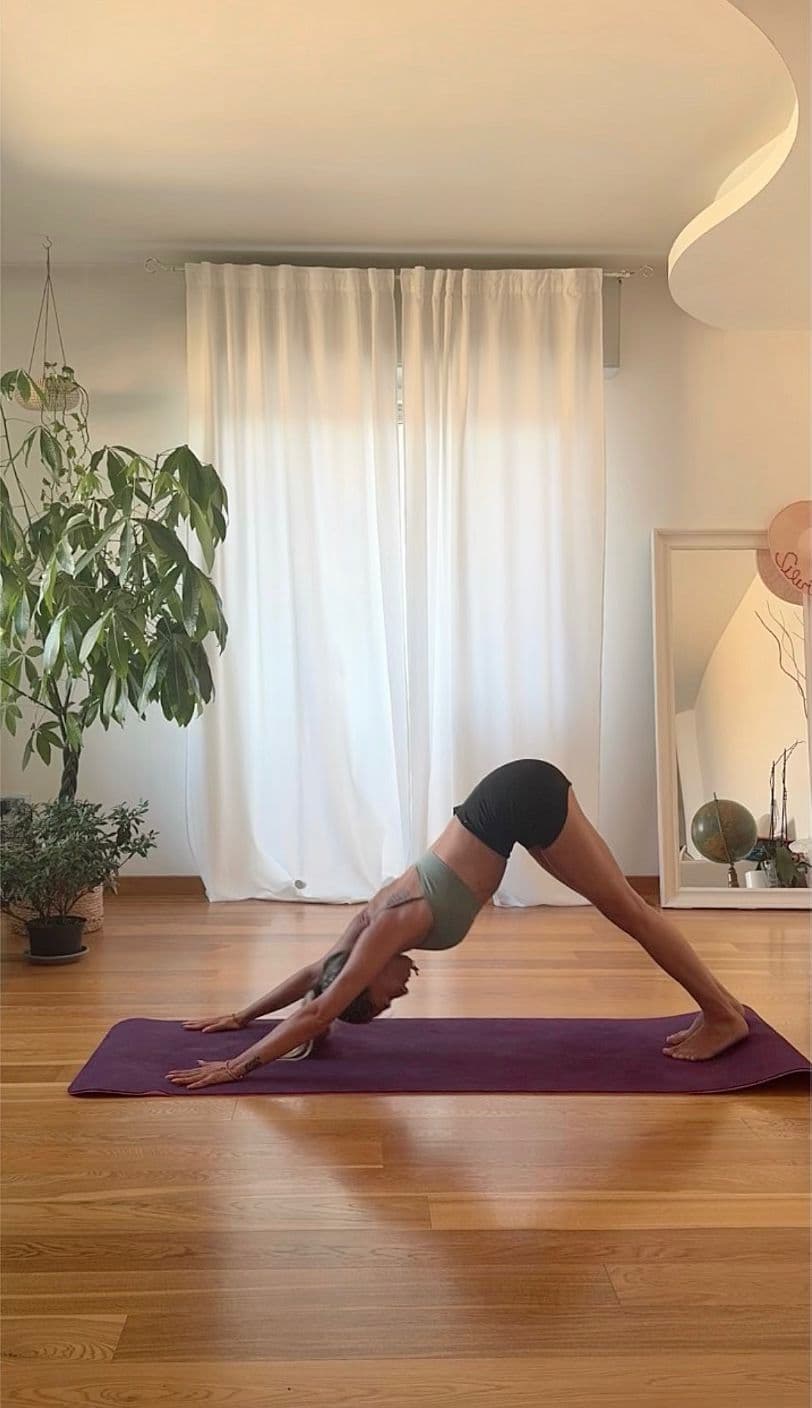
- ●Downward-Facing Dog (Adho Mukha Svanasana) — Stretches the posterior chain with soft knees if needed.
- ●Accessible Pigeon (Kapotasana) — To be done only when pain isn't acute and with respectful adaptations.
- ●Eagle legs (Garudasana variation, standing) — Works on balance, stability and deep connection with pelvic alignment.
An important point
If the pain is acute, persistent, or accompanied by loss of sensation or strength, always consult a doctor or physiotherapist. I am not a doctor. My work is to guide you through mindful, adaptive movement, but yoga is a powerful tool that must be integrated responsibly within a broader care pathway when necessary.
▶Watch the guided practice — Sciatica & Psoas (30 min)
A complete yoga sequence to release sciatica, the piriformis and the psoas. Suitable for beginners and intermediate practitioners.
Want a practical guide you can take everywhere?
If you feel the time has come to work on your sciatica with awareness, I've prepared something for you. Write "SCIATICA" by email and I'll send you my free Guided Protocol in PDF — a progressive sequence designed for mobility, stability and relief in the lower back and glute area.
Request the protocol →Frequently asked questions (no beating around the bush)
Yes, but with intelligence. The practice must be adapted to the pain phase. During acute phases: only gentle mobility and breathing. When the pain decreases, you can progressively work on stretching and stability.
With consistent practice of 15-20 minutes, 3-4 times a week, many people notice a significant change after just 2-3 weeks. The key is gradual progression and consistency.
No. This is the most common mistake. The piriformis is often contracted because it's overworking. It doesn't just need to be stretched — it needs the glutes and pelvic stabilising muscles to start doing their job again.
The body shouldn't be forced. It should be guided. And when we truly start to listen, even pain changes its language. With care and presence — Silvia