The Sanskrit names of asanas: the glossary to understand what you say on the mat — Part 1

Silvia Ghigliazza
Insegnante di Yoga
You're in class, the teacher says 'let's move into Adho Mukha Svanasana' and you think: but what does this name actually mean? Don't worry, it's happened to all of us. Those Sanskrit names, at first, seem like unpronounceable magic spells. And yet, once you discover their logic, they become a game — and understanding them makes the practice much richer and more fun.
As Yogini con la valigia, I've learned that behind every name there's almost always a concrete image: an animal, a part of the body, a sage, an element of nature. I'm starting here a small glossary in instalments to decode them together. In this Part 1 we start from the basics and from the poses that take their name from animals — the most immediate and poetic ones.
Why do asanas have Sanskrit names?
Sanskrit is the ancient language in which much of the yoga tradition was handed down. Using the original names is a way to stay connected to those age-old roots and to speak a common language: 'Tadasana' is Tadasana in Italy, in India or in Brazil. It's a small thread linking those who practise in every corner of the world.
The key word: «asana»
The first trick is very simple: almost all the names of the poses end in -asana, which means 'posture' (originally, 'seated position'). So every time you hear that ending, you already know it's about a pose. Everything that comes before the suffix describes what it represents. We take the names apart like little building blocks and it all becomes clear.
The recurring prefixes (your decoder)
Some words come up again and again: learn them once and you'll recognise dozens of asanas at a glance.
- ●Eka = one · Dwi = two · Tri = three (e.g. Eka Pada = one leg).
- ●Adho = downward · Urdhva = upward (e.g. Urdhva = facing up).
- ●Mukha = face/facing (e.g. Adho Mukha = face down).
- ●Supta = reclining · Utthita = extended/standing.
- ●Parivritta = revolved/twisted · Ardha = half (e.g. Ardha = half pose).
- ●Pada = foot/leg · Hasta = hand · Janu = knee · Sirsa = head.
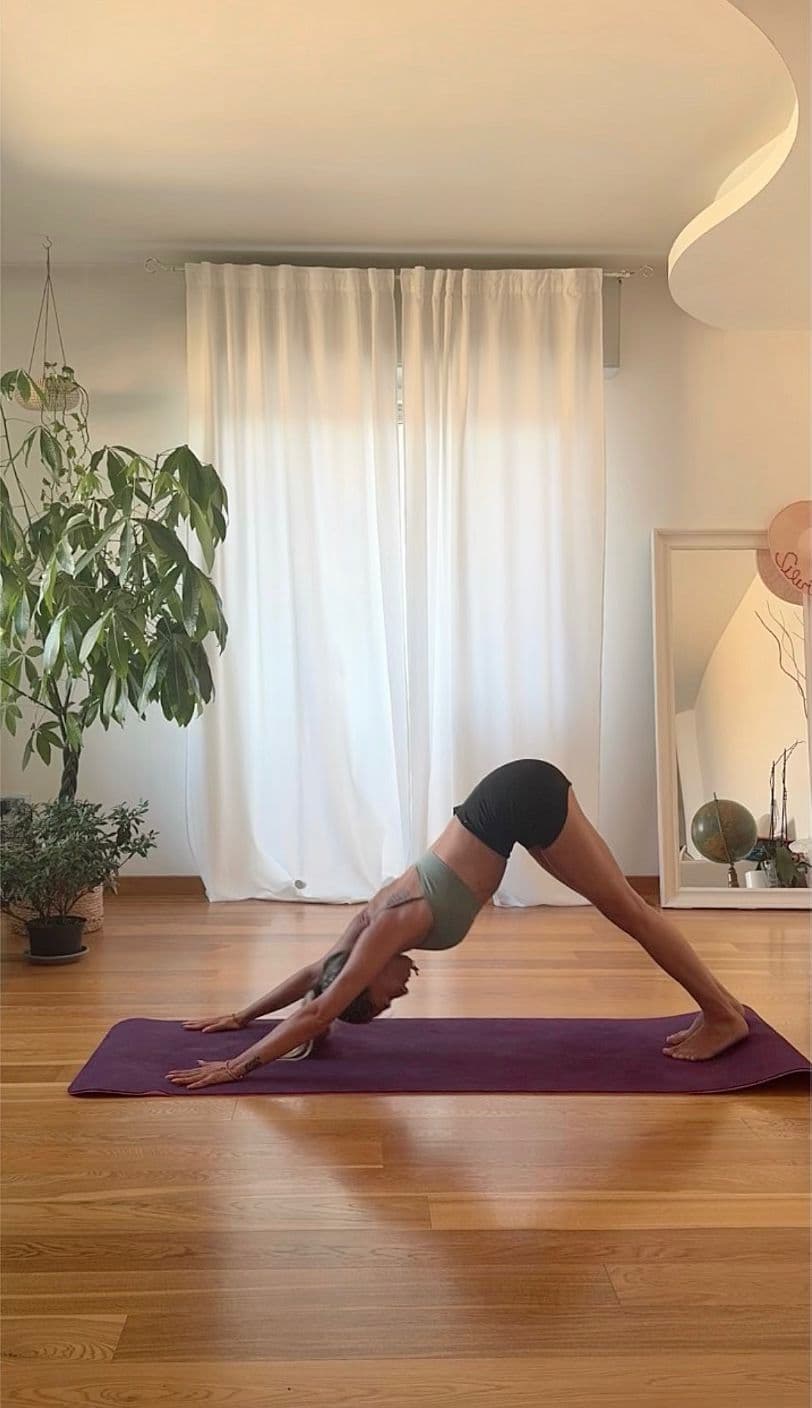
See? With these few building blocks, a very long name like 'Adho Mukha Svanasana' stops being scary: adho (down) + mukha (face) + svana (dog) + asana (posture) = the downward-facing dog.
The asanas that take their name from animals
Ancient yoga observed nature and drew inspiration from it. Many poses are born from imitating animals — their way of moving, resting, defending themselves. Here are the most common ones, taken apart word by word:
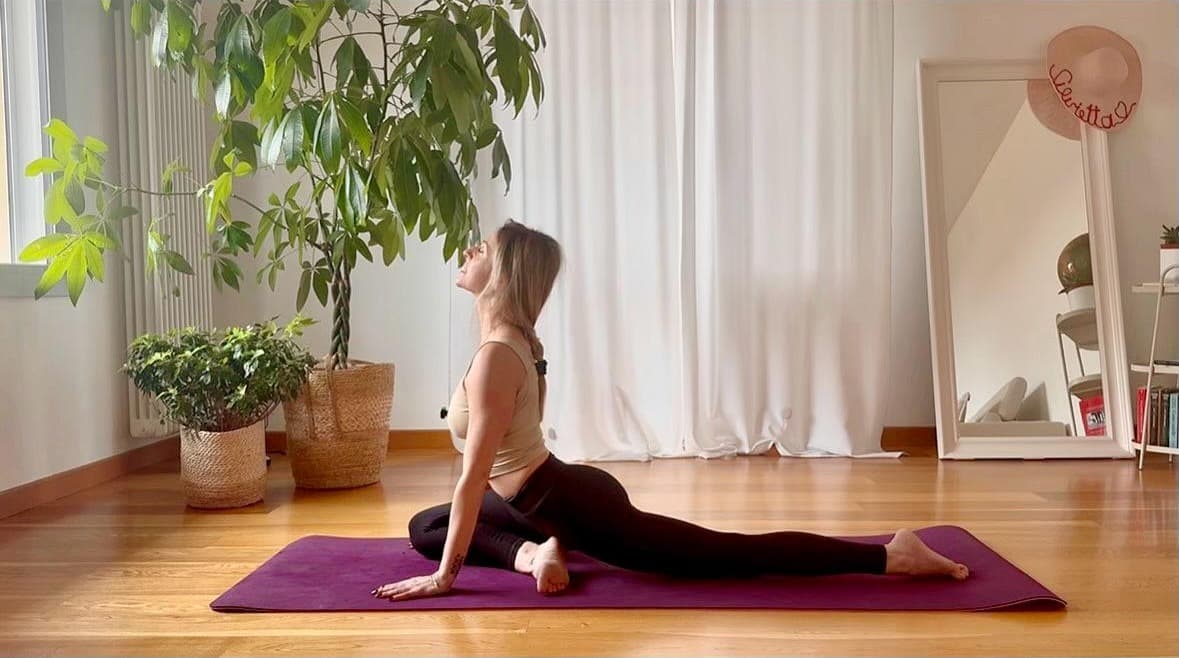
- ●Bhujangasana (Cobra) — from bhujanga (snake/cobra) + asana. The chest opening that mimics the snake raising its head.
- ●Adho Mukha Svanasana (Downward-facing dog) — svana (dog): the stretch of the dog that stretches itself.
- ●Marjariasana (Cat) — from marjari (cat): the back arching like a cat's.
- ●Bitilasana (Cow) — the counter-movement to the cat, often paired with it.
- ●Ustrasana (Camel) — from ustra (camel): a wide backbend.
- ●Bakasana (Crane) or Kakasana (Crow) — baka (crane), kaka (crow): the balance on the arms.
- ●Matsyasana (Fish) — from matsya (fish): the opening of the throat and chest.
- ●Shalabhasana (Locust) — from shalabha: strengthening the back lying face down.
- ●Go Mukhasana (Cow face) — go (cow) + mukha (face/muzzle): the shape recalling the animal's face.
- ●Mayurasana (Peacock) — from mayura (peacock): a demanding arm balance.
The next time you hear one of these names, try to picture the animal: you'll immediately understand the shape and the intention of the pose. It's the gentlest way to memorise them.
To be continued in the next glossaries
This is just the first stage. In the next instalments of the glossary we'll explore the asanas that take their name from the parts of the body, those dedicated to the great sages of the tradition, and those inspired by the elements and objects of nature. A little dictionary that grows with each article.
↗Just starting out? Begin here
If you're taking your first steps, read the guide to start yoga from scratch, even if you're not flexible.
Want the asana glossary always with you?
I'm gathering the names of the asanas, word by word, into a small downloadable guide. Write 'ASANA' to me by email and I'll let you know as soon as it's ready, sending you in the meantime the scheme of the most useful Sanskrit prefixes to keep on your mat.
Richiedi il protocollo →Frequently asked questions about the names of the asanas
In Sanskrit asana means 'posture' and, originally, 'seated position'. It's the suffix you find at the end of almost all the names of yoga poses.
No, it's not compulsory in order to practise. But knowing them makes the practice more conscious, helps you follow any class in the world and brings you closer to the roots of yoga. And, once you understand the logic, it's also fun.
Because ancient yoga observed nature and imitated its forms and movements. Cobra, cat, dog, camel: each animal inspires a posture that recalls its quality.
The 'h' after a consonant (as in bha, dha, tha) indicates an aspirated sound, slightly breathed. You don't need perfection: what matters is getting close and practising with respect.
Knowing the name of a pose is like knowing the name of a flower: you look at it with different eyes, and suddenly it speaks to you. — Silvia