The origins of yoga: from the Vedas to today, the story few tell

Silvia Ghigliazza
Insegnante di Yoga
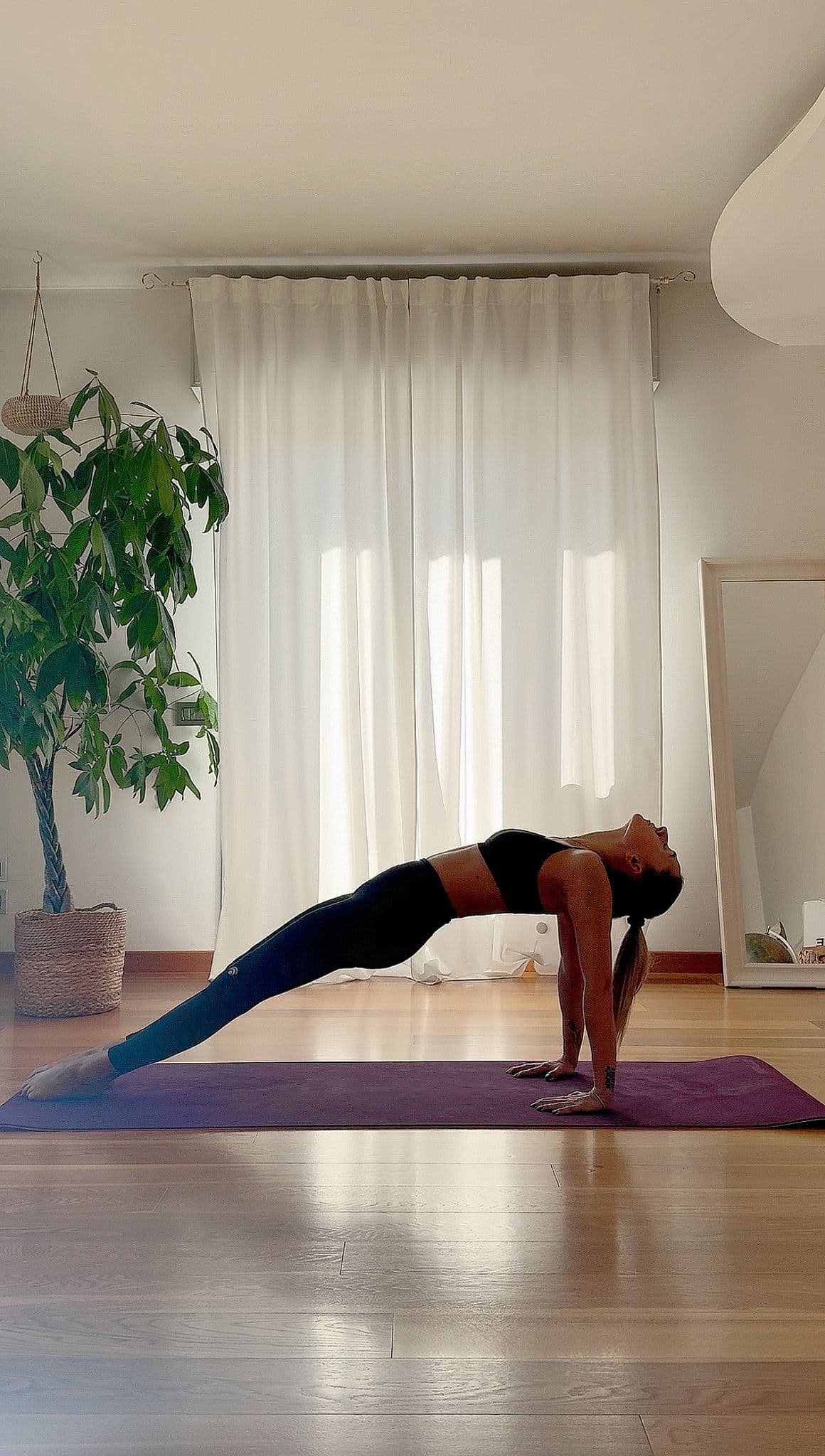
Open Instagram and type 'yoga': you're swept up by a cascade of flexible bodies balancing on one hand, perfect sunsets, impossible poses. Beautiful, of course. But what if I told you that yoga, for most of its history, had almost nothing to do with all this?
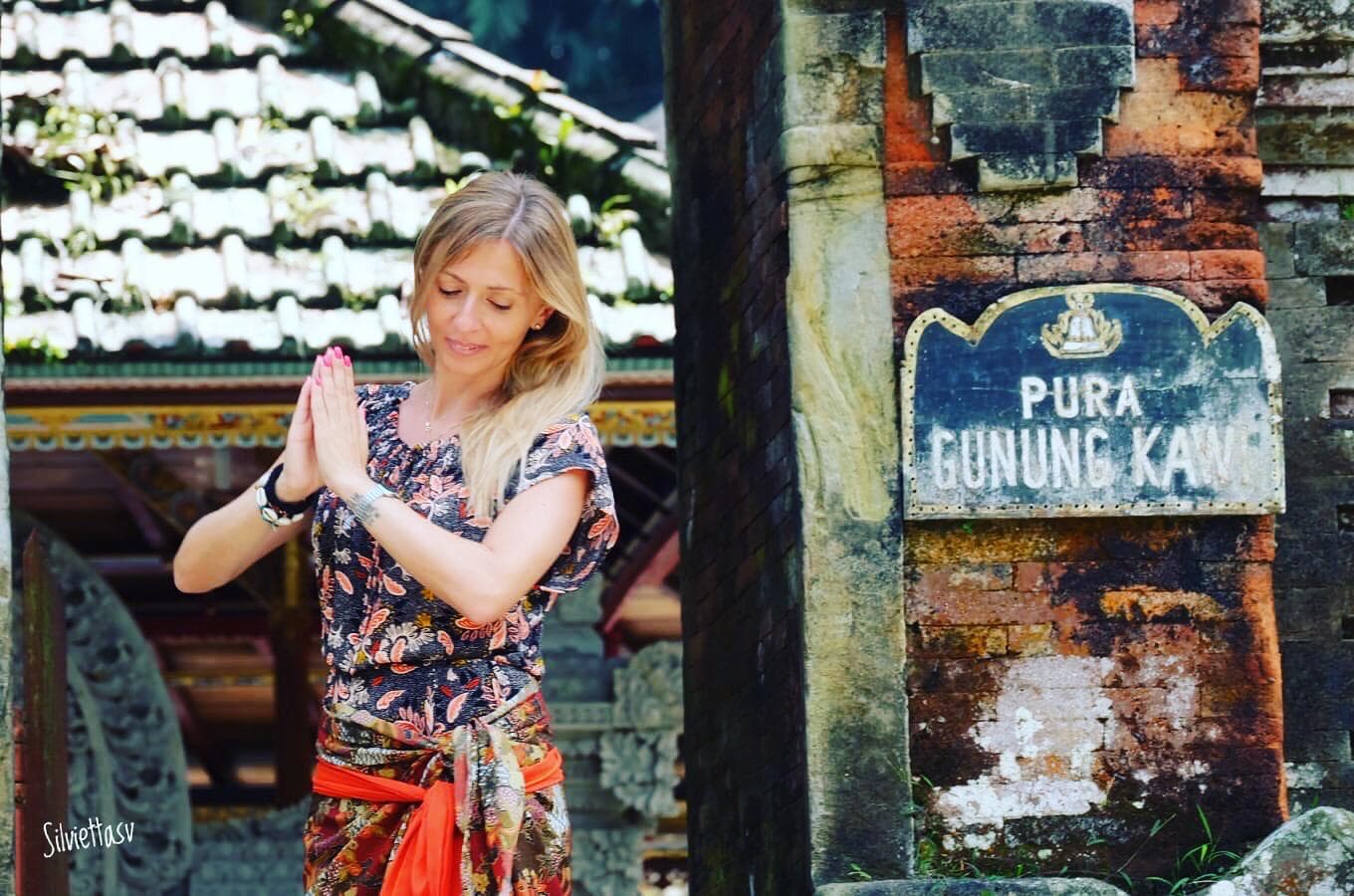
As Yogini con la valigia, I've been lucky enough to practise in some of the places where yoga has its roots — and every time I realised how much the 'cover version' is just the tip of the iceberg. Beneath it lies a story thousands of years long, made more of breath and silence than of acrobatics. Let me tell it to you: it will change the way you step onto your mat.
Yoga wasn't born on the mat
Let's start with a small earthquake: the postures (the asanas) we consider 'yoga' today are, historically, a recent and rather minor part. For millennia yoga was above all an inner discipline — a method to calm the mind, know oneself and seek a broader meaning of existence. The body was there, but as a tool, not as an end.
The word itself says so. 'Yoga' comes from the Sanskrit root yuj, meaning to unite, to yoke, to bring together. Not 'to stretch the muscles': to unite. To unite body and mind, the individual and everything around them. Keeping this in mind already changes everything.
The Vedic roots: the Vedas (around 1500 BCE)
The earliest traces take us to the Vedas, the ancient sacred texts of India, handed down orally for generations before being written down. Here yoga isn't yet a codified practice: it's a spiritual horizon made of hymns, rituals and a search for the sacred in everyday life. It's the ground from which everything will sprout.
In this phase 'yoga' indicates above all a discipline of the spirit: the idea that, through concentration and ritual, a human being can come into contact with something greater than themselves.
The Upanishads and the Bhagavad Gita: yoga turns inward
With the Upanishads (from around 800 BCE) the gaze turns inward. People begin to speak of meditation, of breath, of the relationship between the individual self and the absolute. Yoga becomes a path of deep knowledge.
Then comes the Bhagavad Gita, one of the most beloved texts of all time, where yoga takes on many faces: there's the yoga of selfless action, the yoga of devotion, the yoga of knowledge. The message is powerful and timeless: yoga isn't only what you do on the mat, but the way you live, choose and act every day.
Yoga is skill in action. — Bhagavad Gita
Patanjali and the Yoga Sutras: the eight limbs
Around the 2nd century BCE (datings vary) a sage named Patanjali gathered and ordered this wisdom in the Yoga Sutras: a few hundred essential aphorisms that are still the backbone of yoga philosophy today. It's here that yoga is described as Ashtanga, the 'eight limbs': a complete path towards inner freedom.
- ●Yama — ethics towards others (non-violence, truthfulness, non-greed...).
- ●Niyama — ethics towards oneself (discipline, contentment, inner study...).
- ●Asana — the posture. Just one, out of eight: and originally it meant above all a seated position, stable and comfortable, to be able to meditate for a long time.
- ●Pranayama — the control and expansion of the breath.
- ●Pratyahara — the withdrawal of the senses from the outer world.
- ●Dharana — concentration.
- ●Dhyana — meditation.
- ●Samadhi — the state of union and deep stillness.
Read the list again: asana is just the third of eight limbs, and it arises in the service of meditation. All the rest is breath, ethics, attention, interiority. That's why I always say that reducing yoga to the poses is like judging an ocean by looking only at the foam of the waves.
Hatha Yoga: when the body enters the scene
We have to wait for the Indian Middle Ages (around the 10th–15th century) for the body to truly take the stage, with the birth of Hatha Yoga and texts like the Hatha Yoga Pradipika. Here we find asana, pranayama, purification techniques: the body becomes a conscious ally, a tool to awaken and circulate energy (prana).
Even then, however, the goal wasn't aesthetic performance: it was to prepare the body to sit for a long time, healthy and balanced, to immerse itself in meditation. Form in the service of substance.
Yoga reaches the West
It's mainly between the late 19th and the 20th century that yoga met the West, thanks to masters who brought it out of India and teachers who codified the dynamic styles we know today. From here, gradually, 'modern' yoga was born: more physical, more accessible, more widespread. A great achievement — millions of people discovered wellbeing thanks to it — but also the moment when, at times, the root was somewhat lost from sight.
And today? Between mats and roots
Today yoga is everywhere: studios, gyms, apps, beaches at dawn. And that's perfectly fine — I too teach dynamic asana and love a good practice that makes you sweat. The point isn't to deny the body, but to remember where we come from: every time you breathe consciously, choose kindness, pause to listen to yourself, you're practising the most ancient yoga there is. The real one.
Knowing these roots isn't erudition for its own sake: it's what makes the practice deeper. When you know that 'asana' means much more than a pose, you step onto the mat with a different presence — and the benefits, paradoxically, arrive even faster.
↗From theory to the mat: try the method
Discover the adaptive method, where the body serves the breath and the listening — with free videos to follow at your own pace.
Want to continue the journey into the roots of yoga?
If this story intrigued you and you want to go deeper, write 'ORIGINI' to me by email: I'll send you a small guide with the key texts and concepts to start from, explained simply and without big words, to bring a little philosophy into your daily practice too.
Richiedi il protocollo →Frequently asked questions about the origins of yoga
The roots of yoga go back over 3,000 years, to the time of the Vedas in ancient India. It then evolved over the centuries through the Upanishads, the Bhagavad Gita, Patanjali's Yoga Sutras and Hatha Yoga, up to modern yoga.
It comes from the Sanskrit root yuj, which means 'to unite'. It indicates the union between body and mind, and between the individual and a broader dimension of reality.
No. Yoga arises in a spiritual context but is not a religion: it's a discipline of body and mind that people of any faith, or no faith at all, can practise freely.
He is the sage credited with compiling the Yoga Sutras, the text that organised the philosophy of yoga into the eight limbs (Ashtanga). He is considered one of the fathers of classical yoga.
Knowing the roots doesn't take you away from modern practice: it makes it deeper. Step onto the mat knowing you're part of a story thousands of years long. — Silvia