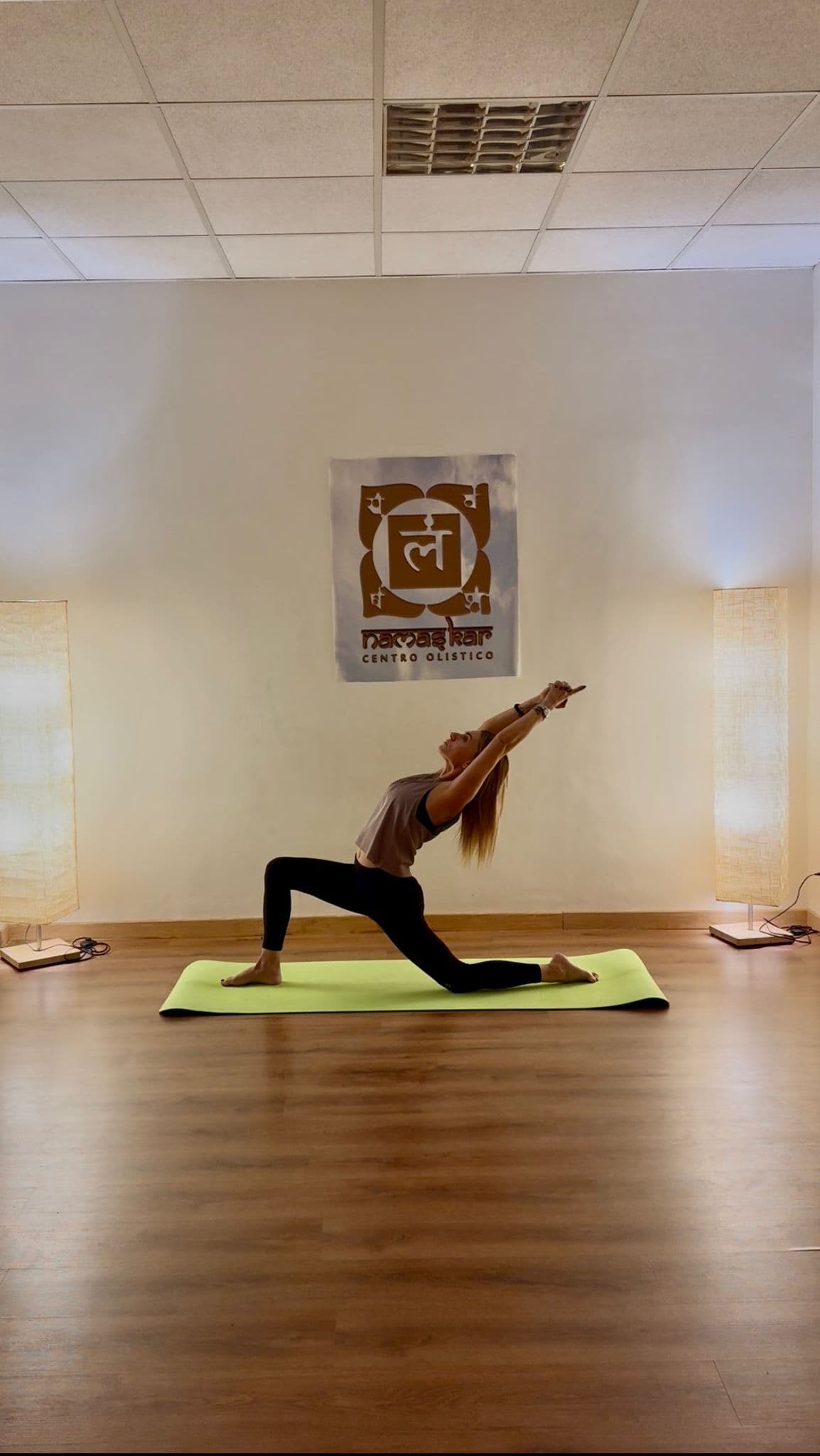
Yoga for anxiety and stress: breathe, you're in the right place

Silvia Ghigliazza
Yoga Teacher
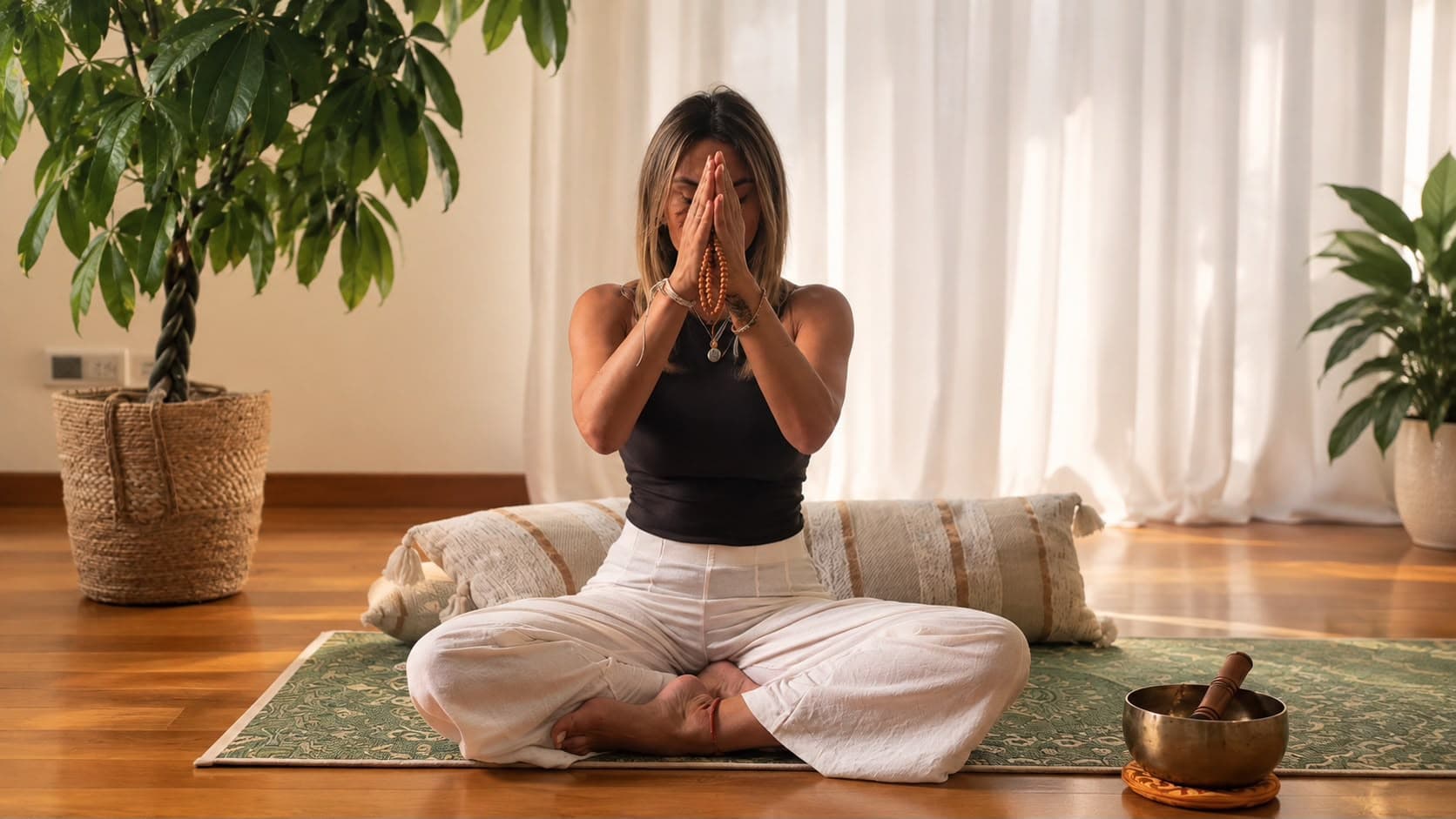
You know those days when your thoughts are racing a mile a minute and you feel that nagging weight right in the centre of your chest? Before I even explain why, let's do one thing together. Right now.
Do this now: 60 seconds of breathing
If you've arrived here with anxiety rising, you don't need theory: you need relief. Here's a very simple exercise to do right now, wherever you are.
- ●Sit comfortably and rest one hand on your belly.
- ●Inhale through your nose counting to 4, feeling your belly gently expand.
- ●Exhale slowly through your mouth counting to 6, as if blowing through a straw.
- ●Repeat for 6-8 breaths: an exhale longer than the inhale is the signal that tells your body «now you can relax».
Can you already feel your shoulders a little softer? That's your nervous system shifting gear. Now let me explain why it works — and how yoga does it, every time you step on the mat.
Yoga for anxiety: how it works on your nervous system
Anxiety and stress aren't «enemies» to fight with force, but signals that the nervous system is stuck in constant-alert mode. And yoga isn't just exercise: it's a true switch for that system. Here's what happens when you practise:
- ●You lower cortisol, the stress hormone that keeps the body permanently on guard.
- ●You pull the «handbrake»: the parasympathetic nervous system, the one that tells your heart to slow down and your muscles to let go.
- ●You come home, into your body: you shift attention from catastrophic thoughts to real sensations, here and now.
Yoga exercises for anxiety (to do at home)
You don't need an hour of practice to change your mental state: a few minutes and the right poses are enough. These are the ones I always recommend to those living with anxiety and tension — gentle, accessible, effective:
- ●Balasana, Child's Pose — a bow to yourself, to shut out the world and listen only to your breath.
- ●Viparita Karani, Legs Up the Wall — one of my travel favourites: it releases tiredness and calms the nervous system almost instantly.
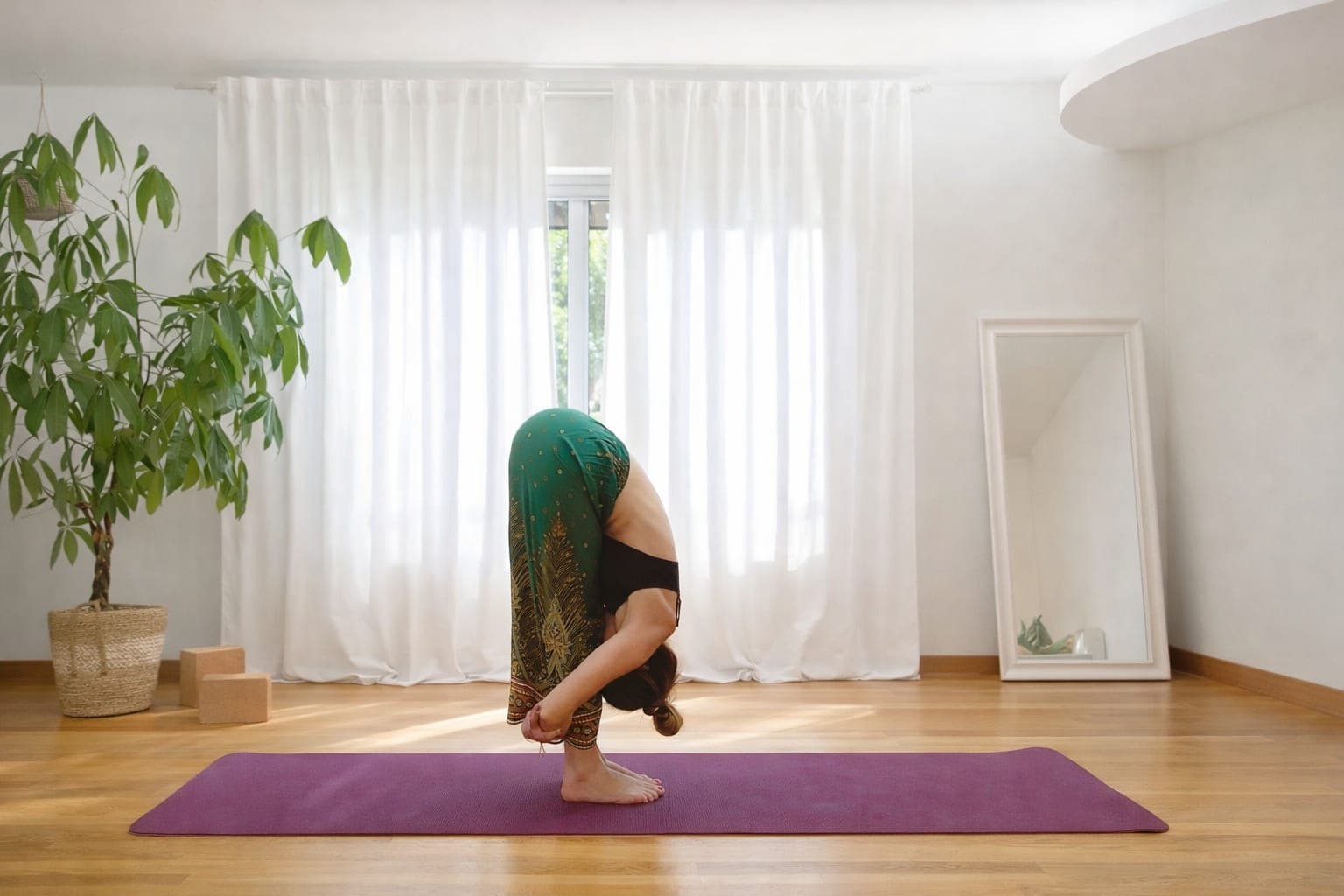
- ●Uttanasana, the standing forward fold — the head below the heart, the tension in shoulders and neck melting away.
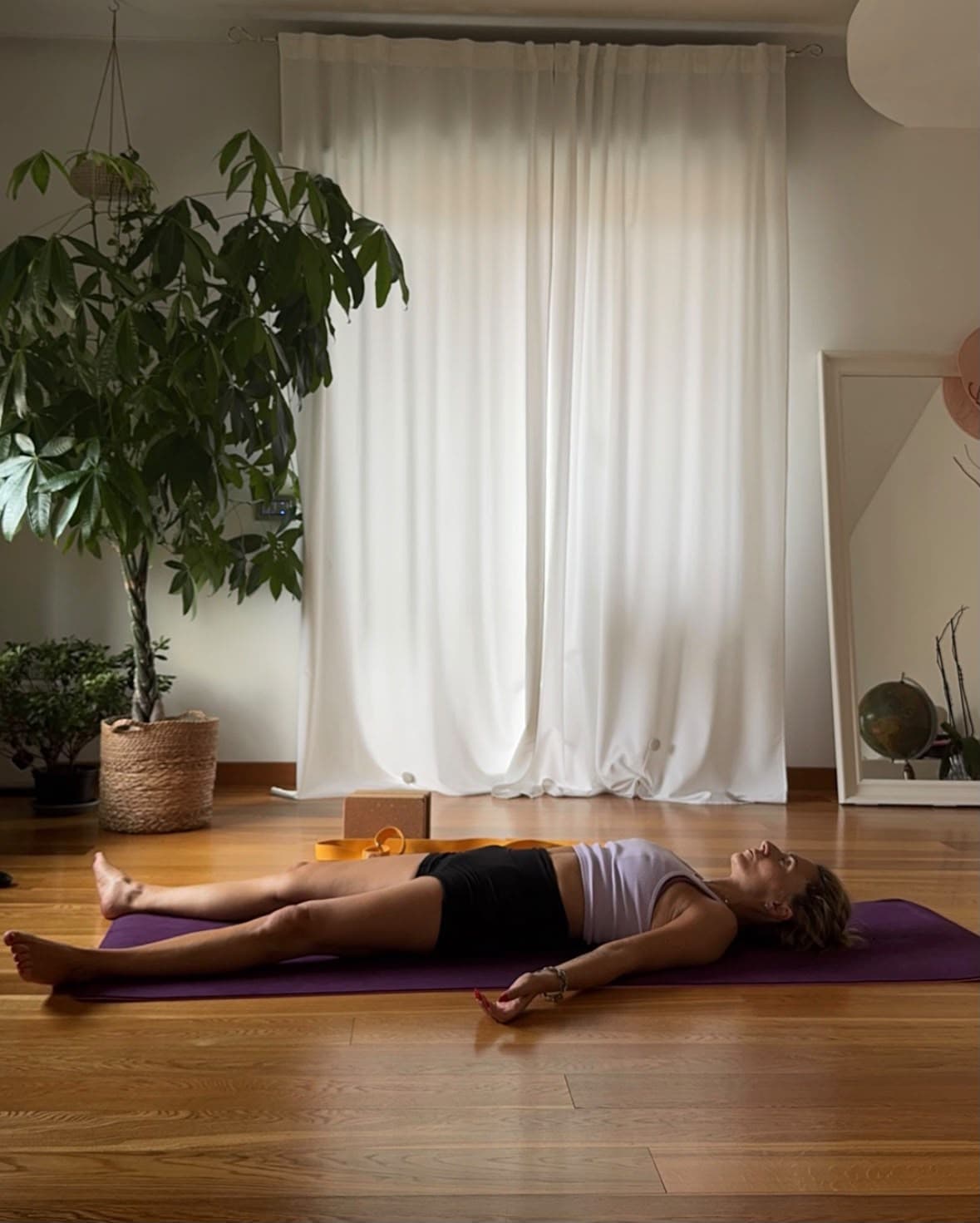
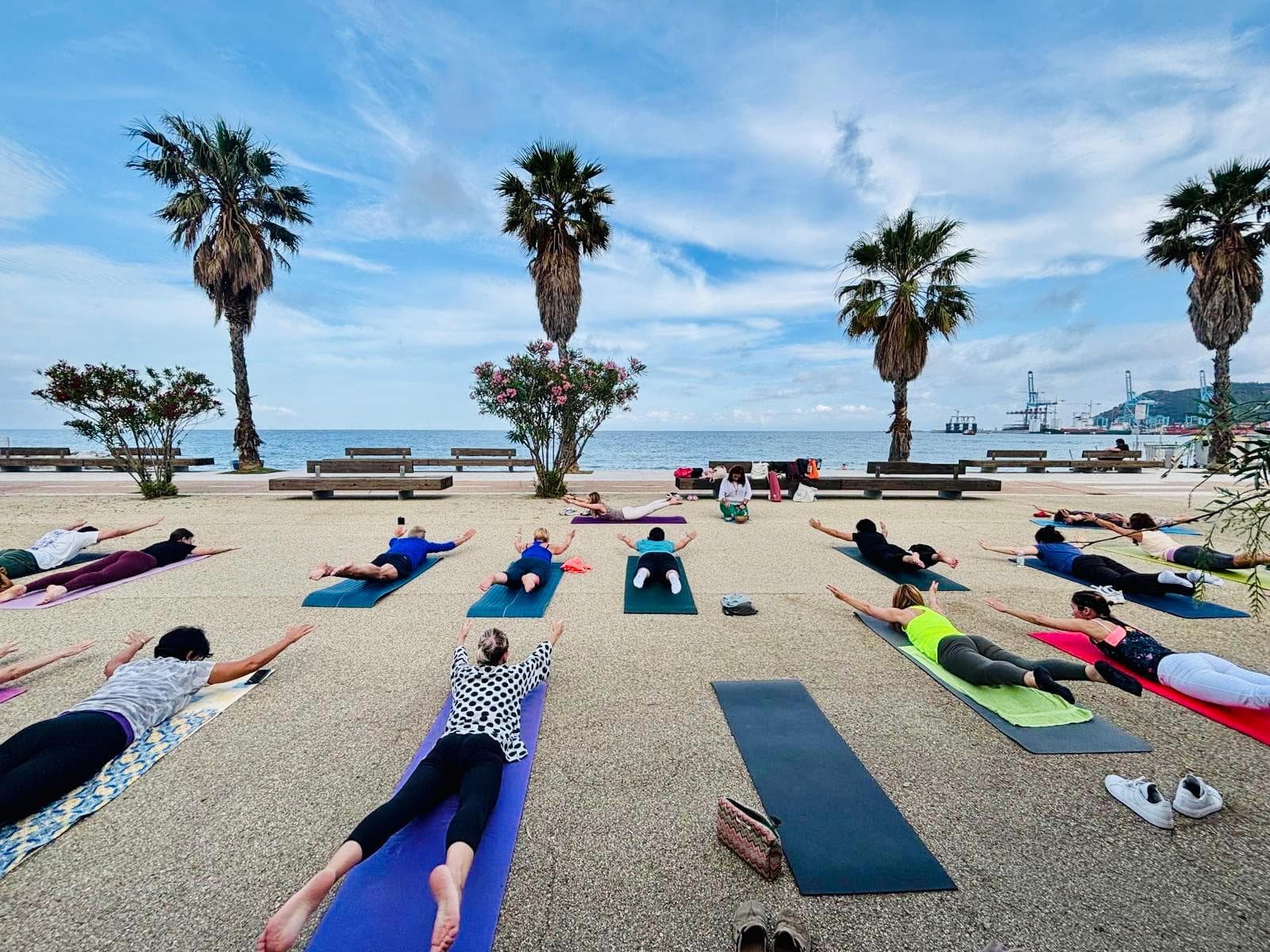
- ●Advasana, the prone pose — to reconnect with the earth and let go of abdominal tension.
Breathing to calm anxiety
The breath is the fastest tool you have: it works in seconds and you carry it everywhere. The long-exhale exercise we did at the start is your «first aid» for moments of crisis. When you have a few more minutes, try Nadi Shodhana, alternate nostril breathing: it rebalances your energy and soothes a mind that jumps from one thought to the next. Close your right nostril with your thumb, inhale on the left; close the left, exhale on the right; then switch. A few rounds, unhurried, and it's a different world.
The secret: no performance
The biggest mistake when you're stressed is chasing «performance». If you push yourself to do the perfect pose, you're only adding more stress to what's already there. On the mat, with me, perfection doesn't exist: only how you feel matters. We always start from there.
Your «first aid kit» for anxiety
I know that in moments of crisis it's hard to remember what to do. That's why I created a little digital lifesaver for you. Write «ANSIA» and I'll send you my 10-minute Guided Protocol in PDF: a sequence designed to calm you down right away when you feel the tension taking over. Keep it on your phone, carry it with you always.
Request the protocol →Ready to make peace with your cycle? Don't let pain decide for you. Write to me to receive your free guide and let's start taking care of you, one breath at a time.
Frequently asked questions
Gentle, grounding poses are the most effective: Balasana (Child's Pose), Viparita Karani (Legs Up the Wall), Uttanasana (forward fold) and Advasana. Combined with slow breathing, they help switch off the alert state and restore calm.
By lengthening the exhale. Inhale counting to 4 and exhale counting to 6: the longer exhale activates the parasympathetic nervous system and signals to the body that it can relax. Just 6-8 breaths are enough to feel the difference.
The breath works immediately: after just one 10-minute session you'll feel your shoulders lighter and your mind less cluttered. Consistency then makes you more resilient in the long run.
No. Yoga is a wonderful complementary support tool: it helps you manage the physical sensations of anxiety and regain presence, working in harmony with whatever path you're following. It doesn't replace the advice of a professional.
And if you can't switch off even on holiday?
When tension is chronic, even a break isn't enough: the body stays wired. Here's why it happens and the four levers that truly help it slow down.
Balance isn't the absence of the storm: it's learning to breathe inside the storm. And it's just a mat away. — Silvia
Your body, your practice
Have this need or issue? Let's create a practice made just for you. Write to me, we'll talk.