The Sanskrit names of the asanas: the body parts — Part 2

Silvia Ghigliazza
Yoga Teacher
In Part 1 we learned to spot the animals hidden in the names of the asanas: the cobra, the cat, the dog that stretches. Today we take a step inward, because so many poses are named after a part of the body — the head, the knee, the hand, the big toe. And understanding them is even more useful, because the name already tells you where to look.
If Part 1 gave you your first building blocks, this one adds a handful of new ones. And we won't leave them there: we'll use them right away, taking the names apart together like little puzzles.
The decoder: body parts in Sanskrit
Here are the key words that come up again and again. Learn them once and you'll recognise dozens of asanas at a glance:
- ●Sirsa = head · Griva = neck · Mukha = face (a recap from Part 1).
- ●Janu = knee · Pada = foot/leg · Angustha = big toe.
- ●Hasta = hand · Bhuja = arm/shoulder.
- ●Karna = ear · Jathara = belly, abdomen.
- ●Bonus: Hridaya = heart · Prishtha = back · Nabhi = navel.
Let's take a name apart together
Let's try with a name that looks impossible: «Parivritta Janu Sirsasana». Scary, right? And yet: parivritta (revolved, twisted) + janu (knee) + sirsa (head) + asana (pose) = the head-to-knee pose, but revolved. Once taken apart, the name tells you exactly what to do.
Again: «Supta Padangusthasana». Supta (reclining) + pada (foot) + angustha (big toe) + asana = lying down, the hand catching the big toe. See? It's not magic: it's a little dictionary that lights up, piece by piece.
The asanas named after body parts
Here they are, taken apart word by word — with a note on what the body does in each:
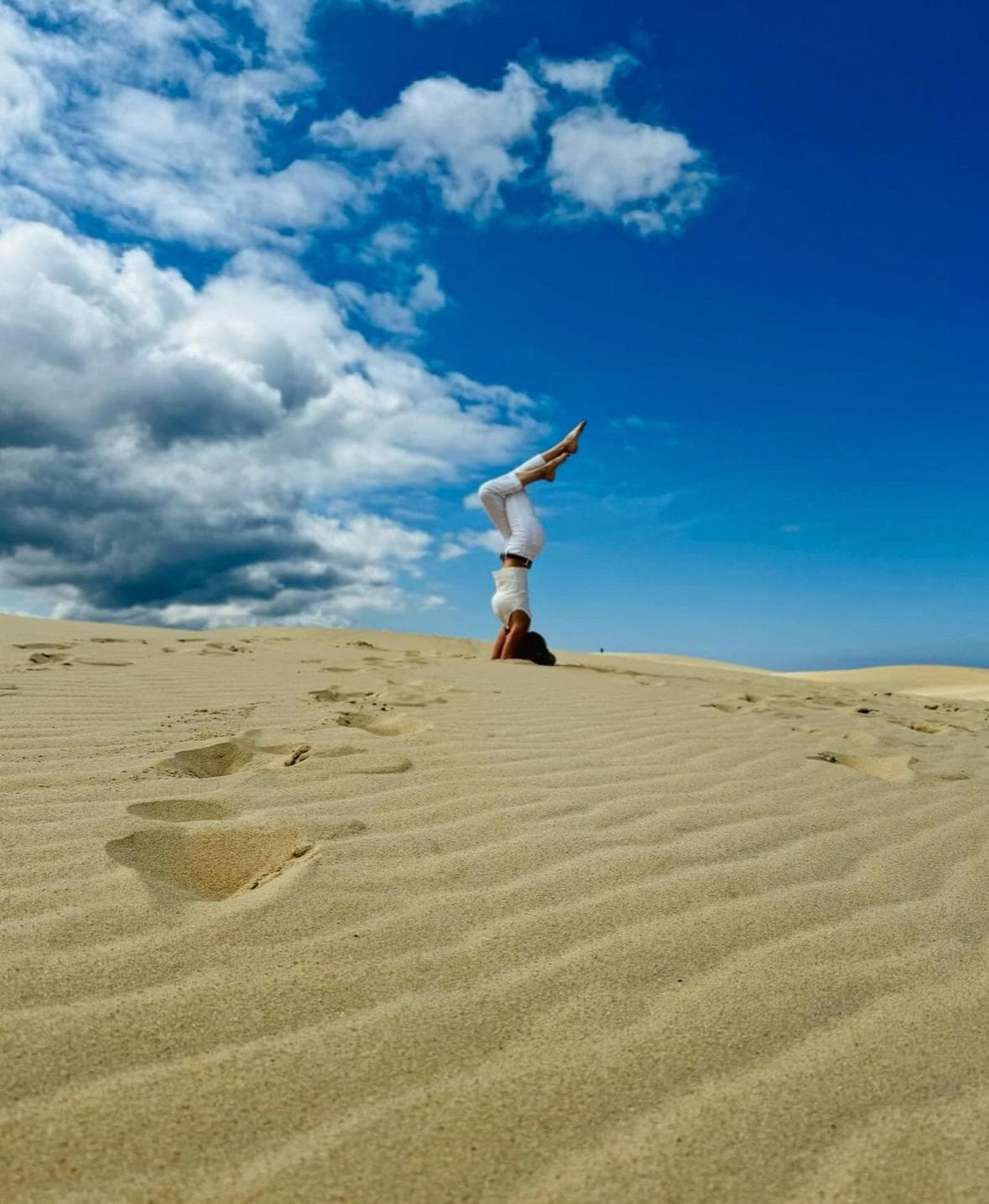
- ●Sirsasana (headstand) — from sirsa (head): the body inverted, balancing on the head and forearms. It's called «the king of asanas» (more on that shortly).
- ●Janu Sirsasana (head-to-knee) — janu (knee) + sirsa (head): seated, you fold forward bringing the forehead towards one extended leg. A calming pose that lengthens the back.
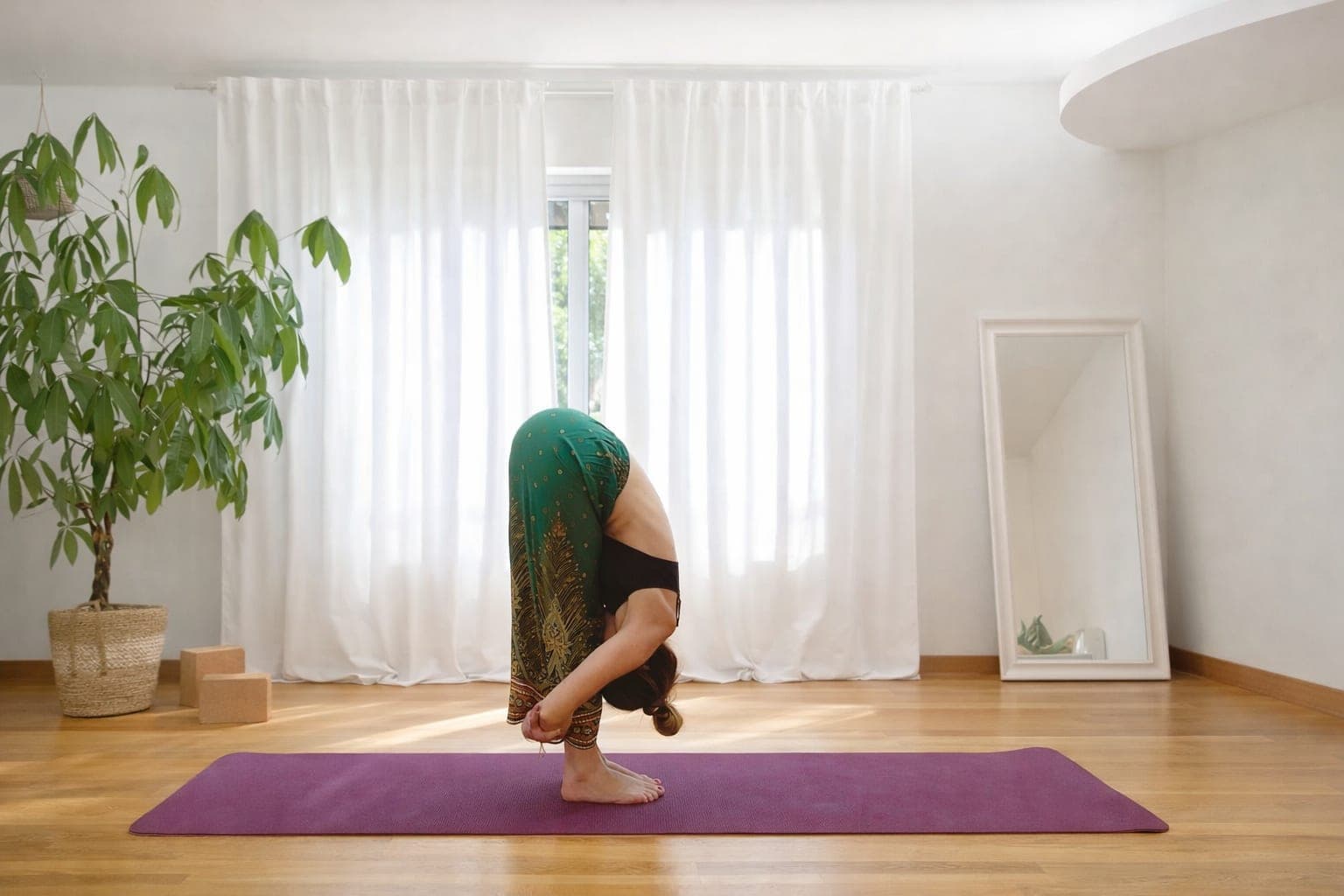
- ●Pada Hastasana (hands under the feet) — pada (foot) + hasta (hand): standing, you fold forward and slide your hands under the soles of your feet. A lovely stretch for the back line.
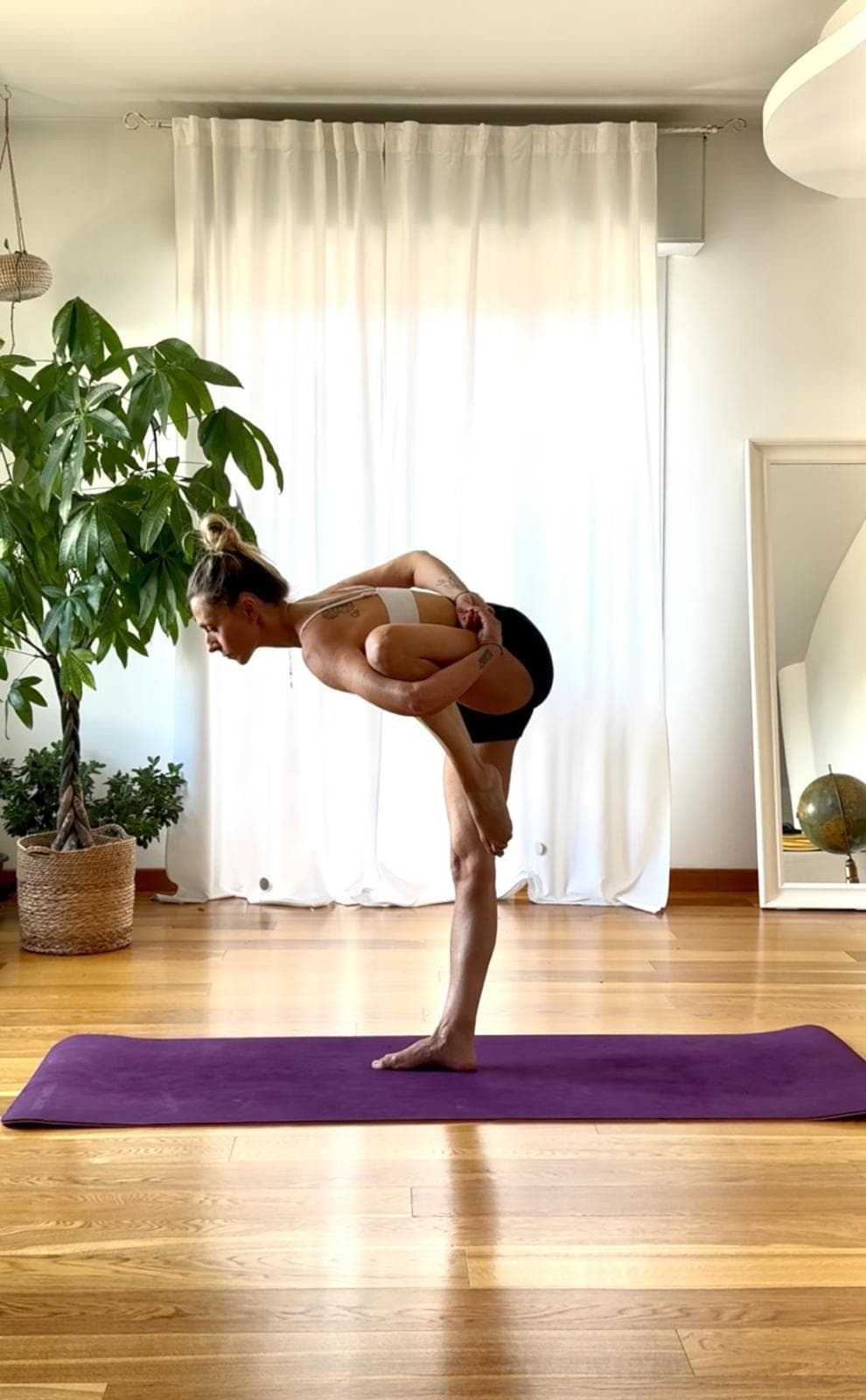
- ●Utthita Hasta Padangusthasana (hand-to-big-toe, standing) — hasta (hand) + pada + angustha (big toe): a balance on one leg, holding the big toe of the extended leg.
- ●Supta Padangusthasana (hand-to-big-toe, reclining) — supta (reclining): the gentle version of the previous one, on the floor. Perfect for opening the hamstrings without challenging your balance.
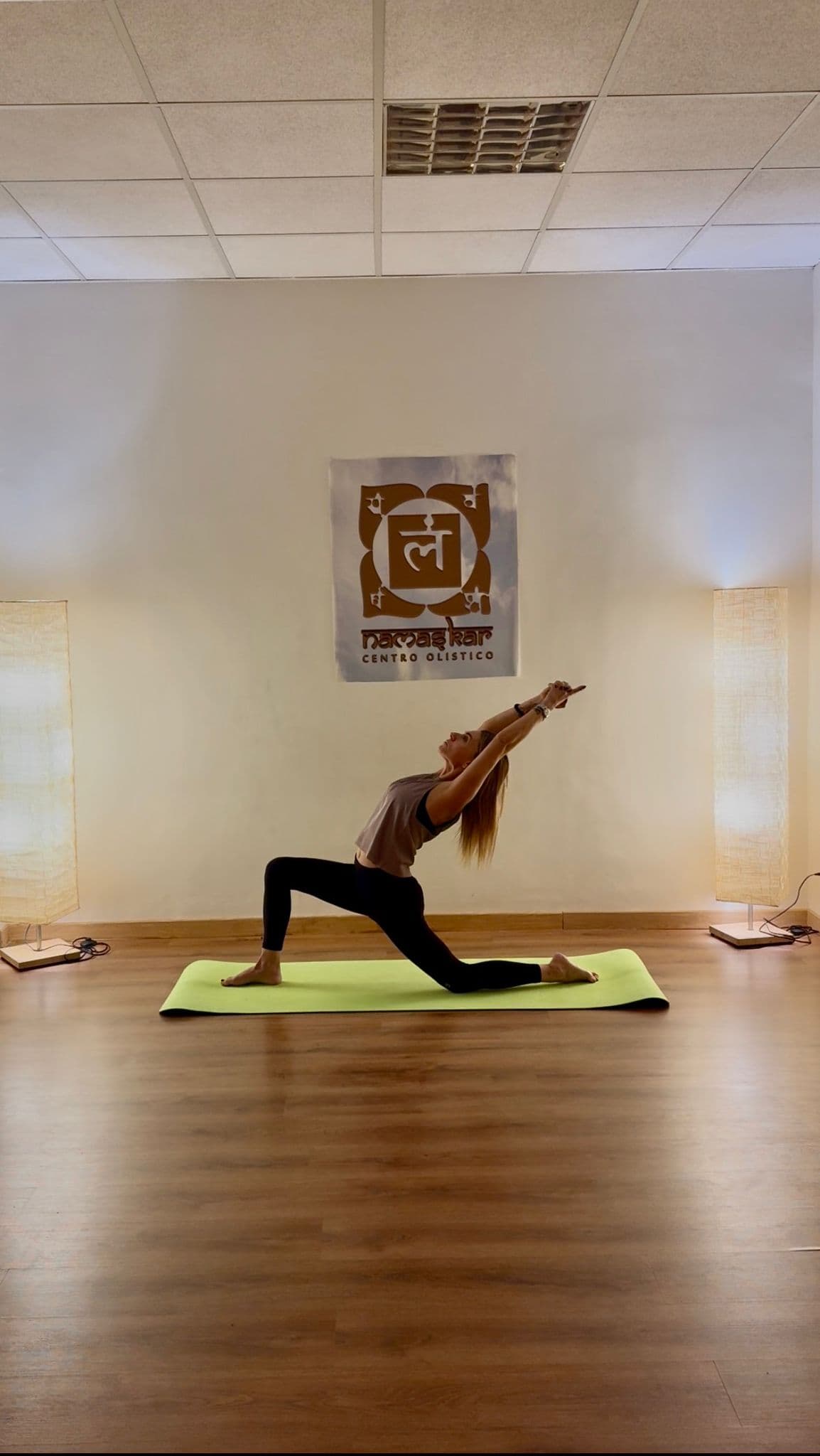
- ●Urdhva Hastasana (raised arms) — urdhva (upward) + hasta (hand): the opening gesture, arms reaching to the sky, that so often begins the sun salutation.
- ●Karnapidasana (ear-pressure pose) — karna (ear) + pida (pressure): from the plough, the knees come down gently beside the ears. A deep gathering-in.
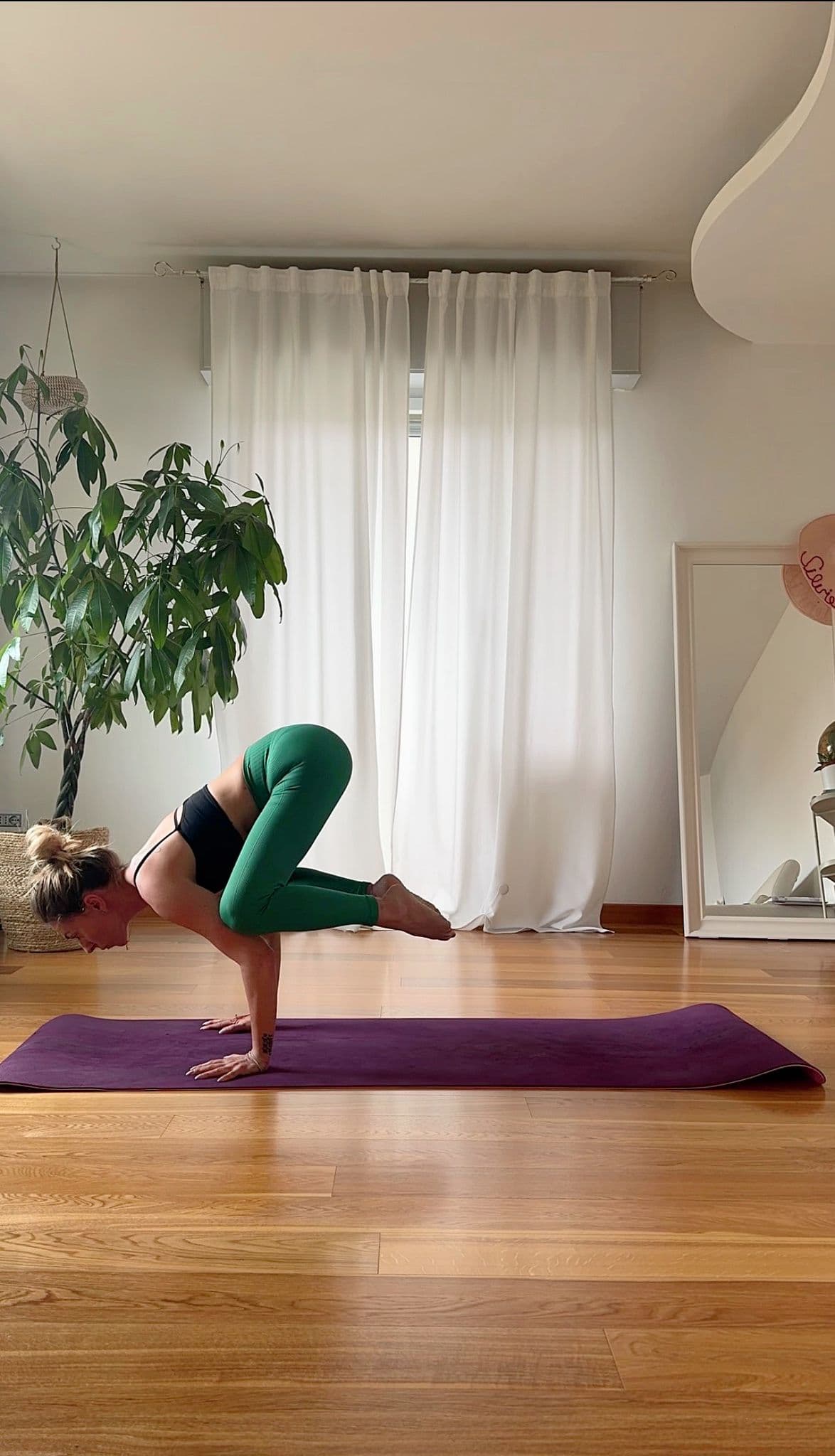
- ●Bhujapidasana (arm-pressure pose) — bhuja (arm/shoulder) + pida (pressure): a balance in which the gathered body «presses» onto the bent arms.
- ●Jathara Parivartanasana (revolved abdomen) — jathara (belly) + parivartana (turning): lying down, you let the legs fall to one side in a twist that massages the organs.
- ●Prasarita Padottanasana (wide-legged forward fold) — prasarita (spread) + pada (legs) + uttana (intense stretch): the forward fold with the legs wide apart, among the most relaxing of all.
Sirsasana, the king of asanas
It deserves a paragraph of its own, because it's the body asana par excellence. It's called «the king of asanas» (its companion, Sarvangasana on the shoulders, is «the queen») because it literally turns perspective upside down: the world flips, the blood flows back towards the heart and head, the mind becomes alert and quiet at once. No wonder so many love it.
But precisely because it's powerful, it must be treated with respect. It's not a pose to «just try and see»: you learn it with a teacher, starting from preparations like Dolphin Pose and from support against a wall. Mind the neck and cervical spine (the weight mustn't crush the head), and it's best avoided — or adapted with your guide — in case of high blood pressure, eye or neck problems, or during pregnancy. The golden rule: it's not a destination to force, but an achievement to build.
A curiosity
Line them up and these names draw a map of the whole body: from the head (sirsa) to the feet (pada), passing through the hands, the knees, the ears, the belly. And some join two parts in a single name — Janu Sirsasana (knee and head), Pada Hastasana (foot and hand) — as if Sanskrit photographed the very instant one part of the body meets another. More than labels, they're little snapshots.
Continues in the next glossaries
The map of the body is served. In the next instalment we enter the myth: the asanas named after the great sages and heroes of tradition — Virabhadrasana, Matsyendrasana, Hanumanasana. Names that are whole stories. The dictionary grows with every article.
↗Missed Part 1? The animals
The first glossary: the word «asana», the decoder prefixes and the poses named after animals, from the cobra to the downward-facing dog.
A name that's a story: Virabhadrasana
The warrior is the perfect example of an asana «with a myth inside». Discover the story of Virabhadra and the three warriors, ahead of the glossary on the sages.
Want the asana glossary always with you?
I'm gathering the names of the asanas, word by word, into a little downloadable guide. Write «ASANA» by email and I'll let you know the moment it's ready, sending you in the meantime the chart of the most useful Sanskrit prefixes to keep on your mat.
Request the protocol →Frequently asked questions
From the Sanskrit sirsa (head) + asana (pose): it's the headstand, the famous inversion balancing on the head and forearms. It's called «the king of asanas».
Janu (knee) + sirsa (head) + asana: literally «head-to-knee pose». It's a seated forward fold in which the forehead moves towards one extended leg.
Many: Sirsasana (head), Janu Sirsasana (knee and head), Pada Hastasana (foot and hand), Padangusthasana (big toe), Karnapidasana (ear), Bhujapidasana (arm), Jathara Parivartanasana (belly), among others.
It should be learned gradually and with a teacher, starting from preparations (like Dolphin Pose) and support against a wall. It calls for care with the neck and cervical spine and should be avoided or adapted in case of high blood pressure, eye or neck problems, or during pregnancy.
Learning the names of the asanas isn't scholarship: it's listening to the body in the language in which, a thousand years ago, someone first loved it. — Silvia