Virabhadrasana: the three warriors of yoga

Silvia Ghigliazza
Yoga Teacher
There's one asana that, sooner or later, enters the life of anyone who practises yoga: the warrior. Steady legs, outstretched arms, a firm gaze — it looks like the pose of strength itself. And yet, behind that fierce name hides a story of love, grief and divine fury. Shall we uncover it, and then try it together, step by step?
With this article I'm opening the Asana Library: the story of the yoga poses, one by one. And what better way to begin than with the three warriors?
The name: what Virabhadrasana means
The name comes from Sanskrit and breaks down like this: vira means hero, valiant; bhadra means friend, benevolent, glorious; asana is the pose. Virabhadra is therefore the name of a warrior — a hero as fierce as he is noble. It's pronounced roughly vi-ra-bha-dràs-ana, with the stress near the end.
The story: the myth of Virabhadra
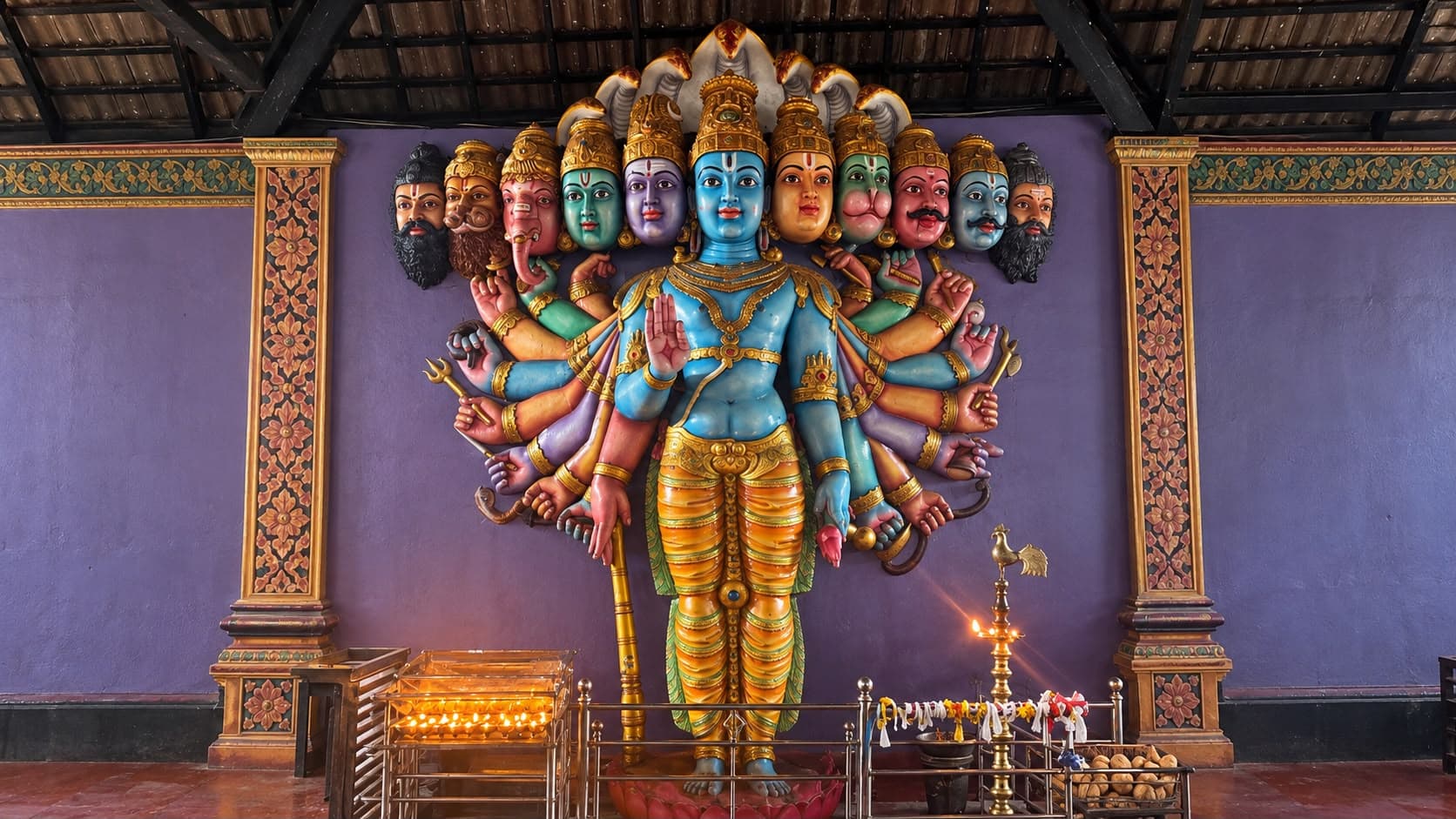
The story goes — and it is a tale of tradition, not a historical fact — that Sati, Shiva's wife, had defied her father Daksha in order to love her god. Daksha, who despised Shiva, held a great sacrifice without inviting him. Sati went anyway and, humiliated and torn by the offence done to her beloved, let herself die in the flames of the rite.
When Shiva learned of it, his grief became fury. He tore out a lock of his hair and hurled it to the ground: from that gesture Virabhadra was born, an immense warrior charged with avenging Sati. In the reading most common in modern yoga, the three warriors tell three instants of that scene: Warrior I is Virabhadra rising from the earth with his swords raised; Warrior II is the moment he sights the enemy, Daksha; Warrior III is the lunge of the attack. Keeping this image in mind as you practise changes everything: you aren't just bending a knee, you're giving shape to an intention.
Virabhadrasana I: Warrior I
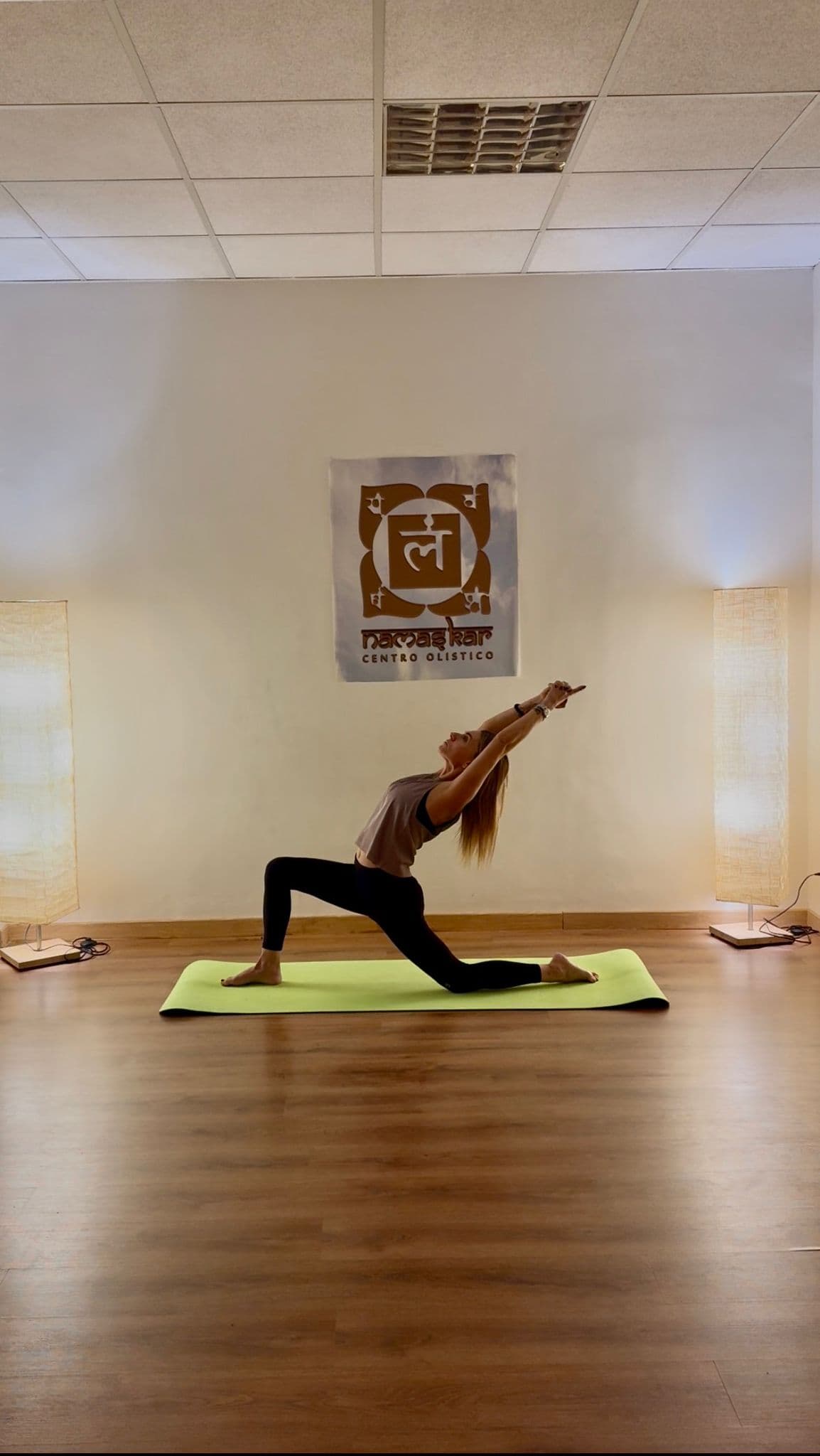
This is the warrior rising from the earth: rooted, arms reaching to the sky. Here's how to enter it:
- ●From standing, step one foot back about a metre and set the heel down with the toes turned out about 45 degrees.
- ●Bring your hips to face forward, towards the front foot, like two parallel headlights.
- ●Bend the front knee until it's over the ankle, never beyond the toes.
- ●Reach your arms upward, shoulders away from the ears, and look forward or slightly up.
The 3 most common mistakes: over-arching the lower back by pushing the ribs forward (lengthen the pelvis down instead); letting the hips open to the side instead of staying square to the front; lifting the shoulders towards the ears as you raise the arms.
Benefits: strengthens legs and ankles, opens the chest and hips, lengthens the sides and builds stability and focus. Easier variation: shorten your stance and bring your hands to your hips, or rest the back heel against a wall. Take care if you have knee or shoulder issues, or high blood pressure (in that case keep the arms lower or apart).
Virabhadrasana II: Warrior II
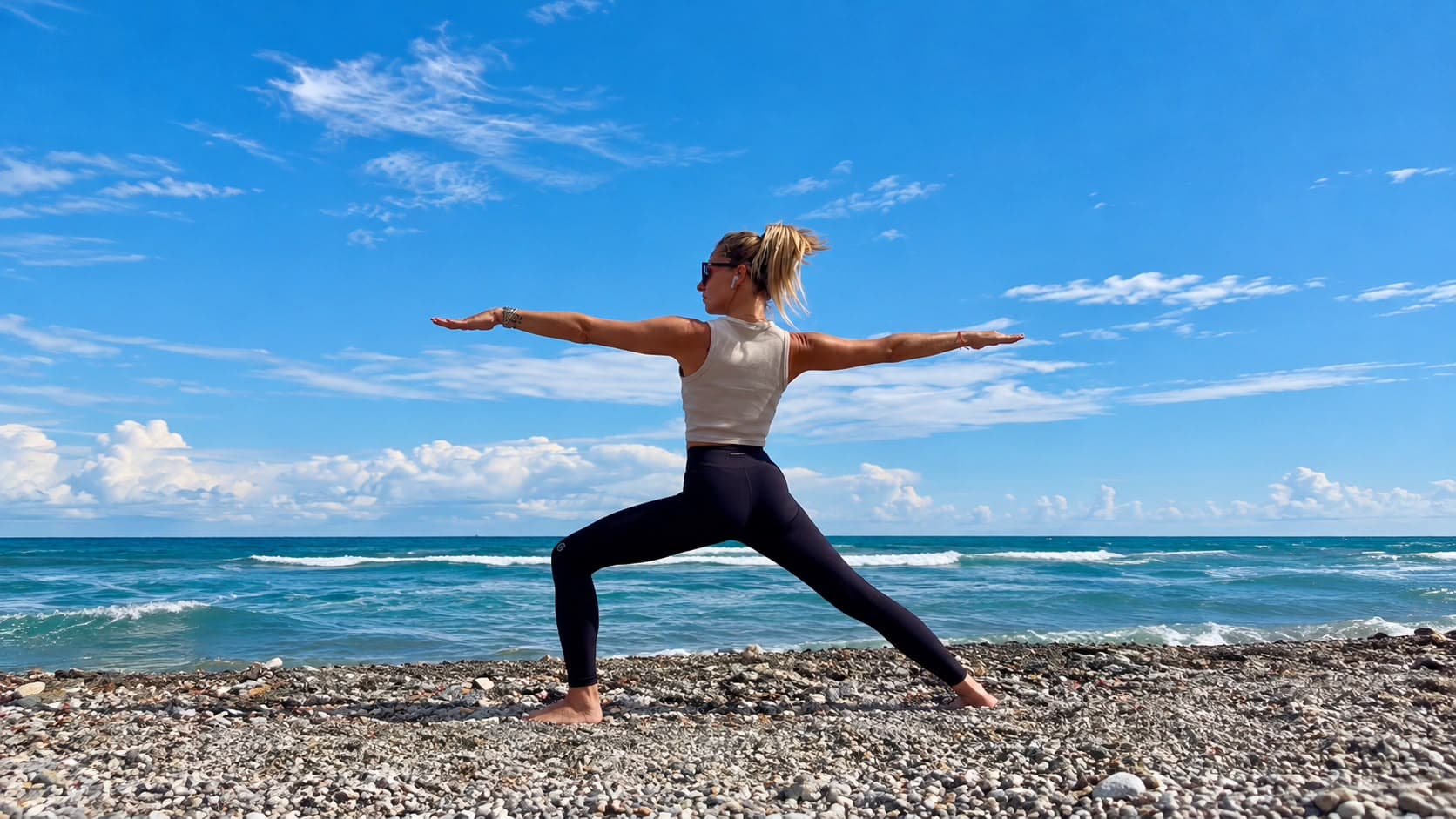
This is the warrior who sights the enemy: the gaze beyond the hand, the pelvis open to the side. The most iconic, and the one people most often look up advice for.
- ●Widen your legs into a long stance; turn the front foot forward and the back foot almost parallel to the edge of the mat.
- ●Bend the front knee over the ankle, pointing it towards the little-toe side of the foot.
- ●Open your arms at shoulder height, parallel to the floor, as if drawing a bow.
- ●Turn your head and look beyond the front hand, torso upright and centred between your legs.
The 3 most common mistakes: the front knee collapsing inward (actively guide it towards the little toe); the torso leaning forward over the leg (bring it back to centre, as if your back slid along a wall); the shoulders creeping up towards the ears (let them drop, neck long).
Benefits: tones legs and glutes, opens hips and chest, improves stamina and grounding, and trains mental steadiness — staying still while everything asks you to give up. Easier variation: shorten the stance and bend the knee less. Take care with knee, hip or sacrum issues.
Virabhadrasana III: Warrior III
This is the warrior in the lunge of the attack: a balance on one leg, the body like a horizontal arrow. The most demanding of the three.
- ●From Warrior I, shift your weight onto the front leg and start to lift the back one.
- ●Bring the torso forward until trunk and lifted leg form a line parallel to the floor.
- ●Keep the hips level, parallel to the ground, and the back foot pressing away through the heel.
- ●Reach your arms forward, along your sides or in a T, and pick a fixed point for your gaze.
The 3 most common mistakes: opening the hip of the lifted leg upward (keep it facing the floor); letting the chest drop and rounding the back instead of lengthening forward; locking the standing knee (keep it soft, micro-bent).
Benefits: strength in legs and core, balance, coordination and a good dose of confidence when you finally hold it. Easier variation: rest your hands on a wall or the back of a chair, or keep the back toes brushing the floor (half Warrior III). Take care with balance issues, blood pressure or back problems: always use support.
The best-loved variations
From the three warriors come two beautiful variations that soften their fierceness: the Reverse Warrior (Viparita Virabhadrasana) and the Humble Warrior (Baddha Virabhadrasana).
- ●Reverse Warrior — from Warrior II, turn the front palm up to the sky and let the back hand slide down the rear leg, lengthening the side in a soft arc. It opens the ribcage and gives you breath.
- ●Humble Warrior — from Warrior I, clasp your hands behind your back and fold forward, bringing the torso inside the front leg, head towards the floor. A bow that unites strength and surrender.
A curiosity
It may seem strange that yoga, a path of peace and non-violence, celebrates a warrior born to avenge. But the yoga warrior doesn't fight others: he fights his own laziness, fear, the stories we tell ourselves so we don't have to try. Virabhadrasana is the reminder that true strength is the gentle kind — the kind that stays firm, and standing, even when the legs are shaking.
↗The Sanskrit names of the asanas
Why do the poses all end in -asana? The glossary of the names, word by word, to understand what you're saying every time you step on the mat.
Just starting out? Begin here
Everything you need to start practising yoga from scratch, even if you don't feel flexible or strong. Spoiler: that's perfectly fine.
Frequently asked questions
It's the «warrior pose». From Sanskrit vira (hero, valiant) and bhadra (friend, glorious): Virabhadra is the name of the warrior created by Shiva in the myth; asana means pose.
Warrior I has square hips and arms reaching up; Warrior II has the pelvis open to the side, arms parallel to the floor and the gaze beyond the hand; Warrior III is a balance on one leg, with body and lifted leg parallel to the floor.
Letting the front knee collapse inward. Guide it actively towards the little toe, keeping the torso upright and centred and the shoulders away from the ears.
Yes, with the right variations: a shorter stance, a less-bent knee and support (a wall or chair) for Warrior III. Quality matters more than depth: start from where you are.
The yoga warrior fights no one: he stays standing, firm and gentle, even when everything inside you asks you to give up. — Silvia