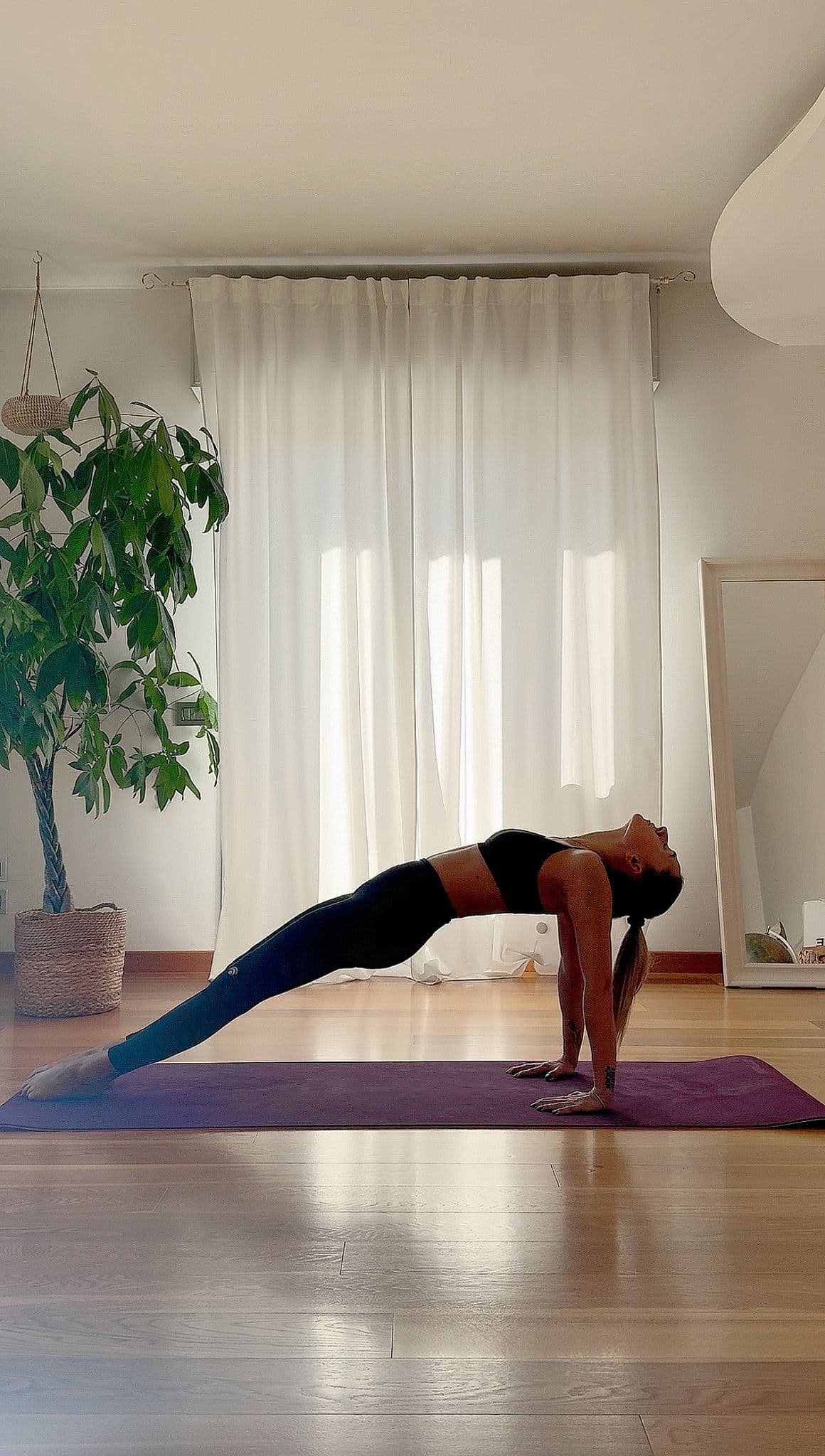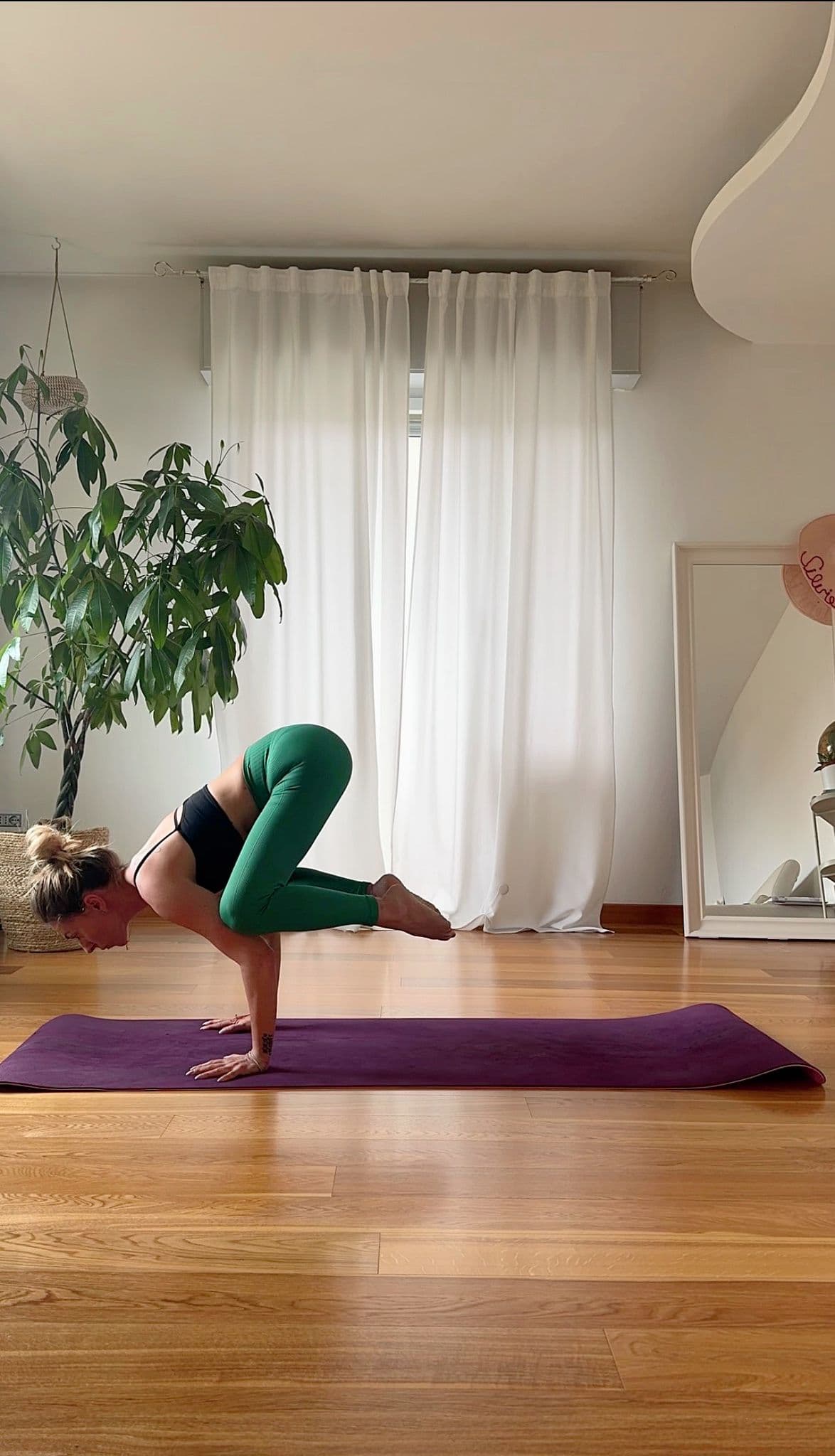
Rocket Yoga: the style that gets you «there faster»

Silvia Ghigliazza
Yoga Teacher
The first time you hear the words Rocket Yoga, you think of anything but yoga. A rocket? And yet that's exactly the beauty of it: it's a style that grabs you, shakes you and — I promise — makes you discover things about your body you never imagined. Dynamic, fast, playful. But behind that funny name there's a beautiful story, one that starts a long way back. Let me tell it to you.
What Rocket Yoga is
Rocket® is a dynamic, flowing style of yoga, a sequence of postures linked by the breath that moves fast and without pointless pauses. It was born as a freer, more accessible version of Ashtanga: the same powerful root, but with the doors flung wide open. No rigid hierarchies, no 'you have to earn' a posture first: in Rocket, inversions and arm balances come early, offered with variations for everyone. The underlying message? You're stronger than you think.
Before Rocket: Ashtanga
To understand Rocket you have to take a step back, to Ashtanga Yoga. It's the style codified in India by Sri K. Pattabhi Jois: fixed sequences, always in the same order, in which every movement is synchronised with the breath (the vinyasa), with a precise gaze and an audible breath that accompanies the whole practice. It's a disciplined yoga, almost meditative in its repetition — powerful, but also demanding: traditionally you move on to the next posture only when you're 'ready'.
It's an extraordinary method, but not for everyone: its rigidity can discourage those who are starting out or who don't have a gymnast's body. And it's precisely from this realisation that Rocket was born.
Where it comes from: Larry Schultz and San Francisco
We're in the 1980s, in San Francisco. Larry Schultz, an American teacher, had studied Ashtanga in India with Pattabhi Jois himself. He loved its energy, but felt that such a rigid structure left too many people out. So he began to rework it: he modified the sequences, changed their order, made the harder postures accessible with variations, and above all gave freedom — the freedom to adapt the practice to the person, and not the other way around.
The result was a yoga just as intense, but more democratic and more fun. In the 1990s Schultz even became the personal yoga teacher of the Grateful Dead, whom he took through practice during their tours: a detail that says everything about the free, rock-and-roll spirit of this style.
Why it's called 'Rocket'
And here comes the part I love most. The story goes that it was Bob Weir, guitarist of the Grateful Dead, who named the style, with a line that became legendary: he called it 'Rocket' because 'it gets you there faster'. There, where? To that sense of strength, lightness and openness that usually takes years — and that Rocket gives you sooner, to those brave enough to try. A name born as a joke, that captures its soul perfectly.
The Rocket series
Rocket isn't one single sequence, but three, built from the Ashtanga series and made more flowing:
- ●Rocket I — inspired by the Primary series, it works mainly on forward bends, flexibility and the foundations of arm balances.
- ●Rocket II — inspired by the Second series, it focuses on backbends and twists, for mobility and energy.
- ●Rocket III — the combination of the first two: the most complete and festive, designed for those who want to test themselves.
What a Rocket class is like
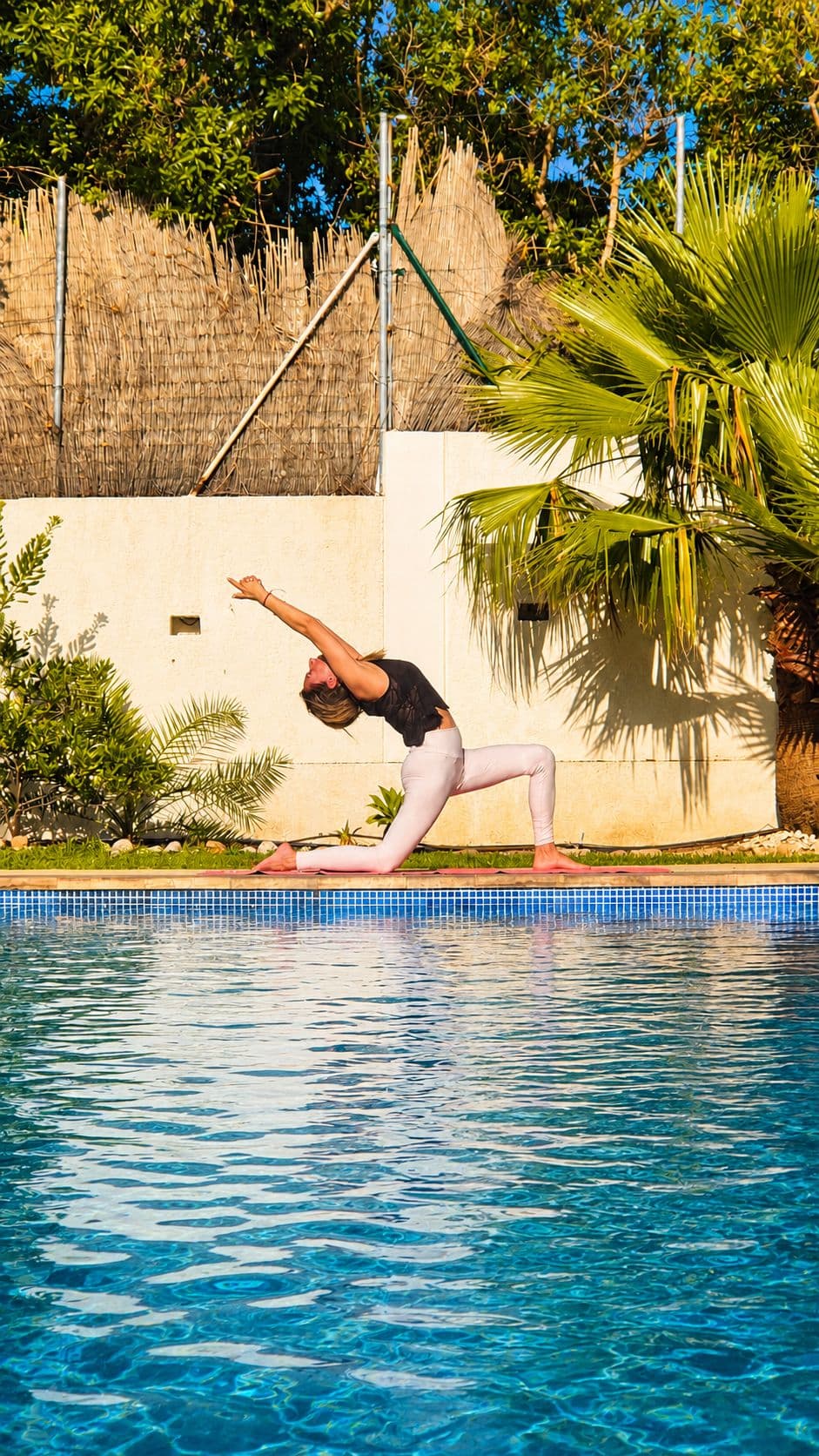
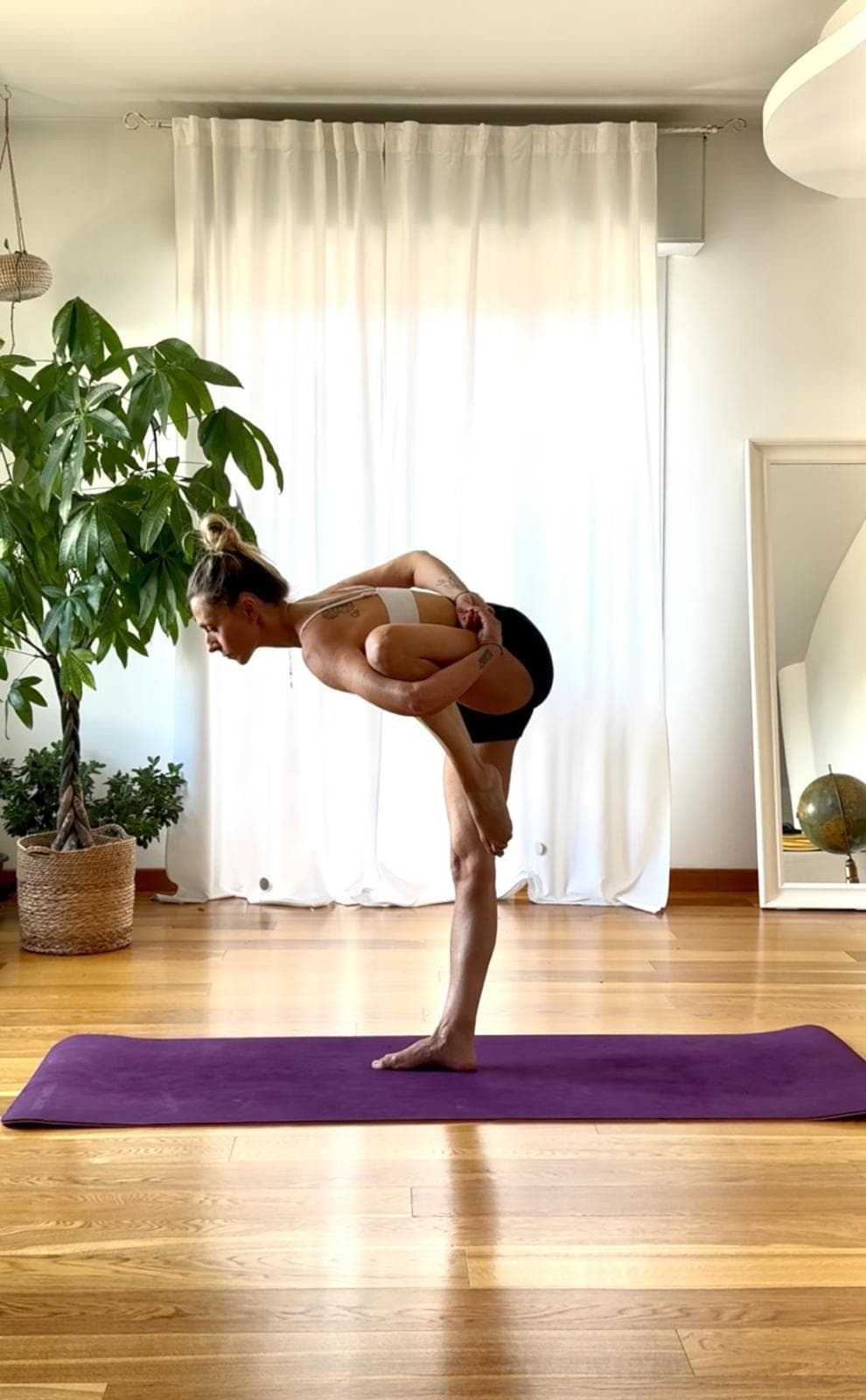
Imagine a continuous, rhythmic flow, often accompanied by music. You warm up, you fly — because yes, in Rocket you really do fly: inversions, balances, handstands, always with the option that suits your level. There's no anxiety about perfection: there's the joy of trying. The teacher offers you variations, and you choose how far to go. You leave the class tired in the right way — the kind that makes you feel alive, strong and a little proud of yourself.
The benefits
- ●Strength, especially in the arms, core and back: the body changes quickly.
- ●Flexibility and mobility, thanks to the alternation of folds, openings and twists.
- ●Energy and stamina: the sustained pace trains your breath and heart too.
- ●Confidence in yourself: facing an inversion and pulling it off changes something off the mat as well.
- ●Mental presence: the breath guides everything and the mind, at last, goes quiet.
- ●Pure fun — and that's no small thing: what we enjoy, we repeat.
Who it's for (and who it isn't)
Rocket is perfect if you love movement, are after energy and want a challenge that makes you grow. And, contrary to what people think, it's accessible even to those who are starting out but are curious and willing to get involved: the variations exist precisely for this. A good teacher tailors it to you.
It's less suitable, on the other hand, if right now you're looking for a slow, relaxing practice (a Hatha or a Yin is better there), or if you have acute injuries to your wrists, shoulders or back, or particular conditions: in those cases it should always be adapted with care, or postponed. When in doubt, talk it over first with whoever guides you.
Rocket, Ashtanga and Vinyasa: the differences
In a nutshell: Ashtanga is the tradition, with its fixed sequences and its discipline. Vinyasa is creative freedom, a flow that's always different. Rocket sits in between — it has a recognisable structure like Ashtanga, but lives it with the freedom and joy of Vinyasa, bringing you to experiment with inversions and balances early on. If you want to understand which one is for you, I've gone deeper into it here.
↗Which style of yoga is right for you?
The guide to the differences between Hatha, Vinyasa, Ashtanga and Rocket, with the benefits of each and tips on where to start.
My experience as a Rocket® teacher
Rocket came into my life and changed it, I'm not exaggerating. It taught me that strength isn't a destination but a journey, and that you can be serious and deep even while laughing on a mat trying to hold a handstand. As a certified Rocket® teacher it's the style I most love to share: because I watch people surprise themselves, class after class. And that spark in their eyes, believe me, is priceless.
↗Want to try Rocket with me?
If reading this made you want to step onto the mat, write to me: I can keep you posted on the next Rocket Yoga masterclasses, or build a private lesson with you, tailored to your level and your goals.
Frequently asked questions
It's a dynamic, flowing style of yoga, born as a freer and more accessible version of Ashtanga. Rhythmic sequences linked by the breath, with inversions and arm balances offered early and with variations for every level.
Yes, if it's well guided. Although it's intense, Rocket is designed to be adaptable: a good teacher offers variations that make it accessible even to those starting out who are willing to get involved.
Ashtanga has fixed sequences and a rigid progression: you move on only when you're ready. Rocket starts from the same foundations but makes them free and modifiable, changes the order and leads you toward inversions and balances sooner, with a more playful spirit.
The story goes that the name comes from Bob Weir of the Grateful Dead, whose yoga teacher was its creator Larry Schultz: he called it 'Rocket' because 'it gets you there faster', that is, it helps you progress quickly.
Three: Rocket I (forward bends and flexibility), Rocket II (backbends and twists) and Rocket III, which combines the first two into a complete, energetic practice.
Rocket doesn't ask you to be perfect: it reminds you, flight after flight, that you're far stronger than you believe. — Silvia