Vrksasana: the tree, the pose that teaches balance

Silvia Ghigliazza
Yoga Teacher
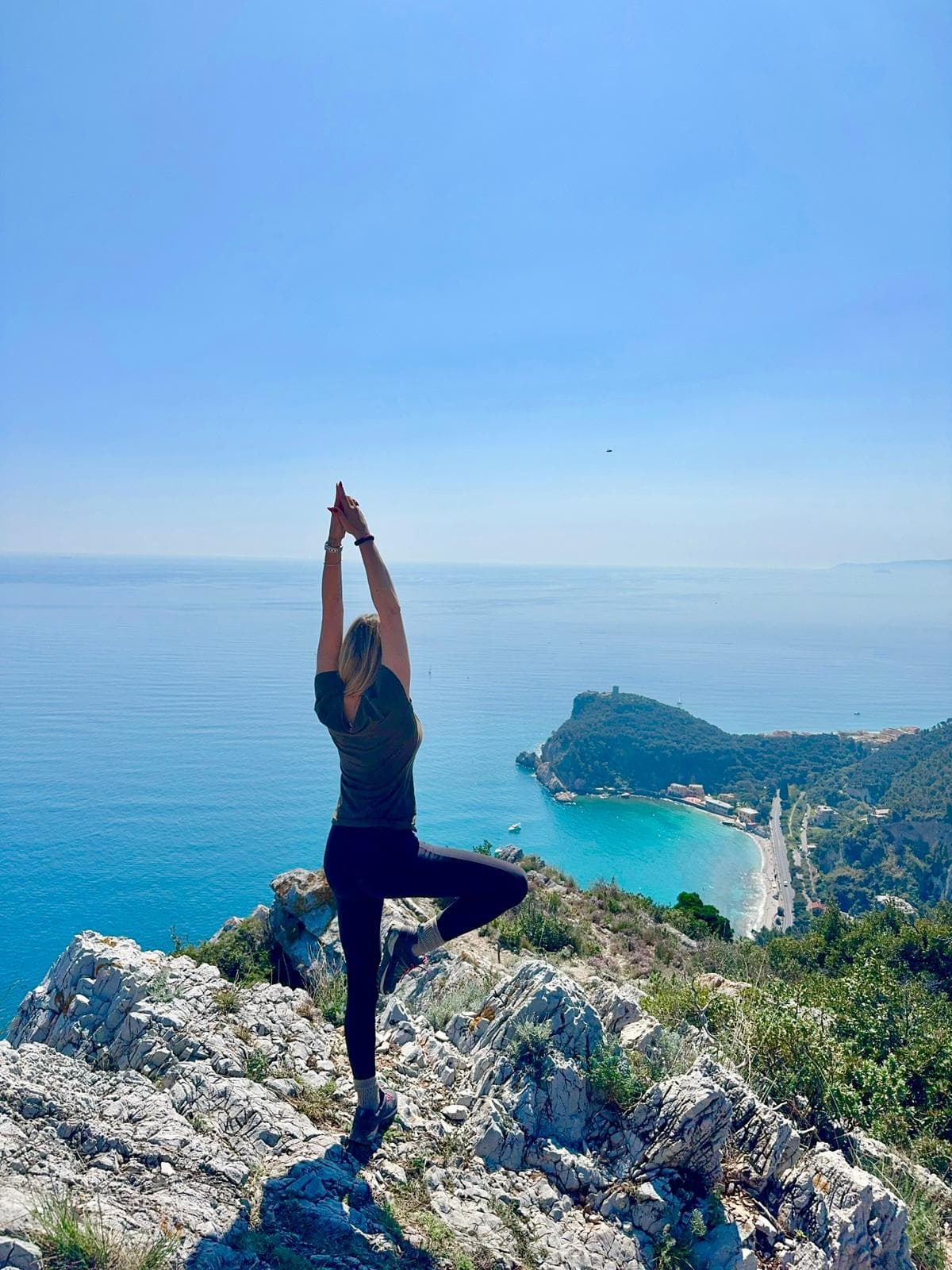
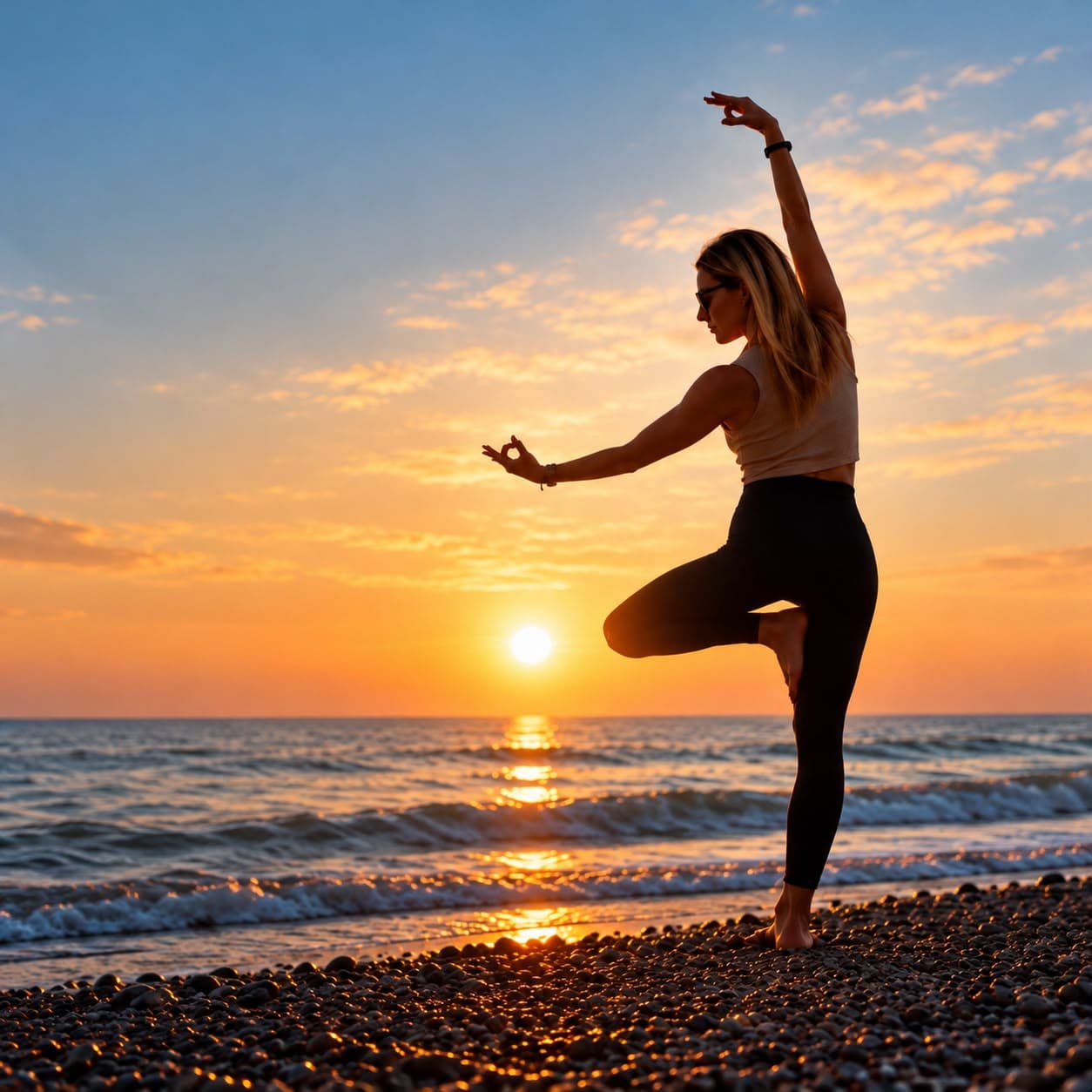
Standing on one leg seems like the simplest thing in the world — until you actually try it. That's when you discover that the tree, Vrksasana, isn't an «easy» pose: it's an honest one. It shows you how rooted you are, and how much, instead, you tend to wobble the moment life shifts your weight a little.
After the warriors — all drive and movement — today in the Asana Library we go the opposite way: not the push, but the roots. Because standing still, in balance, is a form of strength too.
The name: what Vrksasana means
The name is simple and beautiful: vrksa means tree, asana is the pose. Vrksasana is, literally, the tree pose. It's pronounced roughly vrik-sha-asana. A name that is already the whole instruction: become a tree — planted in the earth, open to the sky.
The symbol: roots and sky
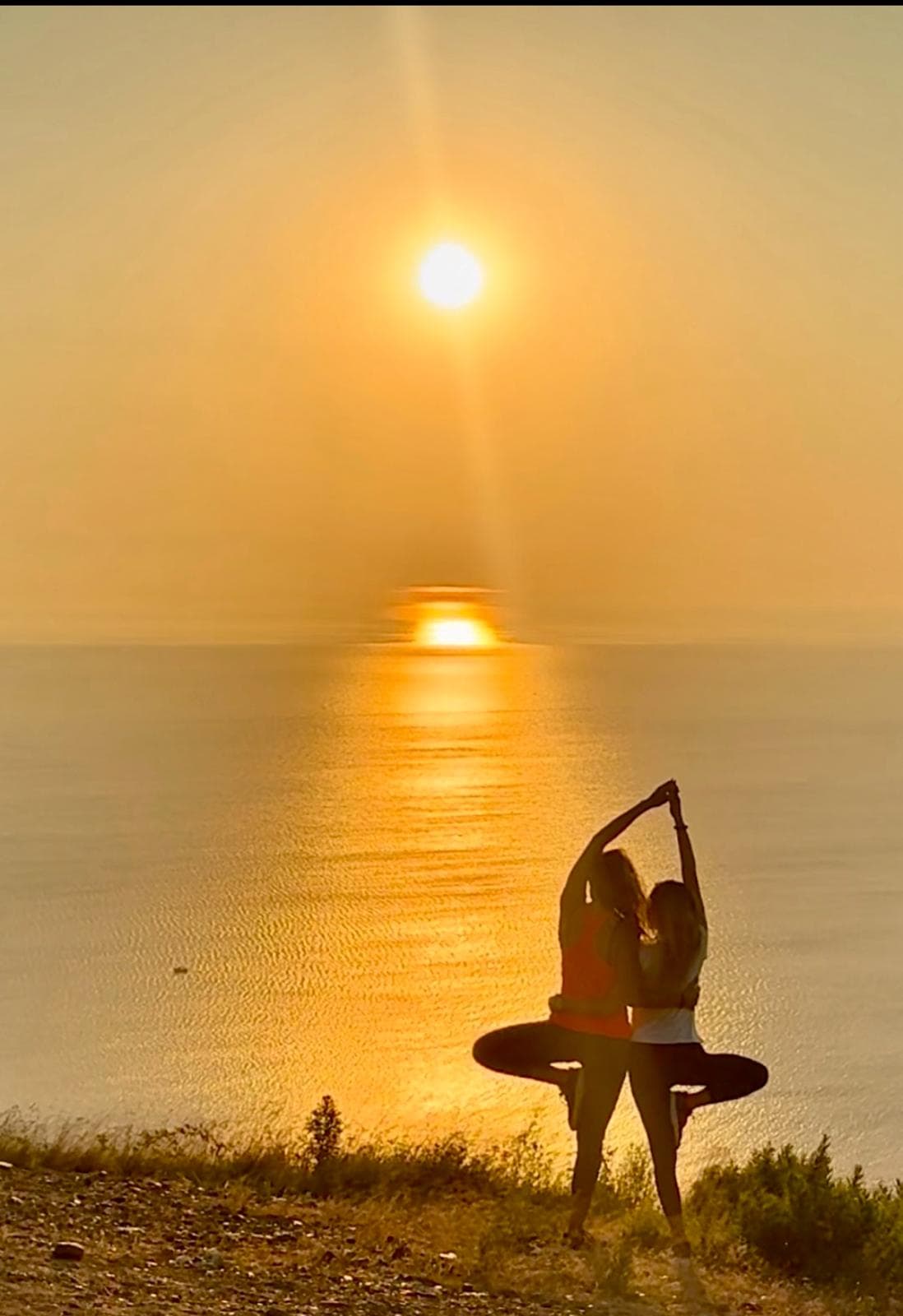
Unlike the warrior, the tree has no dramatic myth behind it: it has a symbol, as old as humankind. The tree is what holds together the low and the high — roots sunk into the dark of the earth, branches reaching for the light. There's no growth without rootedness: the deeper you go, the higher you can rise. That's the whole lesson of the pose.
In the Indian imagination, too, the ascetic who stood motionless on one leg — like a tree — was a figure of tapas, of inner discipline: a silent penance that tempers the spirit. When you practise Vrksasana you aren't just training your ankles: you're practising the same ancient art of staying.
How to enter it, step by step
- ●Start standing, feet parallel, and root one foot firmly into the ground, feeling its four corners (the two of the heel, the two of the ball of the foot).
- ●Slowly shift your weight onto that leg and lift the other foot.
- ●Place the sole of the lifted foot against the inner calf or the inner thigh — never on the side of the knee.
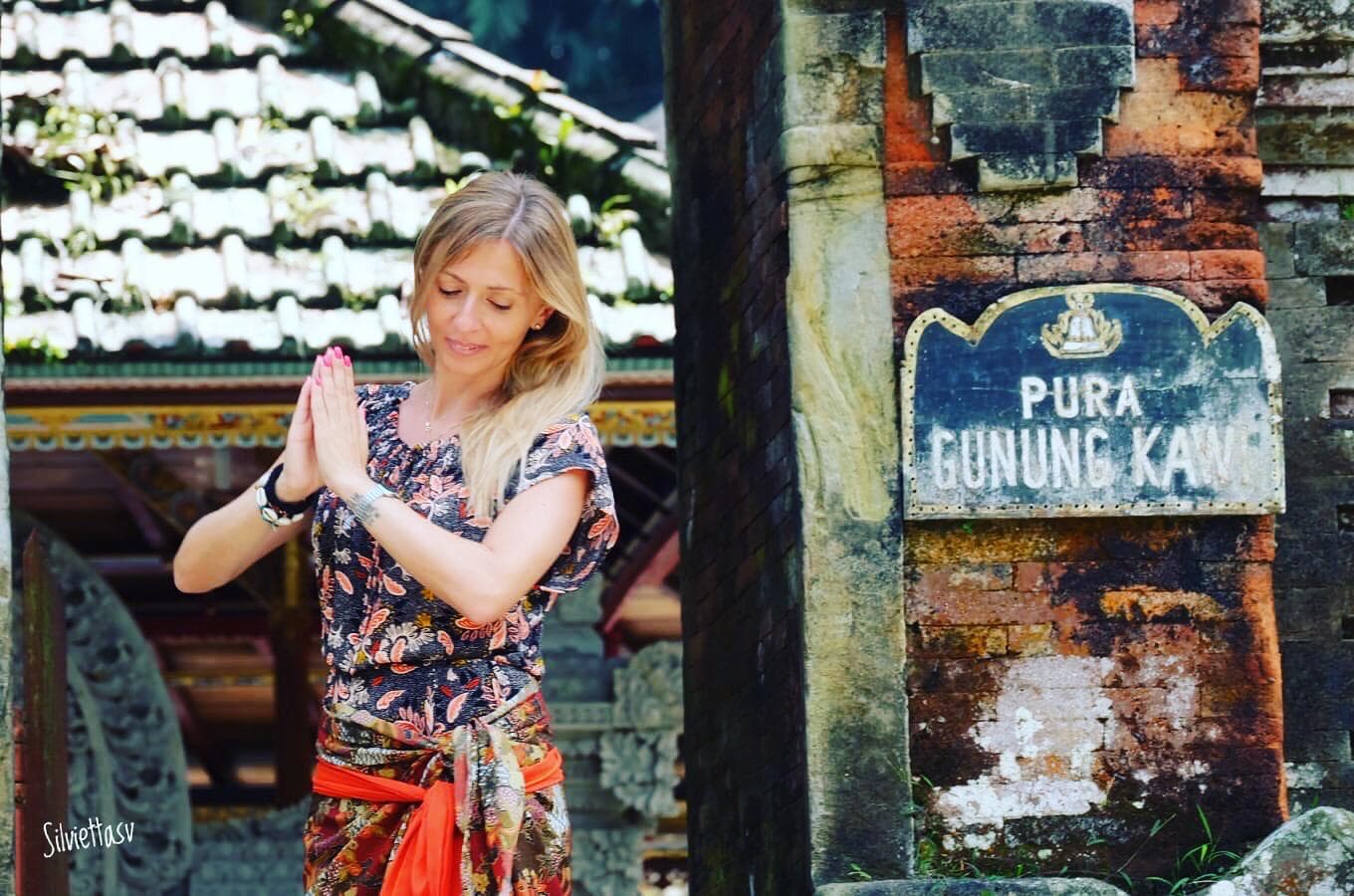
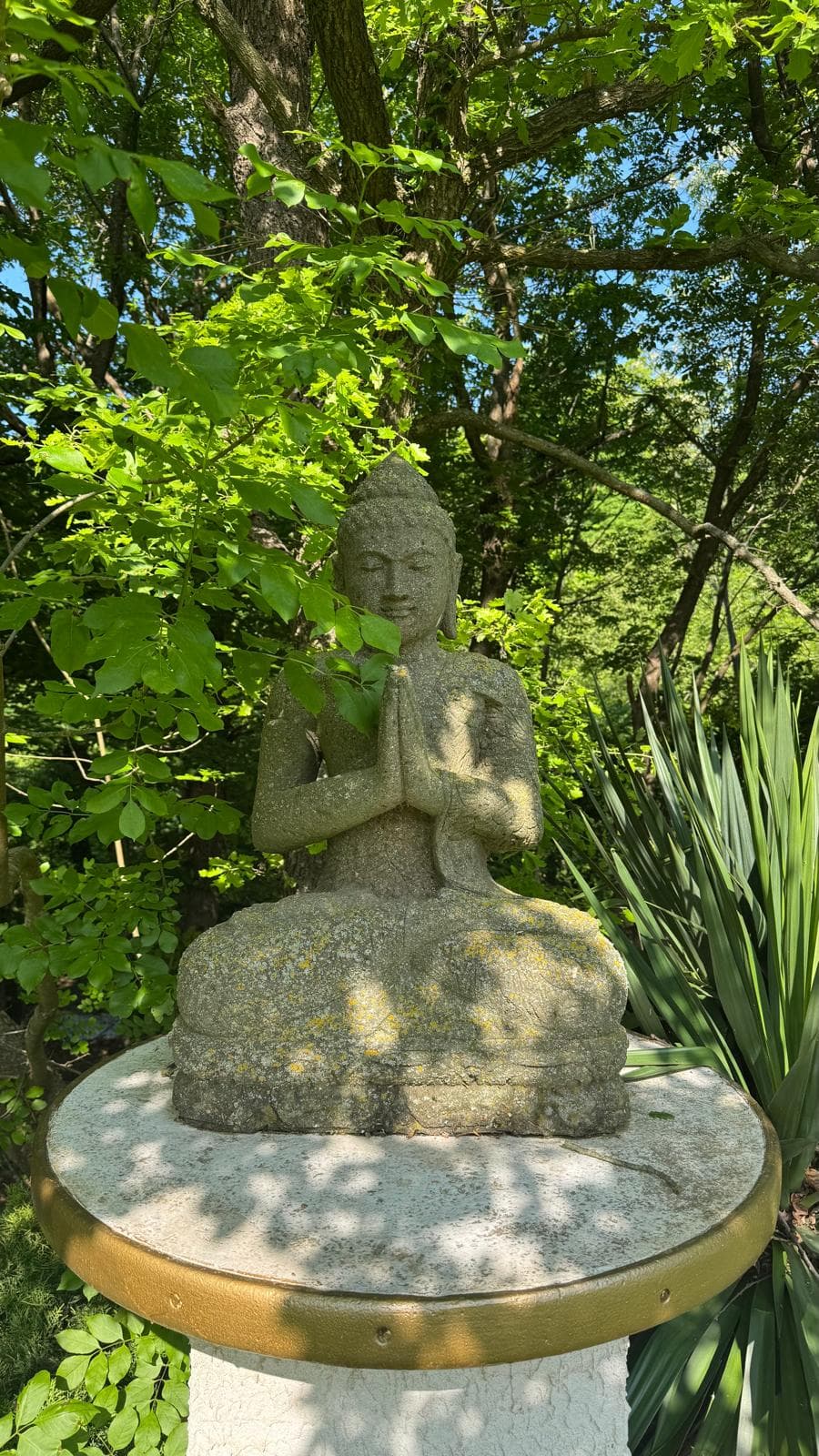
- ●Bring your hands to your heart, in Anjali Mudra, and find a still point in front of you to rest your gaze on (the drishti): it's your anchor.
- ●When you're steady, if you like, reach your arms up like branches. Breathe slowly. Then switch sides.
The 3 most common mistakes
- ●Placing the foot on the knee: the most common and the riskiest mistake. The foot goes above or below the joint (calf or thigh), never on its side, which isn't made for that pressure.
- ●A tilted pelvis: the hip of the lifted leg tends to jut out and the pelvis tilts. Keep the two hip crests level, the navel facing forward.
- ●Losing your gaze and your breath: the moment the eyes wander or you hold your breath, the balance collapses. Fix a point, breathe: that's the secret, far more than the legs.
The benefits
- ●Balance and proprioception: you train the ability to sense where you are in space, a workout for the body as much as the brain.
- ●Strength and stability in ankles, feet and legs, so often neglected.
- ●Posture: the chest opens, the spine lengthens, you «straighten up» like a trunk.
- ●Focus and calm: holding the drishti and the breath is a little standing meditation.
- ●Confidence: every time you stay one second longer, something inside you learns that it can stay.
The variations, from easiest to most advanced
- ●Easier — keep the toes of the lifted foot on the floor, like a kickstand, resting it only against the ankle; or a hand on a wall or a chair.
- ●Intermediate — foot on the calf and hands at the heart, gaze fixed: the «classic» version everyone starts from.
- ●More advanced — arms like branches to the sky, foot on the inner thigh; then, in time, eyes closed (here balance becomes a whole other challenge).
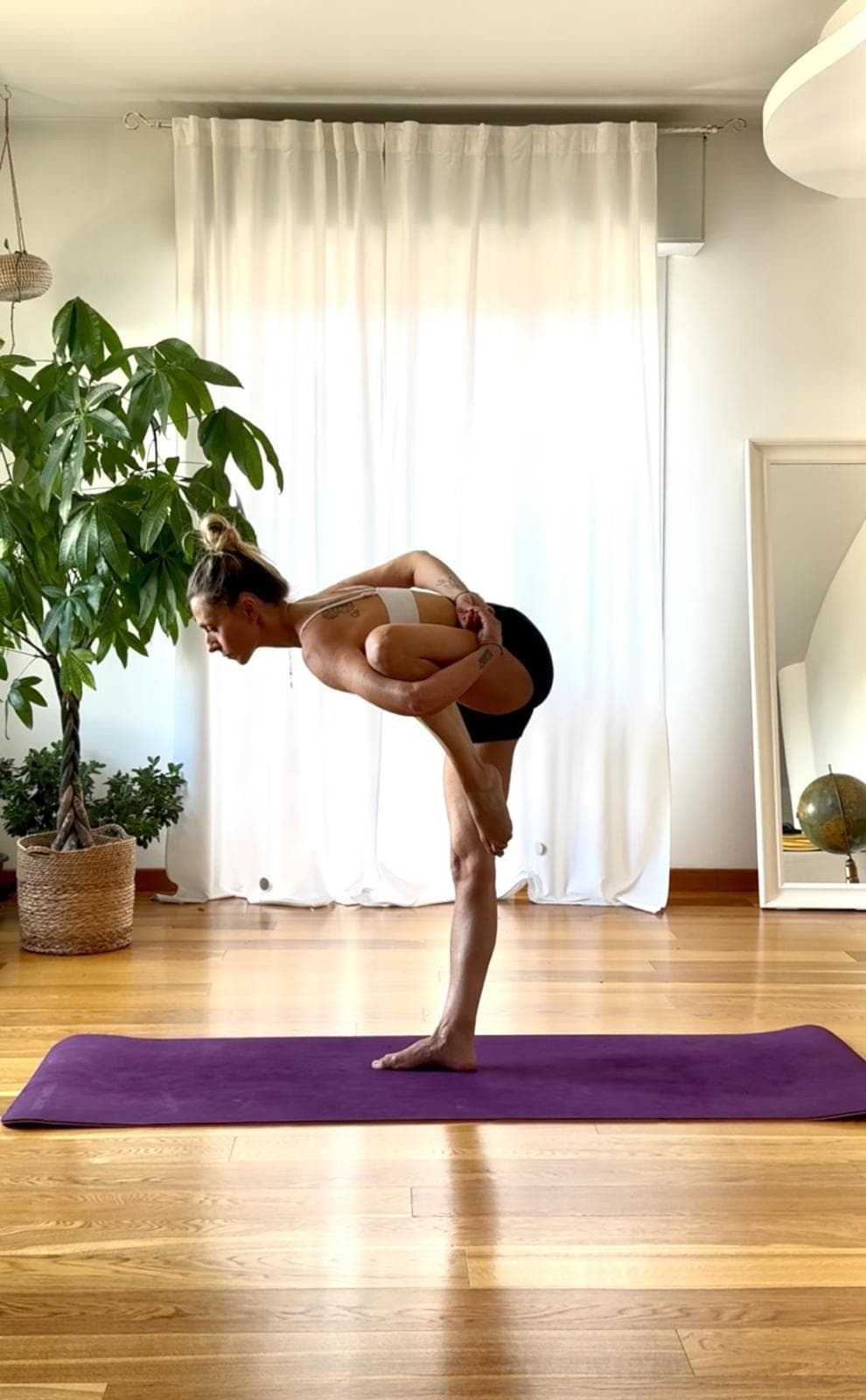
- ●More open — the bound half-lotus balance (Ardha Baddha Padma Vrksasana), for those whose hips and knees are ready.
Who it's for (and who should take care)
The tree is for everyone: only the variation you start from changes. In fact it's perfect for beginners, because it teaches rootedness before flexibility. Take care, and always use support, in case of ankle or knee problems, dizziness or low blood pressure, and during pregnancy (near a wall). When in doubt, start from the version with the toes on the floor: no one is born a tree, you become one.
A curiosity
Balance isn't a gift you're born with: it's a constant conversation between the inner ear, the eyes and the feet, which the brain updates dozens of times a second. That's why you «don't lose it»: every time you practise the tree, you're literally rewriting that dialogue. And why, on off days, you wobble more: it's not the body, it's the crowded mind that can't find its still point. The tree reminds you of it — and gives it back to you.
↗From balance to strength: the three warriors
If the tree gave you roots, Virabhadrasana gives you drive. Discover the story and the three warriors, another great classic of the Library.
The Sanskrit names of the asanas
Vrksa, warrior, dog, cobra... every name is an image. The glossary to understand what you're saying every time you step on the mat.
The tree doesn't stay still because it's rigid: it stays because it's rooted. True for the pose, and true for you. — Silvia
Frequently asked questions
From the Sanskrit vrksa (tree) + asana (pose): it's the «tree pose», a balance on one leg that imitates a tree rooted in the earth and reaching for the sky.
On the inner calf or the inner thigh, never on the side of the knee: the joint isn't made to take that sideways pressure. Choose the height where you feel stable.
The secret isn't in the legs but in the gaze and the breath: fix a still point in front of you (drishti), root the standing foot well through its four corners, and breathe slowly. Balance comes from there.
It improves balance and proprioception, strengthens ankles, feet and legs, opens the chest and corrects posture, and trains focus and calm. It's also ideal for beginners, because it teaches rootedness.