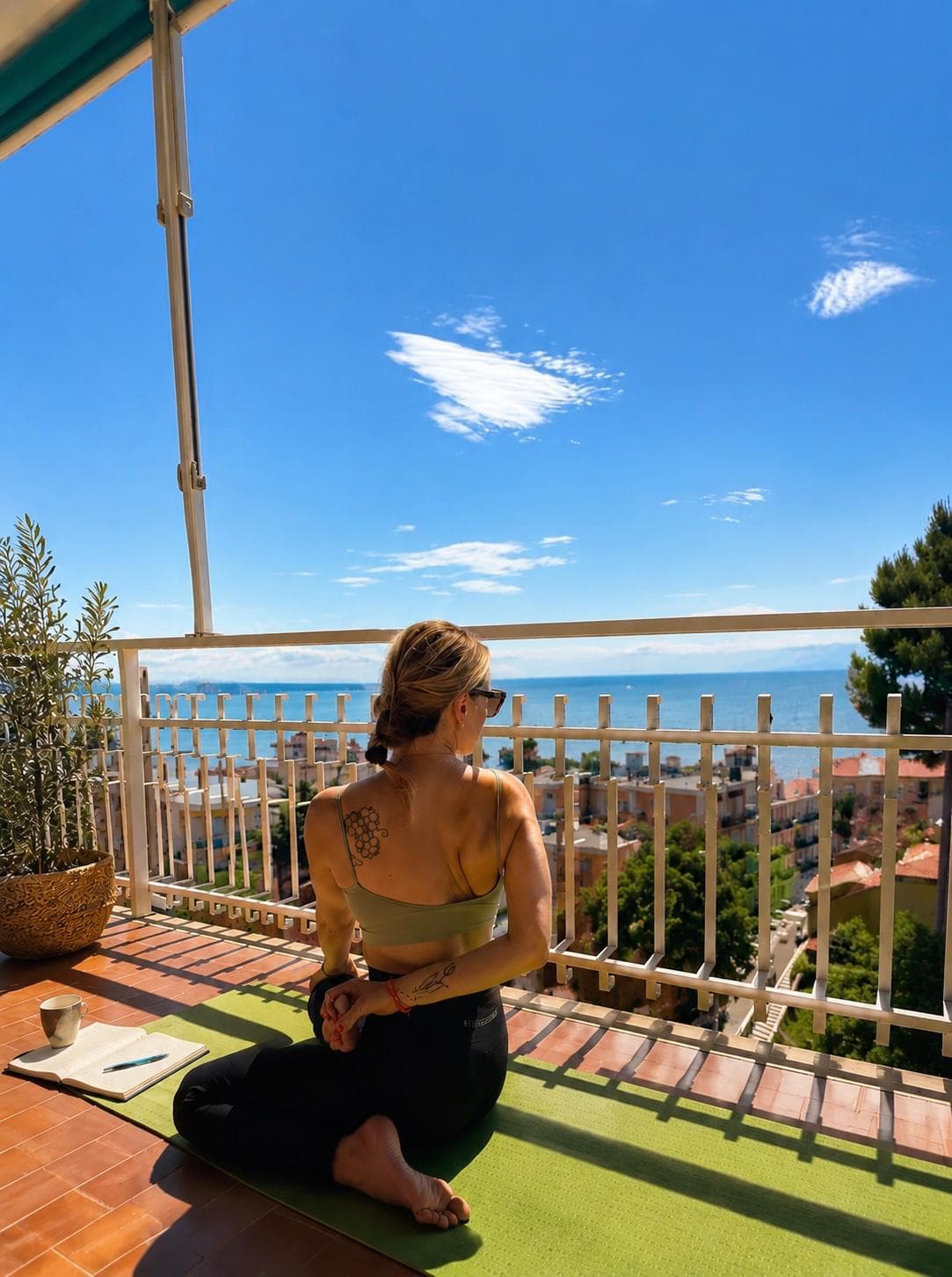
Why you can't switch off, even on holiday

Silvia Ghigliazza
Yoga Teacher
Fourth day of holiday. You're somewhere beautiful, you've slept nine hours, you don't have to be anywhere. And you feel… the same. A little flat, a little irritable, with that strange sense of waiting for something. You look around — the sea, the pool, the silence — and think: «what's wrong with me?».
There's nothing wrong with you. You simply haven't managed to switch off yet — and switching off isn't a button you press as you board the plane. In many years of teaching I've heard this sentence hundreds of times, almost always from people blaming themselves. And almost always the reason was the same — just one, and it isn't laziness.
You changed the backdrop, not the pace
Look at what today's typical holiday is made of: up early so you «don't miss the best part», the list of places to see, the travelling about, the booked restaurant, the photos to take, the messages to answer «it'll only take a second». There's even a little performance anxiety — the anxiety of having to enjoy your holiday, and having to prove it too.
The result: you're elsewhere, but you're still running. Same rush, same notifications — just with more heat and a suitcase. And here's the point: your body doesn't tell the difference between «I'm rushing for work» and «I'm rushing so I don't miss the best sunset». It only reads the rush.
That's why you can come back from a beautiful trip, full of wonderful memories — and still be exhausted. The trip was lovely. But you didn't switch off. Because switching off doesn't mean stopping doing things: it means changing pace. And those are two completely different operations.
The signs you're not really recovering
Let's do a quick check. These aren't diagnoses — they're warning bells. If you recognise three or more, your body is already talking to you:
- ●You sleep a lot but wake up unrefreshed.
- ●You struggle to fall asleep just when you finally could: the moment the body stops, the mind starts.
- ●You're irritable over tiny things. It's not a bad temper, it's a flat battery.
- ●You can't sit doing nothing: after ten minutes you reach for your phone. It's the most telling sign of all.
- ●Digestion and gut play up.
- ●You fall ill the moment you stop. The famous first-day-of-holiday cold.
The engine is off, but it's still hot
The explanation, stripped to the bone, is this: your body has two pedals. An accelerator, which switches on when you have to act, and a brake, which switches on when it needs to repair itself — it's under the brake that digestion, deep sleep and real recovery happen. Eleven months of running leave your foot glued to the accelerator.
That's why removing your commitments isn't enough. You don't arrive tired: you arrive stiff. It's like turning off the engine of a car that's been running for hours — it's off, yes, but it's still hot. And time doesn't pass faster just because you're in a hurry.
The good news is that you can act on the brake. Not with willpower — that pushes the other pedal — but with four very concrete levers.
The four levers that help the body slow down
1. The breath: the most immediate lever
When you inhale, your heartbeat speeds up a little; when you exhale, it slows down. That's why lengthening the exhale is the quickest way you have to press the brake. It isn't suggestion: it's mechanics.
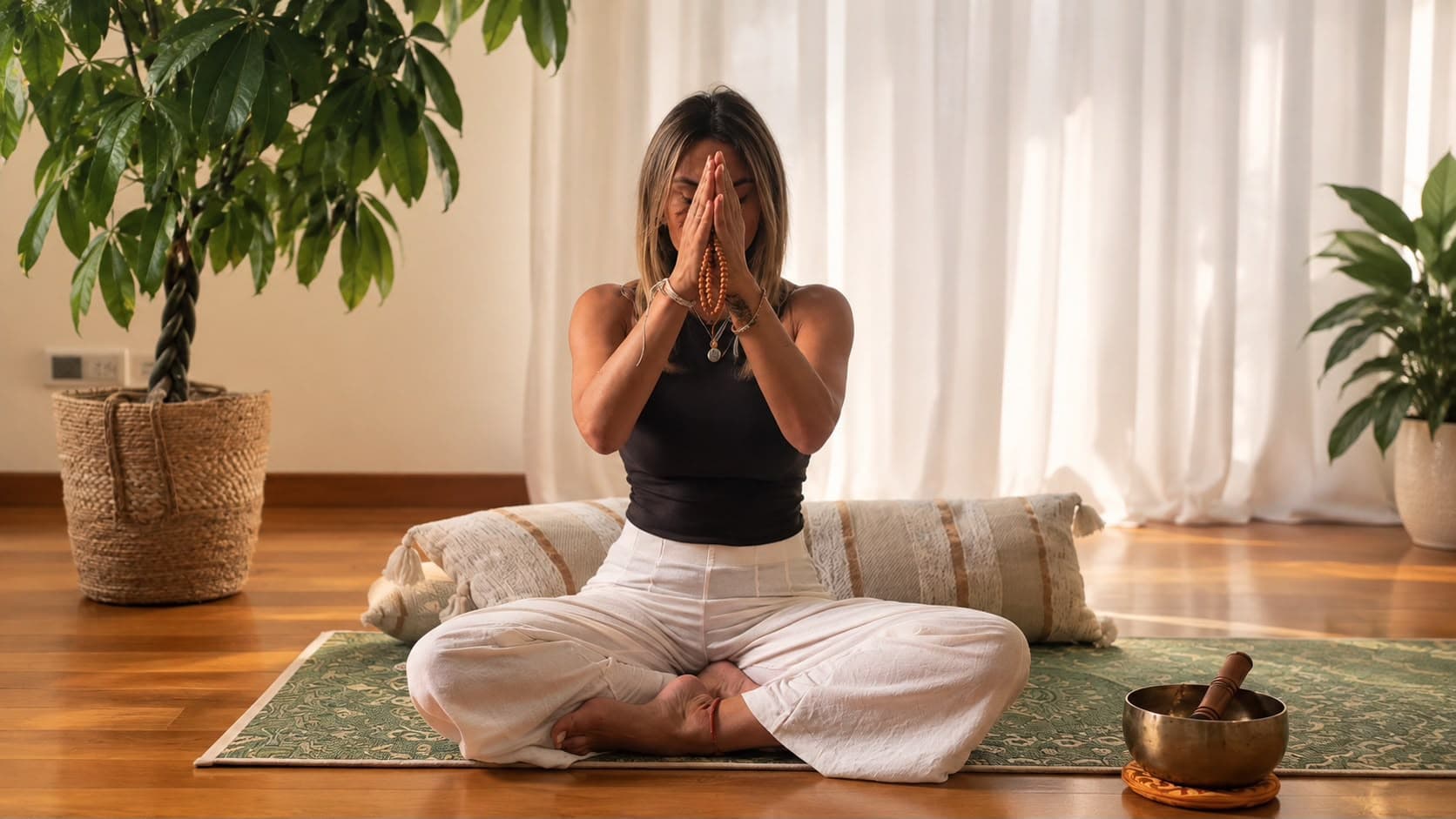
How to do it: inhale through the nose counting to four, exhale through the nose counting to six — or to eight, if it feels comfortable. Never forcing: if you're short of breath you've overdone it, shorten it. Five minutes, twice a day. You don't need a special pose or a mat: it's fine seated on the terrace, on the plane, in the car before getting out.
2. Morning light
The body has an internal clock, and natural morning light is what sets it back on time. Getting outside within the first hour of waking — even just ten minutes, even under a cloudy sky — is one of the most effective and underrated things you can do.
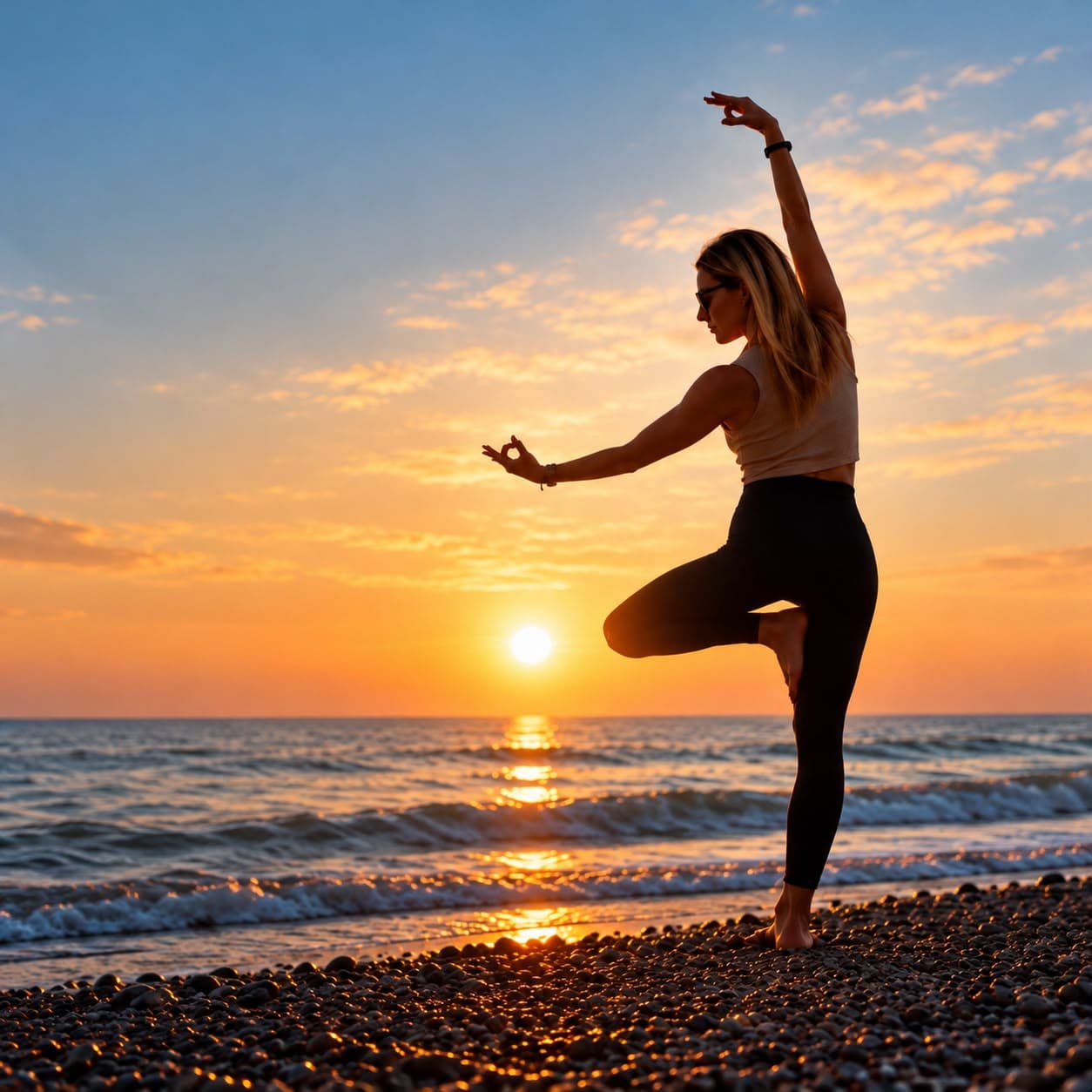
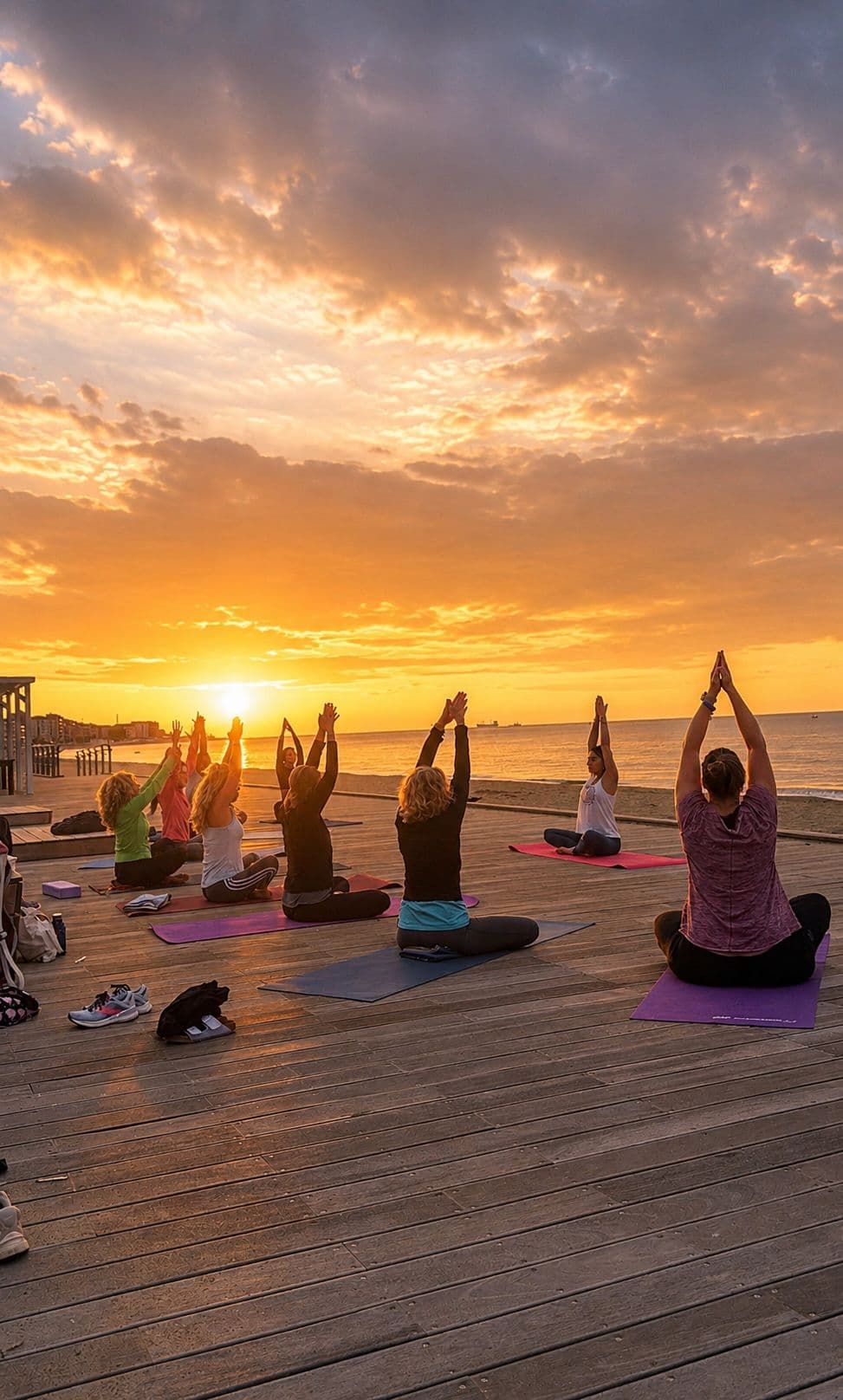
You don't need to practise anything: just be outside. And that's why a sunrise practice, or a simple slow walk as soon as you wake, is worth far more than it seems.
3. Move to discharge, not to train
Here I very often see the opposite mistake: people who arrive drained and react by training more, as if tiredness were a question of fitness. But intense movement pushes the accelerator — and if the accelerator is already stuck, you make things worse.
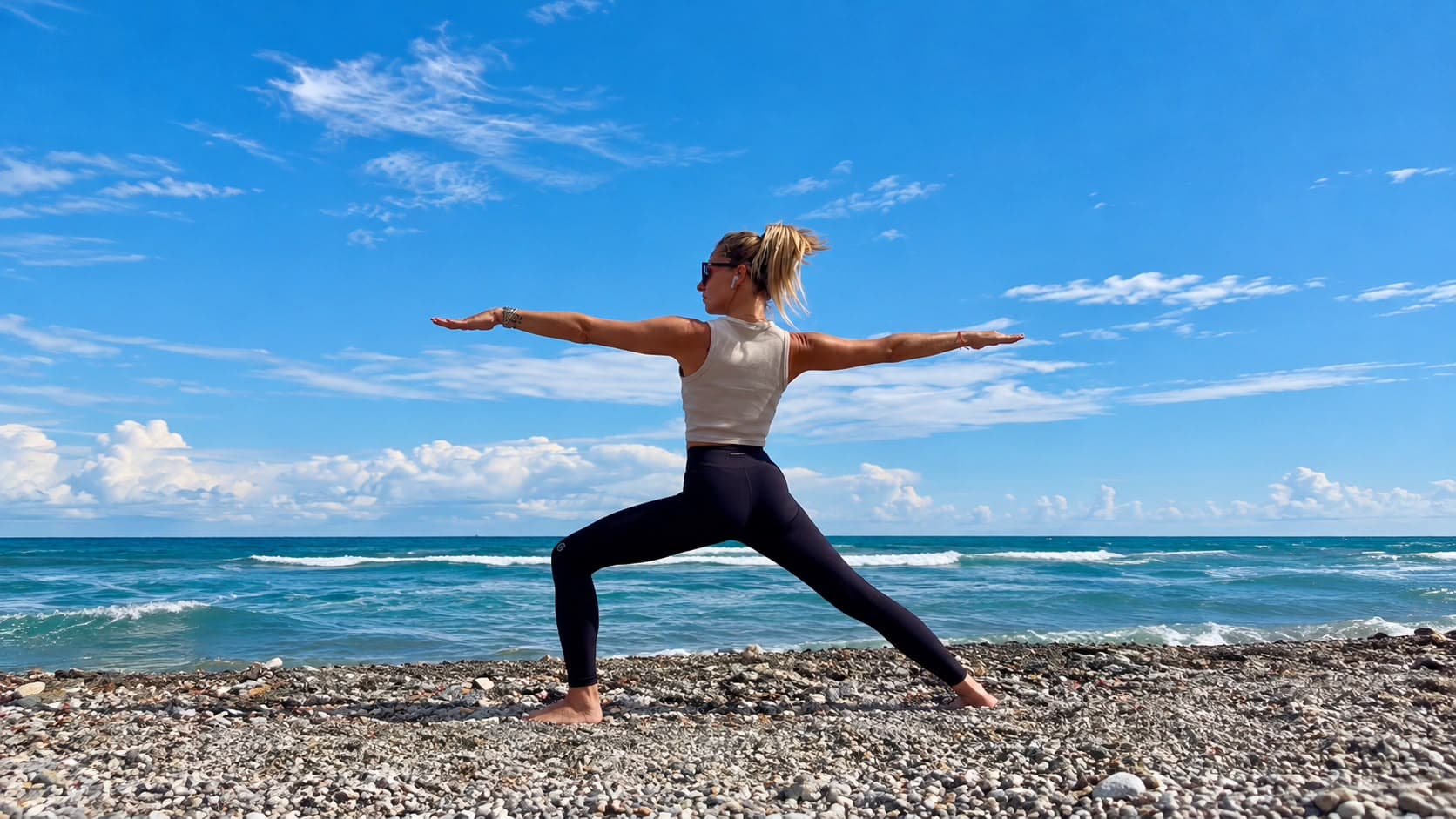
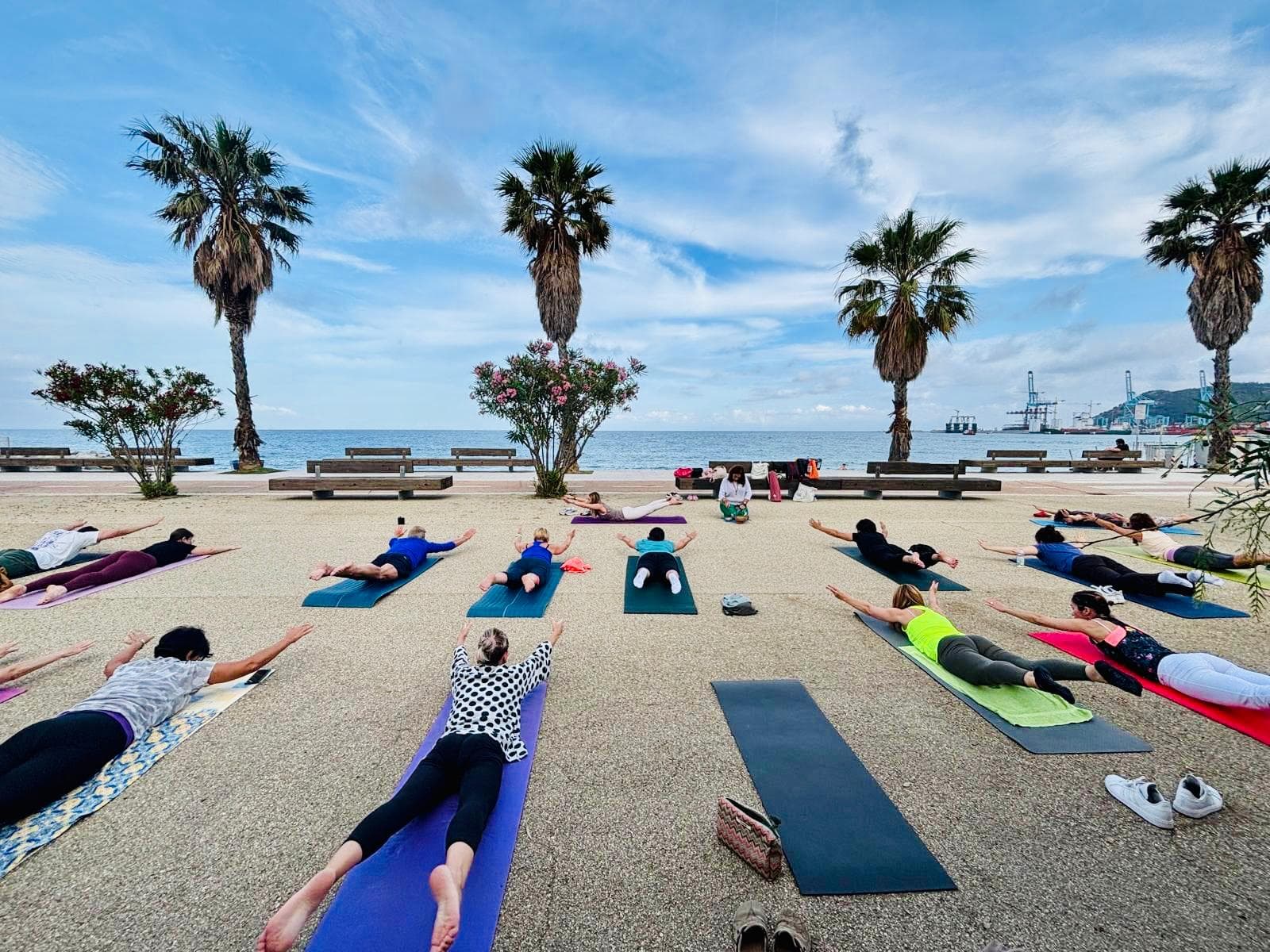
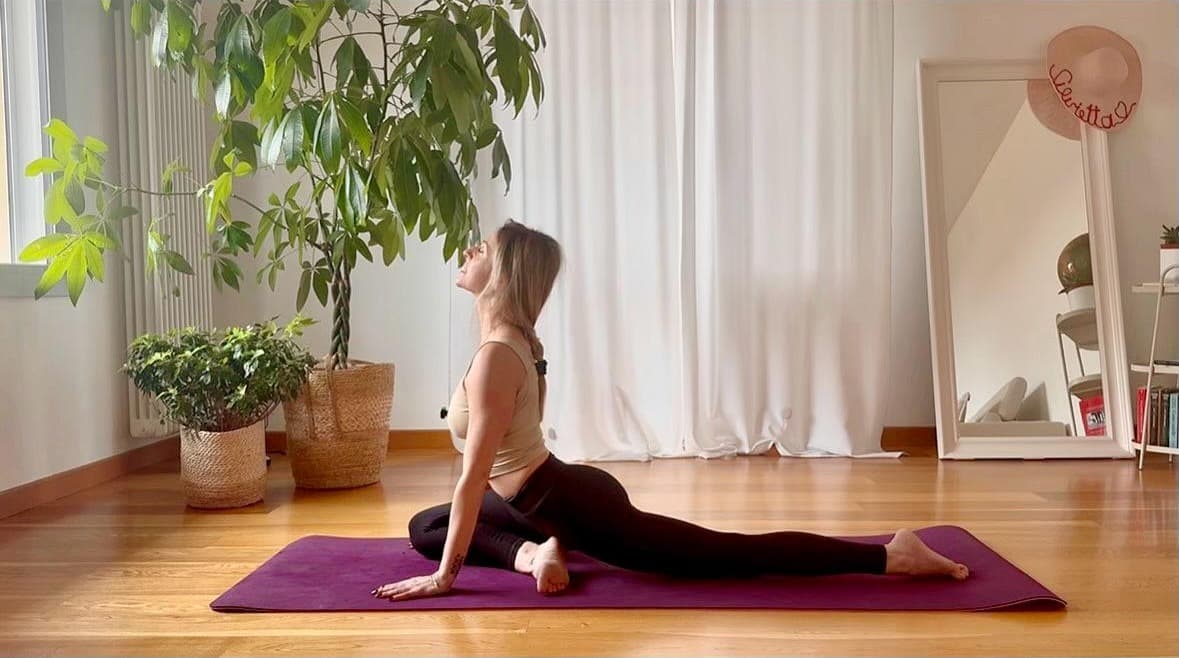
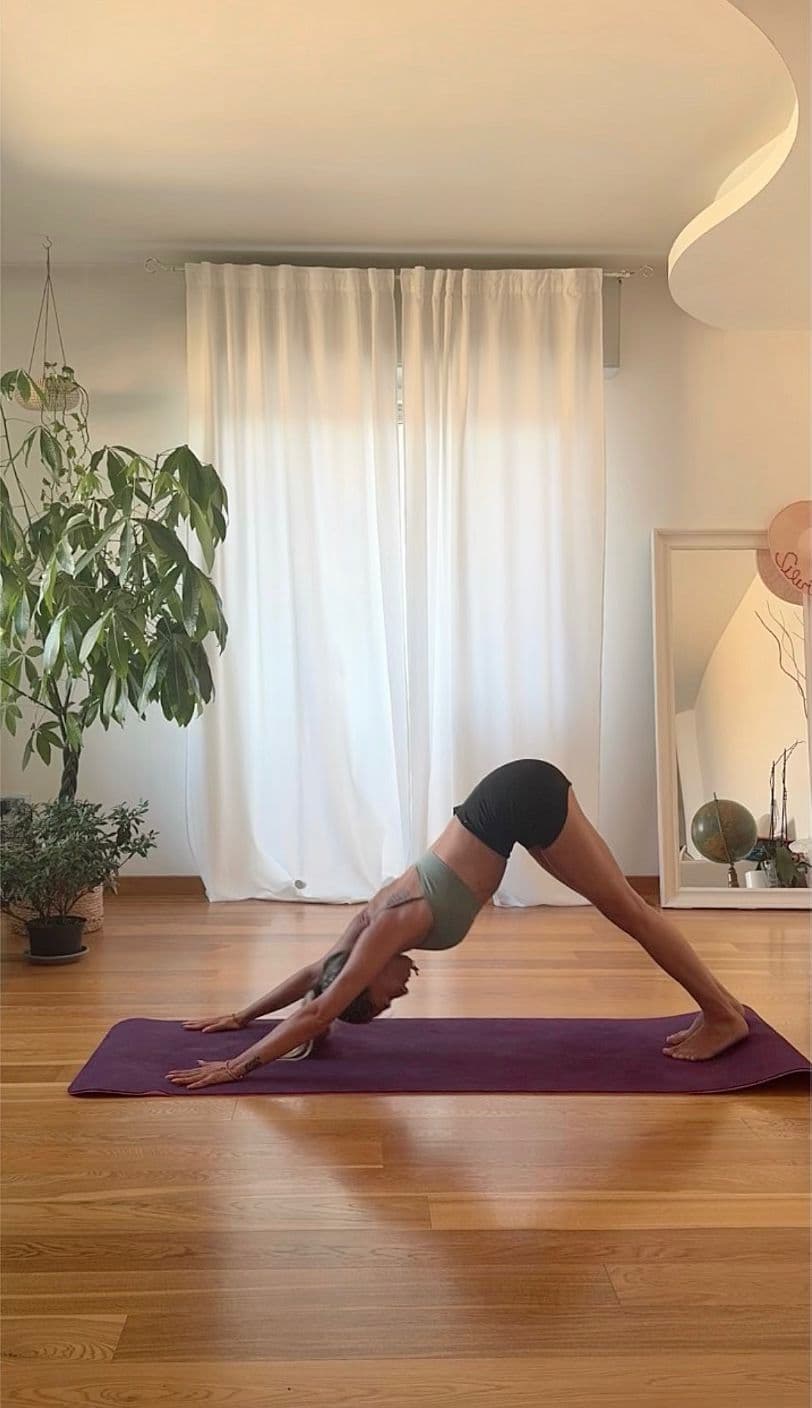
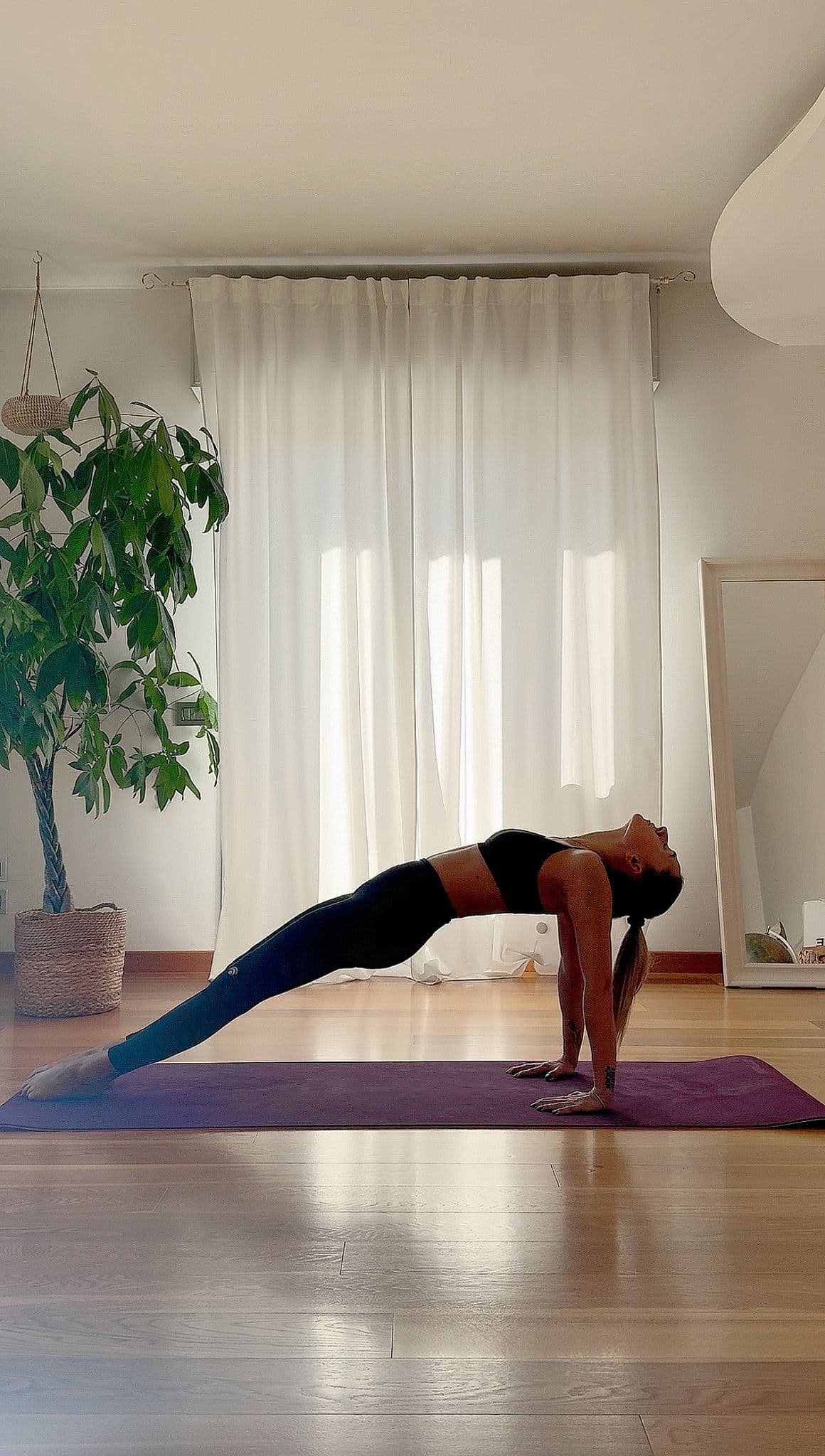
In a phase of depletion you need the opposite: slow, wide movement with a long breath. Walking without a destination, swimming gently, a soft practice with unhurried timing. It's not «easy yoga»: it's yoga with a different intention — not to build, but to drain. And if the body protests in the back, neck and shoulders, it's no coincidence: those are the first places tension settles.
4. Emptiness: the most effective and most feared lever
Things settle inside us when the mind has no tasks: that's where we process, put things in order, make connections. But that process doesn't start if every micro-pause is filled by a screen. And that's why you can spend two weeks in a wonderful place without metabolising anything: the empty spaces were there, but we plugged them all.
The advice is less romantic than it sounds: leave a day with no plan. Not «a relaxing day» full of relaxing activities — a day on which you've decided nothing. At first it'll bother you. That discomfort is exactly the symptom telling you how much you needed it.
Why a retreat works differently from a holiday
Reread the four levers: long breath, morning light, slow movement, unfilled time. On a normal holiday you have to remember them, organise them and defend them. On your own. Against a group that wants to see everything, against the phone, against eleven months of habit.
And here's the real difference, which has nothing to do with an exotic destination: on a retreat you don't have to defend that pace, because it's already the structure of the day. You practise in the morning. You eat at regular times. The afternoon has real gaps. You slow down at sunset instead of speeding up. There's nothing to prove, and no one to say no to.
Put plainly: a retreat isn't a prettier holiday. It's a holiday with a different pace — built, day after day, to make the body slow down instead of keeping it revved up. And that's why five days built like this are often worth more than two weeks spent running.
It's the principle I build the days around for the yoga retreat in Morocco that I'll be guiding in Marrakech from 23 to 27 October: practice in the morning light, excursions and culture without chasing a checklist, hammam, afternoons with real empty spaces, and a slow practice at sunset to close the day by winding down. Not for show — but because that's how the body truly recovers.
↗Under the Moroccan Sky · 23–27 October 2026
Five days built on a pace that makes the body slow down: practice at dawn, slow time, nights under the stars. Discover the full programme of the yoga retreat in Morocco, in Marrakech.
If you only have a few days: where to start
If you're reading this while on holiday with only a few days left, there's no need to overhaul everything. In order of priority:
- ●Get into the light within an hour of waking. It's the gesture with the best effort-to-benefit ratio, and it costs nothing.
- ●Five minutes of long exhaling, twice a day. Inhale for four, exhale for six.
- ●Leave one day with no plan. Just one, with no guilt.
And above all: lower your expectations about timing. If you demand to feel reborn by the third day and it doesn't happen, you add frustration just as you were trying to slow down. Switching off isn't a button. It's a descent.
Frequently asked questions
Usually for two reasons that add up. The first: if the body has been under pressure for months, it doesn't switch into recovery mode just because the commitments are over — it needs time. The second: many holidays are full of travelling, schedules and things to see, so they keep the same pace as everyday life, just with a different backdrop.
There's no number that works for everyone, because it depends on how depleted you arrived. What's often observed is that the first days serve only to slow down, and real recovery begins after that. This is why a week with a slow, regular pace can be more regenerating than two weeks spent running.
It's a very common experience. One plausible explanation is that during intense tension the body tends to postpone its repair work; when you finally stop, those processes restart and symptoms that had been kept at bay surface. If it happens often or is marked, it's worth talking to your doctor.
No. On a well-built retreat the practices are adapted to every level, beginners included, with variations for every body. In fact: if you're going through a tired spell, slow practice and breath are exactly what you need — far more than an intense session.
«But isn't a retreat only for experts?»
If the idea of a retreat appeals to you but something holds you back, it may be one of the five most common myths. We take them apart one by one.
The body isn't asking you to do more to feel better. It's asking for permission to slow down — and it's only waiting for you to give it. — Silvia