Namaste: what it really means (and why it's not just 'hello')
·6 min read

Namaste: what it really means (and why it's not just 'hello')

Silvia Ghigliazza

Silvia Ghigliazza

Yoga Teacher

Share:FacebookWhatsApp

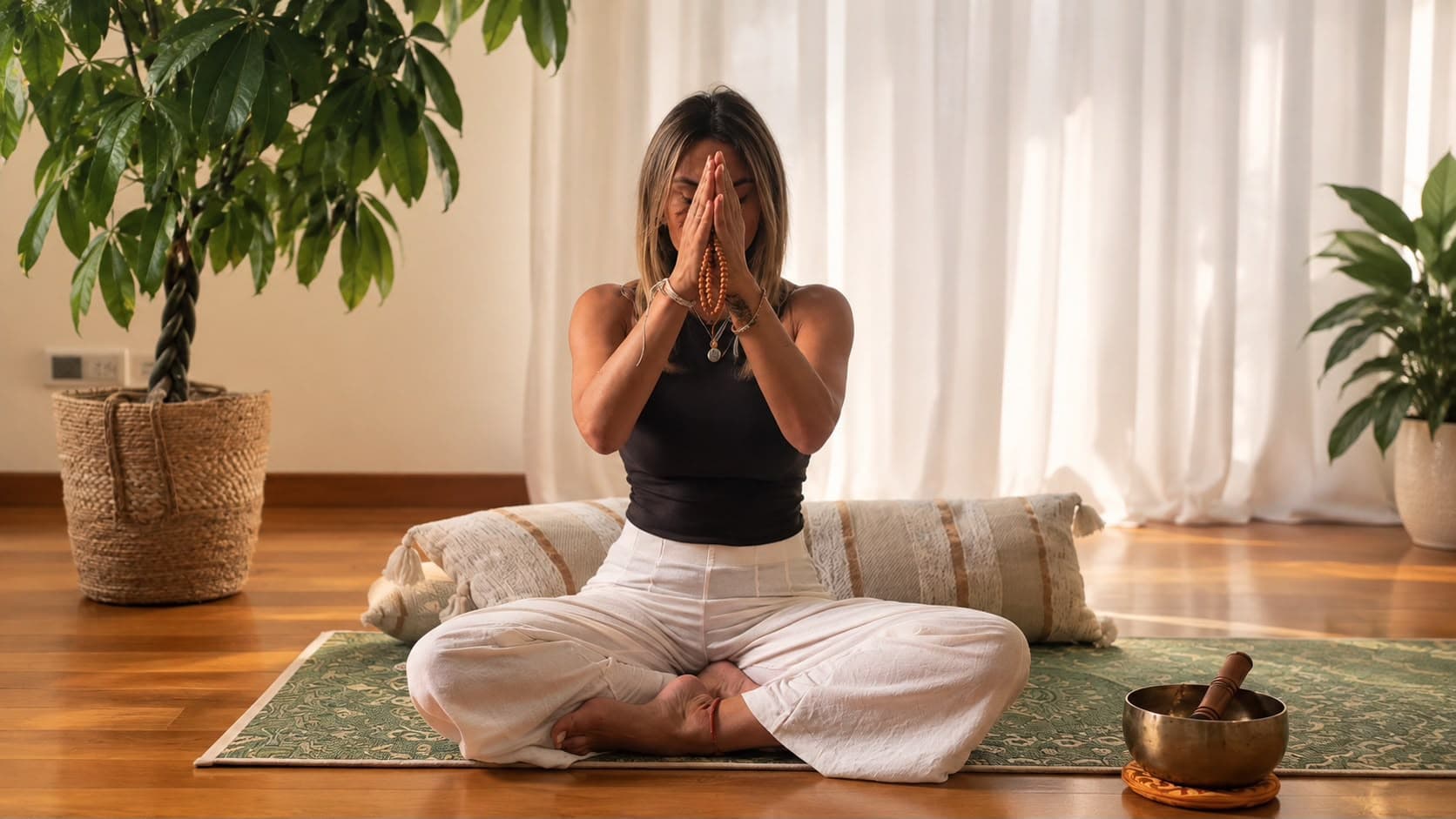
End of class. The teacher brings the palms together at the centre of the chest, closes the eyes, bows the head slightly and says: «Namaste». And everyone, together, replies. It's a beautiful moment — and almost always a small mystery: because if I asked you right now what that word really means, you'd probably say «hello». And yet, no. Or rather: not only.

Namaste is one of those words we use all the time without knowing its weight. It's worth pausing for a moment to rediscover it — because behind it lies something far bigger than a greeting.

Namaste doesn't mean 'hello' (or not only)

Let's start with the most common misconception. In India, Namaste is indeed used to greet people — both when meeting someone and when saying goodbye. So saying it means «hello» isn't entirely wrong. But it's like translating «I offer you my respect» as «hey». Technically it works, but you've thrown away everything that matters. Namaste isn't just any greeting: it's a gesture of reverence.

The roots: what it means in Sanskrit

The word breaks into two: namas, which means bow, reverence, homage; and te, which means to you. Namaste is therefore, literally, «I bow to you». Simple and immensely powerful. From namas come related words like namaskar, and Surya Namaskar — the sun salutation — is nothing other than a bow, a homage to the light.

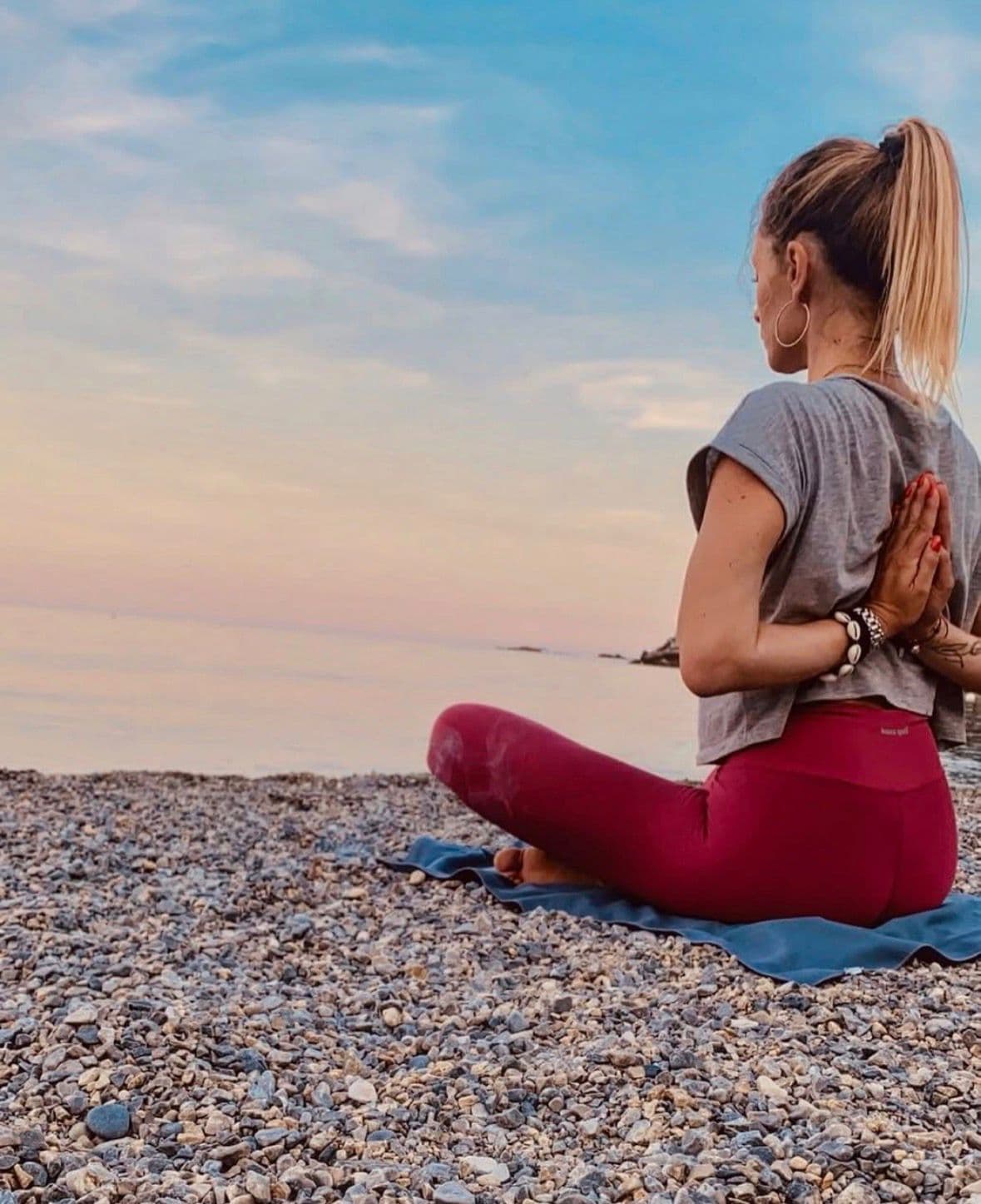
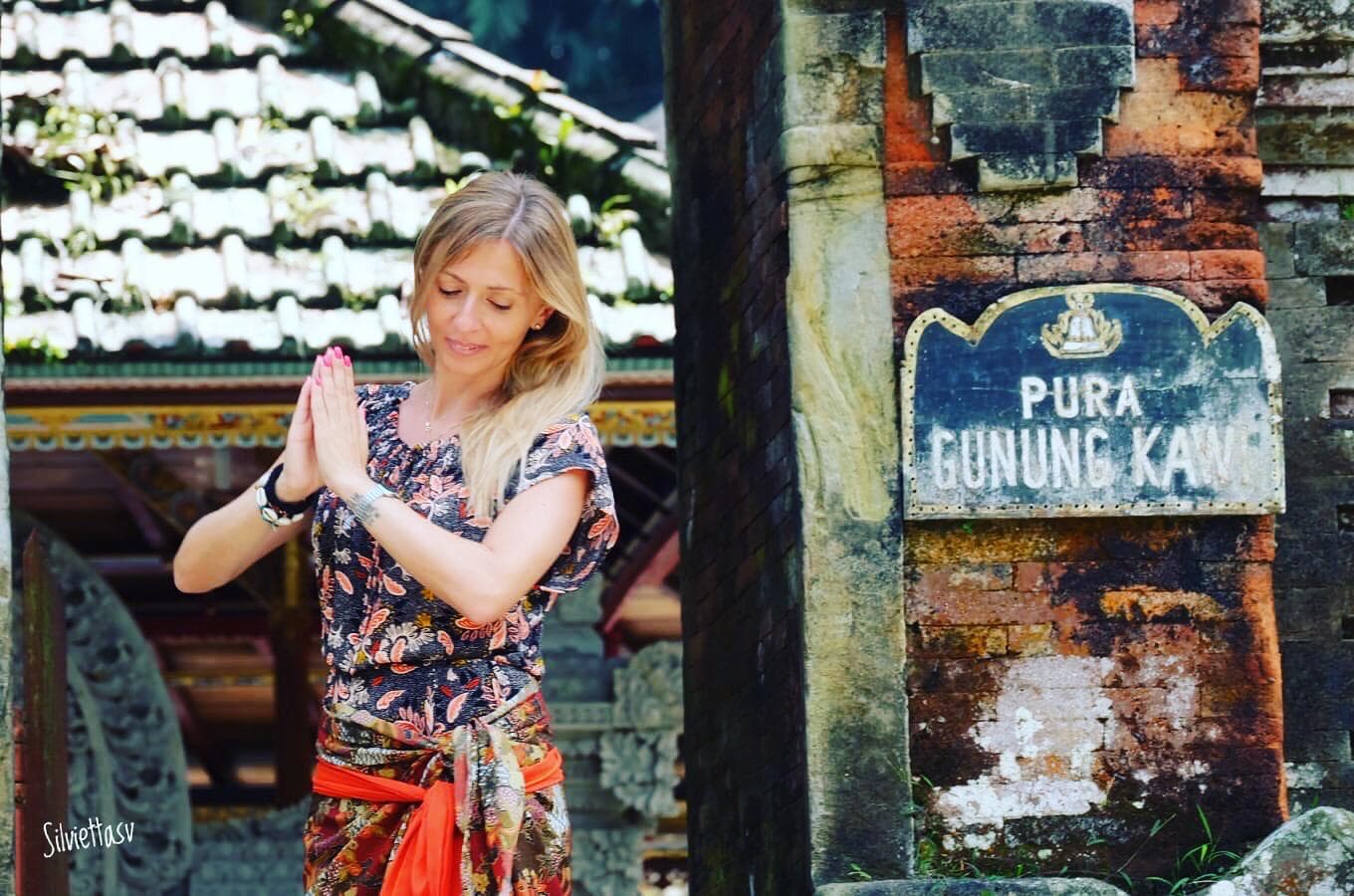
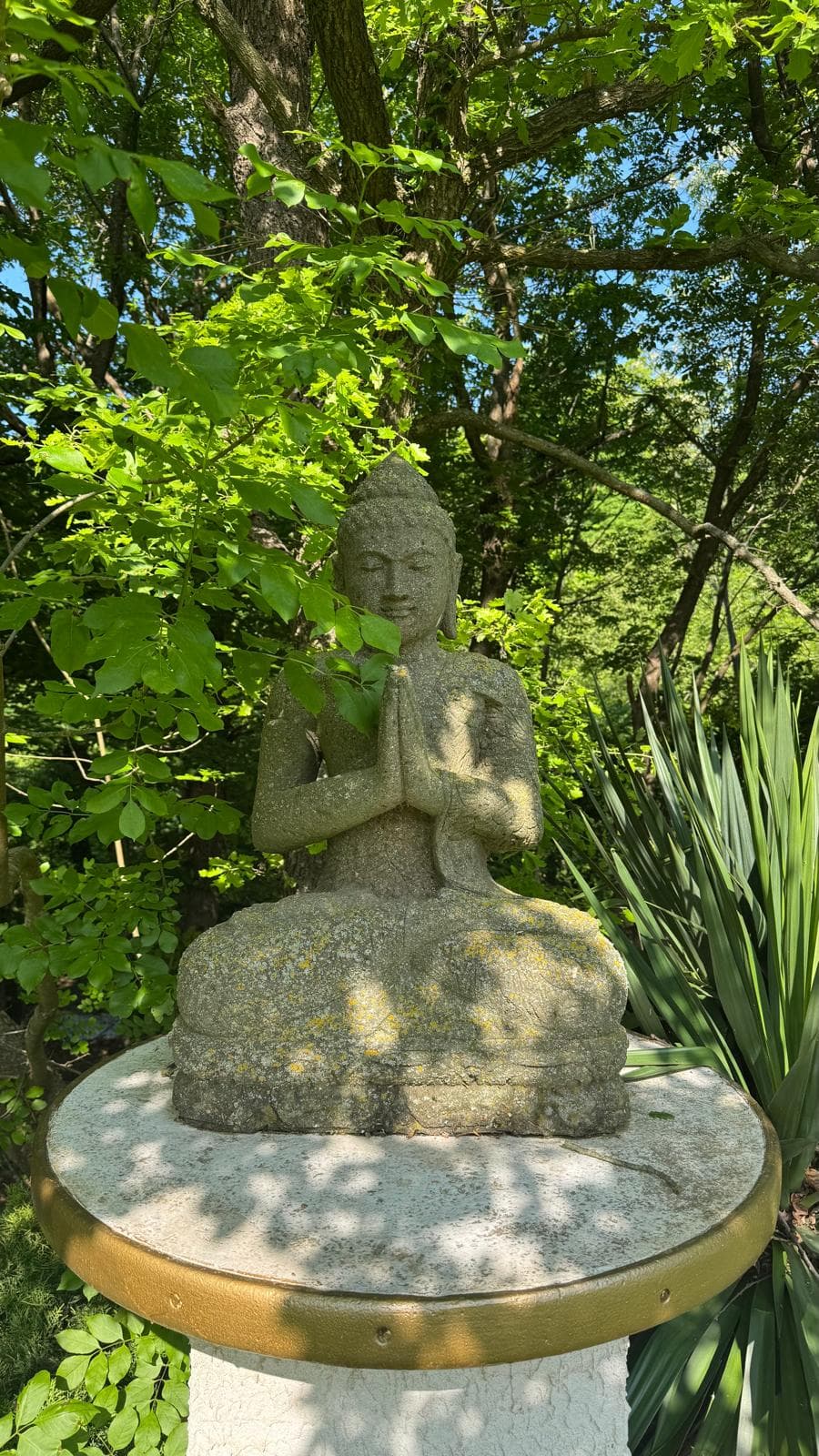
And then there's the gesture, inseparable from the word: the palms together in front of the heart, fingers pointing up, a slight bow of the head. It's called Anjali Mudra, the seal of offering. The hands don't meet on the chest by chance: they're brought there, to the height of the heart.

The deeper reading

There's also a more spiritual interpretation, much loved in yoga: «the light in me recognises and honours the light in you». It's a more modern and devotional reading than the pure etymology, but it says something beautiful — that when I bring my hands to my heart and bow to you, I'm not greeting your role or your name: I'm recognising the sacred you inhabit, the same one I inhabit. For an instant, we are equals.

When (and how) it's really used

In everyday life across the Indian subcontinent it's a respectful greeting, accompanying both meeting and parting, often directed at elders or at someone you wish to honour. In yoga, instead, we find it at the beginning or — more often — at the end of practice: the teacher bows to the students, the students to the teacher, in mutual thanks. It isn't a polite formula: it's the way of saying «thank you for sharing this time, we recognise one another».

The most common mistakes

  • ●Thinking it only means «hello»: it's a greeting, yes, but one of reverence — not a casual «hey».
  • ●The pronunciation: it's roughly «NUH-muh-steh», with the stress near the start and a short final «e», not the long, drawn-out «nama-STAY» you often hear.
  • ●Using it as a slogan or a joke («namaste in bed» and the like): it raises a smile, but it empties a word that for many is sacred.
  • ●Believing it was «invented» by yoga: it's an ancient, living greeting, part of the language and culture of millions of people.
  • ●Repeating it emptily, without the gesture or the intention: without the hands at the heart and a moment of presence, it stays a sound — not a bow.

The overuse of a sacred word

Namaste is everywhere today: printed on mugs, T-shirts, scented candles, the signs of wellness centres. It's the fate of so many Sanskrit words that have entered our vocabulary — guru, karma, mantra, chakra, avatar — words that carried a deep meaning and that, Westernised, became light, sometimes empty. «That person is my guru», «it's my karma»: we use them as figures of speech, forgetting where they come from.

It's not a prohibition, let's be clear: languages live on borrowings too, and it's perfectly fine for Namaste to be part of our world. But knowing its weight changes the way you say it. A word whose meaning you know, you no longer say out of habit: you say it with intention. And that's exactly the spirit of yoga.

A curiosity

In 2020, with the pandemic and the fear of contact, the whole world rediscovered Namaste: heads of state and public figures began greeting one another with joined palms and a bow, instead of a handshake. From a spiritual gesture to a global health gesture, in the space of a few weeks. A small paradox that says a lot: even when we forget its meaning, certain ancient forms can still come back to serve us.

↗

And 108? Yoga's other symbolic number

After the words, the numbers: why 108 appears everywhere in yoga, from the mala to the sun salutations. Another little journey into the roots of the practice.

↗

The Sanskrit names of the asanas

If Sanskrit intrigues you, here's the glossary of the pose names, word by word: what you're really saying every time you practise.

Frequently asked questions

Literally «I bow to you», from the Sanskrit namas (bow, reverence) and te (to you). It's a respectful greeting, accompanied by the gesture of the hands joined at the heart. In yoga it's also used in the more spiritual sense of «the light in me honours the light in you».

In India it's also used to greet people, so it isn't entirely wrong, but it's reductive: it's not a casual «hi», it's a gesture of reverence. Translating it only as «hello» loses all of its meaning.

You bring the palms together in front of the chest, at the height of the heart, fingers pointing up, and bow the head slightly. This gesture is called Anjali Mudra, the seal of offering.

Roughly «NUH-muh-steh», with the stress near the start and a short final «e». Not the long, drawn-out «nama-STAY» that has become common in the West.

Namaste isn't a formula to repeat at the end of class: it's remembering, for an instant, that the same light runs through all of us. — Silvia
Share

Instagram: copy the link and paste it in Stories or bio.

Read also

Vrksasana: the tree, the pose that teaches balanceThe Asana Library
·7 min read

Vrksasana

Firm roots and branches to the sky: Vrksasana, the tree, is the balance pose. Meaning, how to do it, mistakes to avoid, benefits and variations.

Read article →
The Sanskrit names of the asanas: the body parts — Part 2The Asana Library
·9 min read

Sanskrit Names of the Asanas

Sirsasana, Janu Sirsasana, Padangusthasana... many poses carry a body part in their name. Here's the decoder and what each name tells you. Part 2 of the glossary.

Read article →
Virabhadrasana: the three warriors of yogaThe Asana Library
·9 min read

Virabhadrasana

Behind the warrior pose lies a myth of fire and grief. Discover Virabhadrasana I, II and III: meaning, how to do them, mistakes and benefits.

Read article →
Rocket Yoga: the style that gets you «there faster»Start here
·8 min read

Rocket Yoga

Dynamic, playful, built to show you you're stronger than you think. But where does Rocket Yoga come from, and why that name? Let me tell you everything.

Read article →
Wanderlust 108 Milan: A Day I'll Never ForgetExperiences & places
·7 min read

Wanderlust 108 Milan

On Saturday 26 September, in CityLife park, I lived Wanderlust 108. I thought I knew what to expect: I hadn't counted on all that emotion.

Read article →
108: The Sacred Number of YogaPhilosophy & origins
·7 min read

What Does 108 Mean in Yoga (and Why It's Everywhere)

You'll find it on the mala, in sun salutations, even on festival stages. But why 108? A little journey into yoga's most beloved number.

Read article →
Yoga on a Plane: the Practice You Carry Even at 30,000 FeetExperiences & places
·7 min read

Yoga on a Plane

Eleven hours in a seat, the body stiffening, the mind switching off. What if part of that time became care? Yoga travels with you — even in the cabin.

Read article →
Why you can't switch off, even on holidayBody & wellbeing
·7 min read

Why You Can't Switch Off on Holiday (and What to Do)

You've been on holiday for days and still can't switch off. It's not your fault: the body has no on/off switch. Here's what it really needs to slow down.

Read article →
5 Yoga Retreat Myths That Are Holding You BackRetreats & travel
·6 min read

5 Yoga Retreat Myths (and the Truth That Sets You Free)

Do you need to be flexible? Experienced? Will you feel out of place? Is it all-day meditation and just salad? Five yoga retreat myths, busted one by one.

Read article →
Have you ever lived a yoga retreat? 7 reasons to gift yourself one at least onceRetreats & travel
·7 min read

Yoga retreat

From a real break from routine to a practice that leaps forward, to authentic bonds: 7 reasons to gift yourself a yoga retreat at least once in your life.

Read article →
Afraid to travel alone? Why a yoga retreat is the perfect tripRetreats & travel
·5 min read

Afraid to travel alone? Why a yoga retreat is the perfect trip

The fear of travelling alone is real and legitimate. Yet a yoga retreat is one of the most beautiful trips to live even without knowing anyone. Here's why.

Read article →
Yoga in Ibiza for the solstice: how a teacher prepares (beyond the sunscreen)Experiences & places
·8 min read

Yoga in Ibiza for the solstice

I'm off to Ibiza for the summer solstice — but before the suitcase comes the inner work. My diary of preparation, sequences and two enchanting places.

Read article →
Summer solstice and yoga: meaning, 108 Sun Salutations and the International Day of YogaPhilosophy & origins
·8 min read

Summer solstice and yoga

What the summer solstice represents in yoga, why we celebrate the 108 Sun Salutations and why 21 June is the International Day of Yoga.

Read article →
Sunrise yoga by the sea: the awakening that changes your dayExperiences & places
·8 min read

Sunrise yoga by the sea

Why practising yoga at dawn by the sea amplifies the benefits: air ionisation, the sound of the waves, a gentle awakening of body and mind, and the priceless connection of a group sharing the same moment.

Read article →
How to prepare for a yoga retreat (especially if it's your first)Retreats & travel
·7 min read

How to prepare for a yoga retreat

What to pack, what to expect and how to arrive in the right spirit at your first yoga retreat, even if you're travelling alone.

Read article →
Yoga in Ibiza: the island of light where practice becomes celebrationExperiences & places
·6 min read

Yoga in Ibiza

Why Ibiza is one of the world's most loved yoga destinations, when to go and what makes practising during the Summer Solstice so special.

Read article →
Yoga in Liguria with a sea view: breathing to the rhythm of the wavesExperiences & places
·6 min read

Yoga in Liguria with a sea view

Why practising yoga by the sea amplifies the benefits, and where to live this experience along the Ligurian Riviera between Savona and Varazze.

Read article →
The origins of yoga: from the Vedas to today, the story few tellPhilosophy & origins
·10 min read

Origins and history of yoga

A journey into the true roots of yoga: from the Vedas to the Yoga Sutras to today's mat. Why in the beginning yoga wasn't about spectacular poses, but about silence.

Read article →
The Sanskrit names of asanas: the glossary to understand what you say on the mat — Part 1The Asana Library
·8 min read

Sanskrit names of asanas

Bhujangasana, Adho Mukha Svanasana, Marjariasana... what do they really mean? A clear, curious glossary to decode the Sanskrit names of yoga poses. We start with the animals.

Read article →
Yoga for beginners: the guide to truly getting startedStart here
·6 min read

Yoga for beginners

Everything you need to know to start yoga from scratch: what you need, how to overcome the most common doubts and where to begin.

Read article →
Which style of yoga is right for you?Start here
·8 min read

Hatha, Vinyasa, Ashtanga or Rocket

Hatha, Vinyasa, Ashtanga, Rocket: a clear guide to the differences between the main yoga styles, to understand which one to start from based on your goals.

Read article →
Posterior Chain & Forward Folds — Why They're Essential (and Why You Should Really Work on Them)Body & wellbeing
·9 min read

Posterior Chain & Forward Folds — Why They're Essential (and Why You Should Really Work on Them)

If you feel tension behind your legs, stiffness in your back or struggle with forward folds, you're most likely feeling a shortened posterior chain.

Read article →
Sciatica and Piriformis Syndrome — how to recognise them and how Yoga can truly helpBody & wellbeing
·10 min read

Sciatica and Piriformis Syndrome

Lower back pain radiating down the leg isn't just back pain. Discover what the piriformis is and how yoga can help.

Read article →
Period pain? Turn those days into a moment of true self-listeningBody & wellbeing
·8 min read

Yoga for Menstrual Pain

Gentle yoga poses to relieve menstrual cramps, abdominal bloating and back pain during your cycle.

Read article →
Yoga for anxiety and stress: breathe, you're in the right placeBody & wellbeing
·9 min read

Yoga for Anxiety and Stress

A breathing exercise to do right now, the most effective yoga poses and the breathing that calms your mind: everything to manage anxiety and stress.

Read article →
Stiff back and sky-high stress? Here's why Yoga is your compass (even if you're not flexible!)Body & wellbeing
·8 min read

Yoga for Back Pain

Discover how yoga can release lower back and neck tension with safe, simple poses — even if you're not flexible.

Read article →

Get yoga tips from Silvia

Subscribe for practical tips from the adaptive yoga method.

All exercises in this blog follow Silvia's adaptive method

Discover the Adaptive Method →