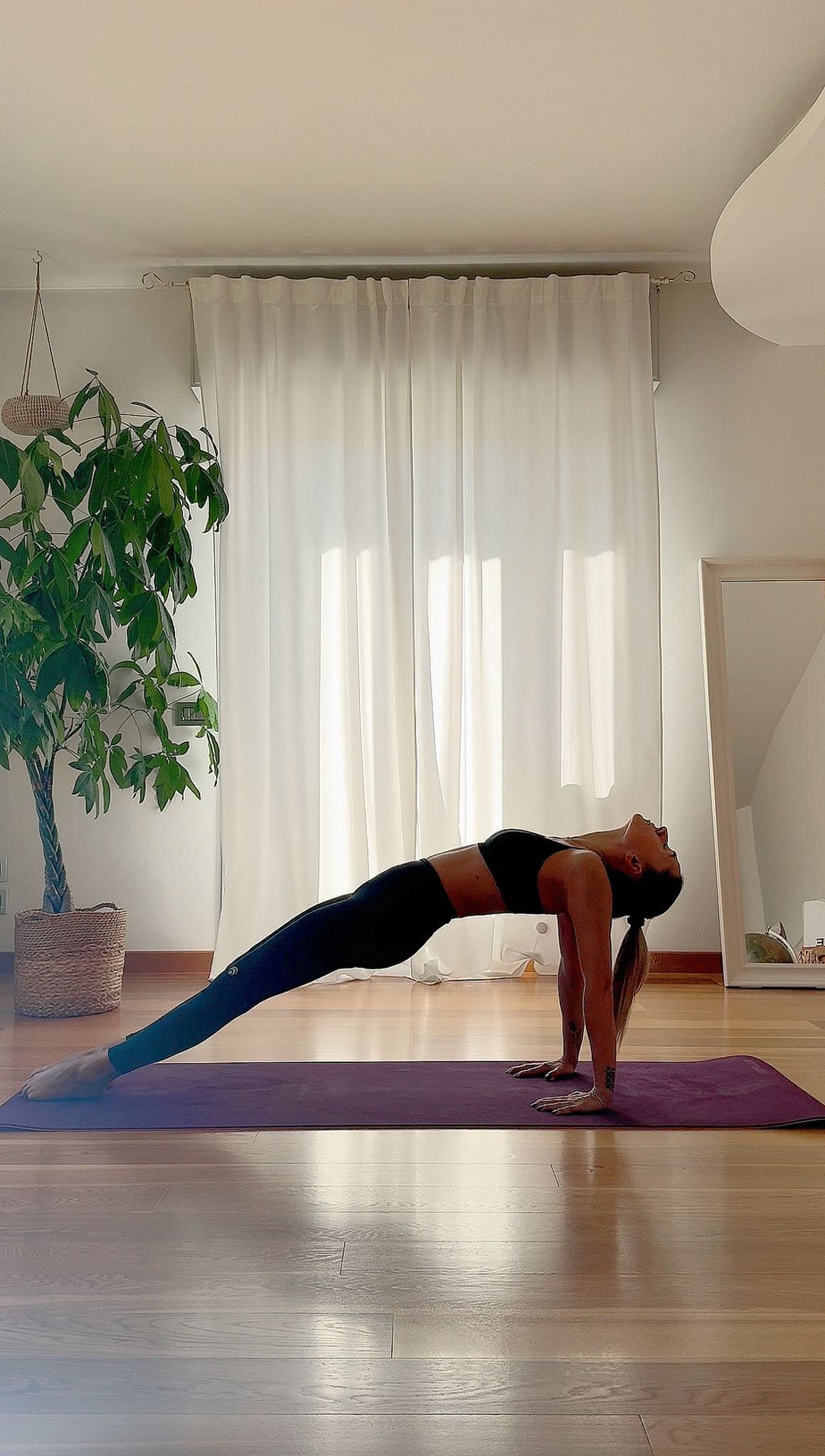
Ustrasana: the camel, the pose that opens the heart
·7 min read

Ustrasana: the camel, the pose that opens the heart

Silvia Ghigliazza

Silvia Ghigliazza

Yoga Teacher

Share:FacebookWhatsApp

We spend our days closing in: hunched over the desk, the phone, our worries. The shoulders round forward, the chest caves in, the breath goes shallow. Then comes the camel — Ustrasana — and does the exact opposite: it asks you to open. And at first it's a little scary, because opening up, as we know, is always the hardest thing.

After the balance of the tree, today in the Asana Library we step into the world of backbends: the poses that open the heart. And the camel is the perfect doorway in.

The name: what Ustrasana means

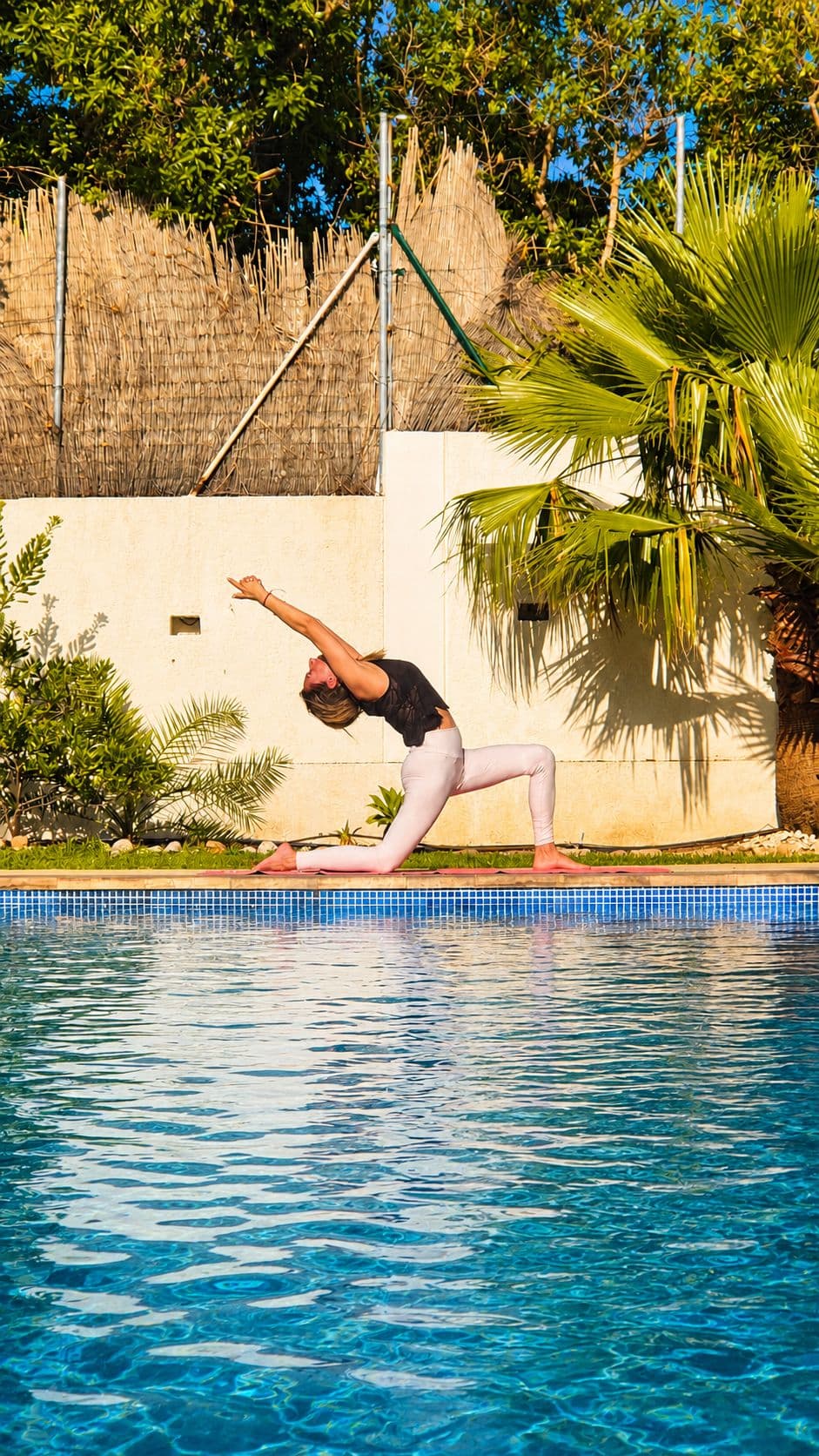
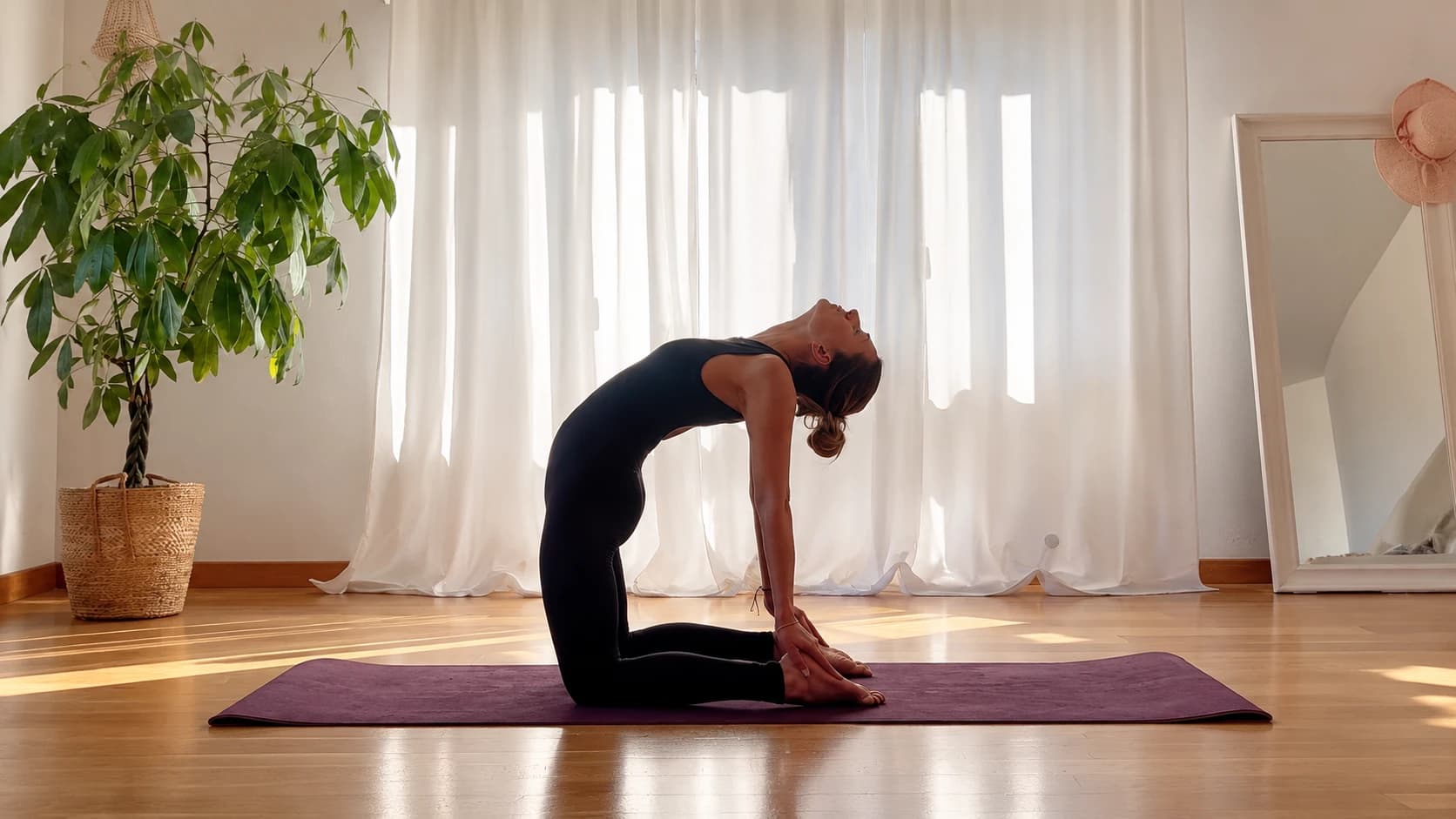
The name is simple: ustra means camel, asana is the pose. Ustrasana is the camel pose. It's pronounced roughly ush-tras-ana. The name comes from the shape: the body arching backwards recalls the hump of the animal. But, as we'll see, the camel of this pose doesn't carry burdens — it lets them go.

The symbol: opening what we protect

All backbends share one meaning: they open the most vulnerable part of us — the chest, the throat, the belly — the part we instinctively keep sheltered. It's no coincidence that in the face of danger we curl up. Arching backwards is the opposite gesture: offering the heart instead of defending it. That's why the camel isn't just an exercise for the back: it's a small act of courage.

How to enter it, step by step

  • ●Kneel down, shins on the floor, knees hip-width apart and your pelvis right over your knees.
  • ●Bring your hands to your lower back, fingers pointing down, and draw your elbows towards each other.
  • ●Lengthen your tailbone down and lift your sternum up and back: the opening comes from the chest, not the waist.
  • ●If you're steady, reach your hands to your heels one at a time, keeping the pelvis forward, over the knees (thighs stay vertical).
  • ●Keep your neck in line with the spine, gaze up; let the head drop back only if your neck is comfortable. Breathe.
  • ●To come out, rise up leading with the chest (not the head) and rest for a few breaths in child's pose.

The 3 most common mistakes

  • ●Collapsing into the lower back: crunching the low back instead of lengthening it hurts and closes the chest. Lengthen up first, then arch — the opening comes from the sternum.
  • ●Pushing the pelvis back: if the hips slide behind the knees, the pose «breaks» at the waist. Push the pelvis forward, thighs vertical.
  • ●Throwing the head back sharply: it compresses the neck. Let the head drop only with control, or keep it neutral with the gaze up.

The benefits

  • ●Opens the chest, shoulders, throat, belly and hip flexors: everything that a seated life shortens.
  • ●Strengthens the back and improves posture, countering the tendency to «close» forward.
  • ●Gives energy: backbends are stimulating, awakening the breath and your presence.
  • ●Encourages an emotional release: opening the chest sometimes stirs something inside too. It's normal, and precious.

The variations, from easiest to most advanced

  • ●Easier — keep your hands on your lower back and don't reach for the heels: opening the chest matters more than depth.
  • ●Comfortable — tuck your toes so the heels rise and your hands reach them without forcing; or rest your hands on two blocks beside your ankles.
  • ●Intermediate — one hand on a heel and one on the back, to learn the opening without losing control.
  • ●Advanced — the full camel with the head dropping back; then, in time, Laghu Vajrasana, towards deeper backbends like Kapotasana.

Who it's for (and who should take care)

The camel is accessible to almost everyone in its gentle version (hands on the back). Take care, go gradually and get guidance in case of lower-back or neck problems, hernias, high or low blood pressure, migraine and during pregnancy. One rule that always applies: after a backbend, give yourself a counter-pose that gently rounds the back again, like child's pose. The body loves contrasts — but gentle ones.

A curiosity

Don't be surprised if, coming out of the camel, you feel strangely moved, or elated, or with the urge to take a deep breath. Backbends open the area of the chest — the one yoga associates with the heart, the anahata — and sometimes release tension you didn't know you were holding. It's not magic: it's a body that, by opening, remembers what it's like to be without defences. Even just for one breath.

↗

From opening to balance: the tree

If the camel opened your heart, Vrksasana teaches you to stay. Discover the tree pose, another pillar of the Library.

↗

The Sanskrit names of the asanas

Ustra, vrksa, warrior... every name is an image. The glossary to understand what you're saying every time you step on the mat.

Closing is a reflex; opening is a choice. The camel reminds you that courage, sometimes, is just this: offering your heart instead of defending it. — Silvia

Frequently asked questions

From the Sanskrit ustra (camel) + asana (pose): it's the «camel pose», a kneeling backbend in which the body arches open across the chest, with a shape that recalls the animal's profile.

It opens the chest, shoulders, throat and hip flexors, strengthens the back and improves posture, gives energy and encourages a fuller breath. It's a great antidote to the tension of spending many hours seated.

The secret is to lengthen before you arch: bring the tailbone down, lift the sternum up and open from the chest, not from the lower back. Keep the pelvis forward, over the knees, and stay in the hands-on-the-back version until you feel ready.

Yes, in its gentle version (hands on the lower back, without reaching the heels). What counts is opening the chest, not depth. Go gradually and always finish with a counter-pose like child's pose.
Share

Instagram: copy the link and paste it in Stories or bio.

Read also

Vrksasana: the tree, the pose that teaches balanceThe Asana Library
·7 min read

Vrksasana

Firm roots and branches to the sky: Vrksasana, the tree, is the balance pose. Meaning, how to do it, mistakes to avoid, benefits and variations.

Read article →
Namaste: what it really means (and why it's not just 'hello')Philosophy & origins
·6 min read

What Does Namaste Mean (and Why It's Not Just 'Hello')

We say it at the end of class, we print it on T-shirts — but Namaste doesn't mean 'hello'. Here are its Sanskrit roots and the meaning we've lost.

Read article →
The Sanskrit names of the asanas: the body parts — Part 2The Asana Library
·9 min read

Sanskrit Names of the Asanas

Sirsasana, Janu Sirsasana, Padangusthasana... many poses carry a body part in their name. Here's the decoder and what each name tells you. Part 2 of the glossary.

Read article →
Virabhadrasana: the three warriors of yogaThe Asana Library
·9 min read

Virabhadrasana

Behind the warrior pose lies a myth of fire and grief. Discover Virabhadrasana I, II and III: meaning, how to do them, mistakes and benefits.

Read article →
Rocket Yoga: the style that gets you «there faster»Start here
·8 min read

Rocket Yoga

Dynamic, playful, built to show you you're stronger than you think. But where does Rocket Yoga come from, and why that name? Let me tell you everything.

Read article →
Wanderlust 108 Milan: A Day I'll Never ForgetExperiences & places
·7 min read

Wanderlust 108 Milan

On Saturday 26 September, in CityLife park, I lived Wanderlust 108. I thought I knew what to expect: I hadn't counted on all that emotion.

Read article →
108: The Sacred Number of YogaPhilosophy & origins
·7 min read

What Does 108 Mean in Yoga (and Why It's Everywhere)

You'll find it on the mala, in sun salutations, even on festival stages. But why 108? A little journey into yoga's most beloved number.

Read article →
Yoga on a Plane: the Practice You Carry Even at 30,000 FeetExperiences & places
·7 min read

Yoga on a Plane

Eleven hours in a seat, the body stiffening, the mind switching off. What if part of that time became care? Yoga travels with you — even in the cabin.

Read article →
Why you can't switch off, even on holidayBody & wellbeing
·7 min read

Why You Can't Switch Off on Holiday (and What to Do)

You've been on holiday for days and still can't switch off. It's not your fault: the body has no on/off switch. Here's what it really needs to slow down.

Read article →
5 Yoga Retreat Myths That Are Holding You BackRetreats & travel
·6 min read

5 Yoga Retreat Myths (and the Truth That Sets You Free)

Do you need to be flexible? Experienced? Will you feel out of place? Is it all-day meditation and just salad? Five yoga retreat myths, busted one by one.

Read article →
Have you ever lived a yoga retreat? 7 reasons to gift yourself one at least onceRetreats & travel
·7 min read

Yoga retreat

From a real break from routine to a practice that leaps forward, to authentic bonds: 7 reasons to gift yourself a yoga retreat at least once in your life.

Read article →
Afraid to travel alone? Why a yoga retreat is the perfect tripRetreats & travel
·5 min read

Afraid to travel alone? Why a yoga retreat is the perfect trip

The fear of travelling alone is real and legitimate. Yet a yoga retreat is one of the most beautiful trips to live even without knowing anyone. Here's why.

Read article →
Yoga in Ibiza for the solstice: how a teacher prepares (beyond the sunscreen)Experiences & places
·8 min read

Yoga in Ibiza for the solstice

I'm off to Ibiza for the summer solstice — but before the suitcase comes the inner work. My diary of preparation, sequences and two enchanting places.

Read article →
Summer solstice and yoga: meaning, 108 Sun Salutations and the International Day of YogaPhilosophy & origins
·8 min read

Summer solstice and yoga

What the summer solstice represents in yoga, why we celebrate the 108 Sun Salutations and why 21 June is the International Day of Yoga.

Read article →
Sunrise yoga by the sea: the awakening that changes your dayExperiences & places
·8 min read

Sunrise yoga by the sea

Why practising yoga at dawn by the sea amplifies the benefits: air ionisation, the sound of the waves, a gentle awakening of body and mind, and the priceless connection of a group sharing the same moment.

Read article →
How to prepare for a yoga retreat (especially if it's your first)Retreats & travel
·7 min read

How to prepare for a yoga retreat

What to pack, what to expect and how to arrive in the right spirit at your first yoga retreat, even if you're travelling alone.

Read article →
Yoga in Ibiza: the island of light where practice becomes celebrationExperiences & places
·6 min read

Yoga in Ibiza

Why Ibiza is one of the world's most loved yoga destinations, when to go and what makes practising during the Summer Solstice so special.

Read article →
Yoga in Liguria with a sea view: breathing to the rhythm of the wavesExperiences & places
·6 min read

Yoga in Liguria with a sea view

Why practising yoga by the sea amplifies the benefits, and where to live this experience along the Ligurian Riviera between Savona and Varazze.

Read article →
The origins of yoga: from the Vedas to today, the story few tellPhilosophy & origins
·10 min read

Origins and history of yoga

A journey into the true roots of yoga: from the Vedas to the Yoga Sutras to today's mat. Why in the beginning yoga wasn't about spectacular poses, but about silence.

Read article →
The Sanskrit names of asanas: the glossary to understand what you say on the mat — Part 1The Asana Library
·8 min read

Sanskrit names of asanas

Bhujangasana, Adho Mukha Svanasana, Marjariasana... what do they really mean? A clear, curious glossary to decode the Sanskrit names of yoga poses. We start with the animals.

Read article →
Yoga for beginners: the guide to truly getting startedStart here
·6 min read

Yoga for beginners

Everything you need to know to start yoga from scratch: what you need, how to overcome the most common doubts and where to begin.

Read article →
Which style of yoga is right for you?Start here
·8 min read

Hatha, Vinyasa, Ashtanga or Rocket

Hatha, Vinyasa, Ashtanga, Rocket: a clear guide to the differences between the main yoga styles, to understand which one to start from based on your goals.

Read article →
Posterior Chain & Forward Folds — Why They're Essential (and Why You Should Really Work on Them)Body & wellbeing
·9 min read

Posterior Chain & Forward Folds — Why They're Essential (and Why You Should Really Work on Them)

If you feel tension behind your legs, stiffness in your back or struggle with forward folds, you're most likely feeling a shortened posterior chain.

Read article →
Sciatica and Piriformis Syndrome — how to recognise them and how Yoga can truly helpBody & wellbeing
·10 min read

Sciatica and Piriformis Syndrome

Lower back pain radiating down the leg isn't just back pain. Discover what the piriformis is and how yoga can help.

Read article →
Period pain? Turn those days into a moment of true self-listeningBody & wellbeing
·8 min read

Yoga for Menstrual Pain

Gentle yoga poses to relieve menstrual cramps, abdominal bloating and back pain during your cycle.

Read article →
Yoga for anxiety and stress: breathe, you're in the right placeBody & wellbeing
·9 min read

Yoga for Anxiety and Stress

A breathing exercise to do right now, the most effective yoga poses and the breathing that calms your mind: everything to manage anxiety and stress.

Read article →
Stiff back and sky-high stress? Here's why Yoga is your compass (even if you're not flexible!)Body & wellbeing
·8 min read

Yoga for Back Pain

Discover how yoga can release lower back and neck tension with safe, simple poses — even if you're not flexible.

Read article →

Get yoga tips from Silvia

Subscribe for practical tips from the adaptive yoga method.

All exercises in this blog follow Silvia's adaptive method

Discover the Adaptive Method →