Sanskrit Names of Asanas: The Sages and the Deities — Part 3

Silvia Ghigliazza
Yoga Teacher
You say "Hanumanasana" in a class and it sounds like just a difficult name. But behind it there's no animal and no body part: there's a hero, with a legendary leap to his name. Some asanas are named after someone — a great sage or a deity — and practising them is a little like stepping into their story.
After the animals (Part 1) and the body parts (Part 2), today the glossary steps into the world of myth. Get ready: here every name is a tale.
The great sages (rishi)
The rishi are the seer-sages of the Indian tradition: those who "saw" knowledge and passed it on. Several asanas bear their name, often because a legend ties them to that very pose.
- ●Matsyendrasana (Matsyendra) — from matsya (fish) + indra (lord): the «lord of the fishes». The story goes that Shiva was explaining the secrets of yoga by the sea, and a fish, listening in secret, learned them all: it became Matsyendra, the legendary father of hatha yoga. It's the great seated twist.
- ●Bharadvajasana (Bharadvaja) — named after one of the seven great rishi (the Saptarishi). A gentle, accessible twist, dedicated to a sage of the Vedic tradition.
- ●Marichyasana (Marichi) — from Marichi, «ray of light», son of Brahma and forebear of Surya, the sun. A small family of twists and forward folds.
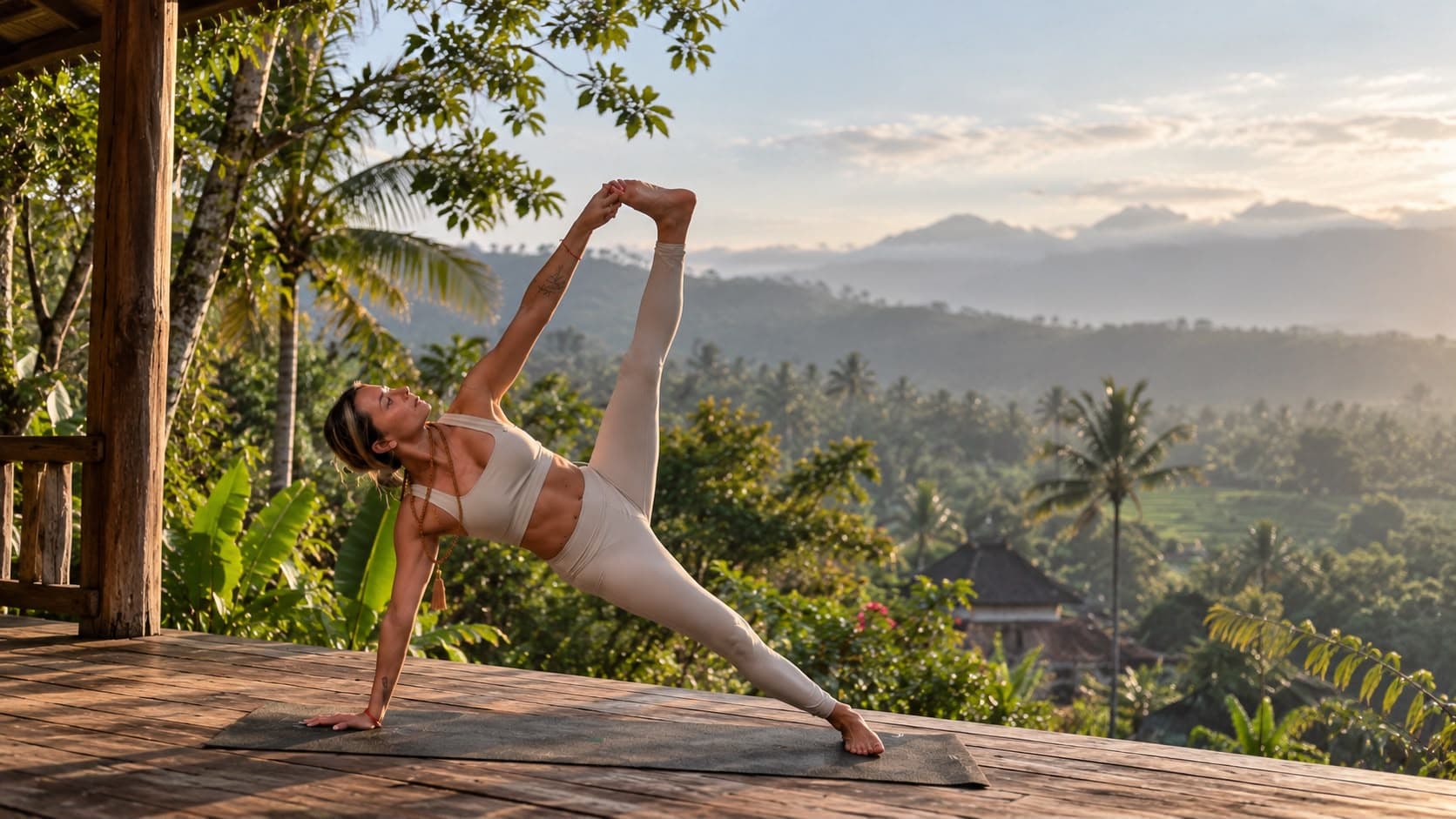
- ●Vasisthasana (Vasistha) — from Vasistha, another of the Saptarishi, a symbol of mastery and inner light. It's the side plank: balance and stability on one arm.
- ●Astavakrasana (Astavakra) — from asta (eight) + vakra (bent): «the eight bends». The sage Astavakra was born with his body bent in eight places and mocked for his appearance, yet became one of the greatest scholars. His pose — an arm balance — reminds us that wisdom doesn't depend on the shape of the body.
- ●Vishvamitrasana (Vishvamitra) — from Vishvamitra, the king who through sheer discipline became a brahmarishi, a great sage. A demanding balance, for those who love a challenge.
The gods and heroes of myth
Other asanas take their name directly from the gods and heroes of the great poems. Here the pose «tells» a precise gesture of the character.
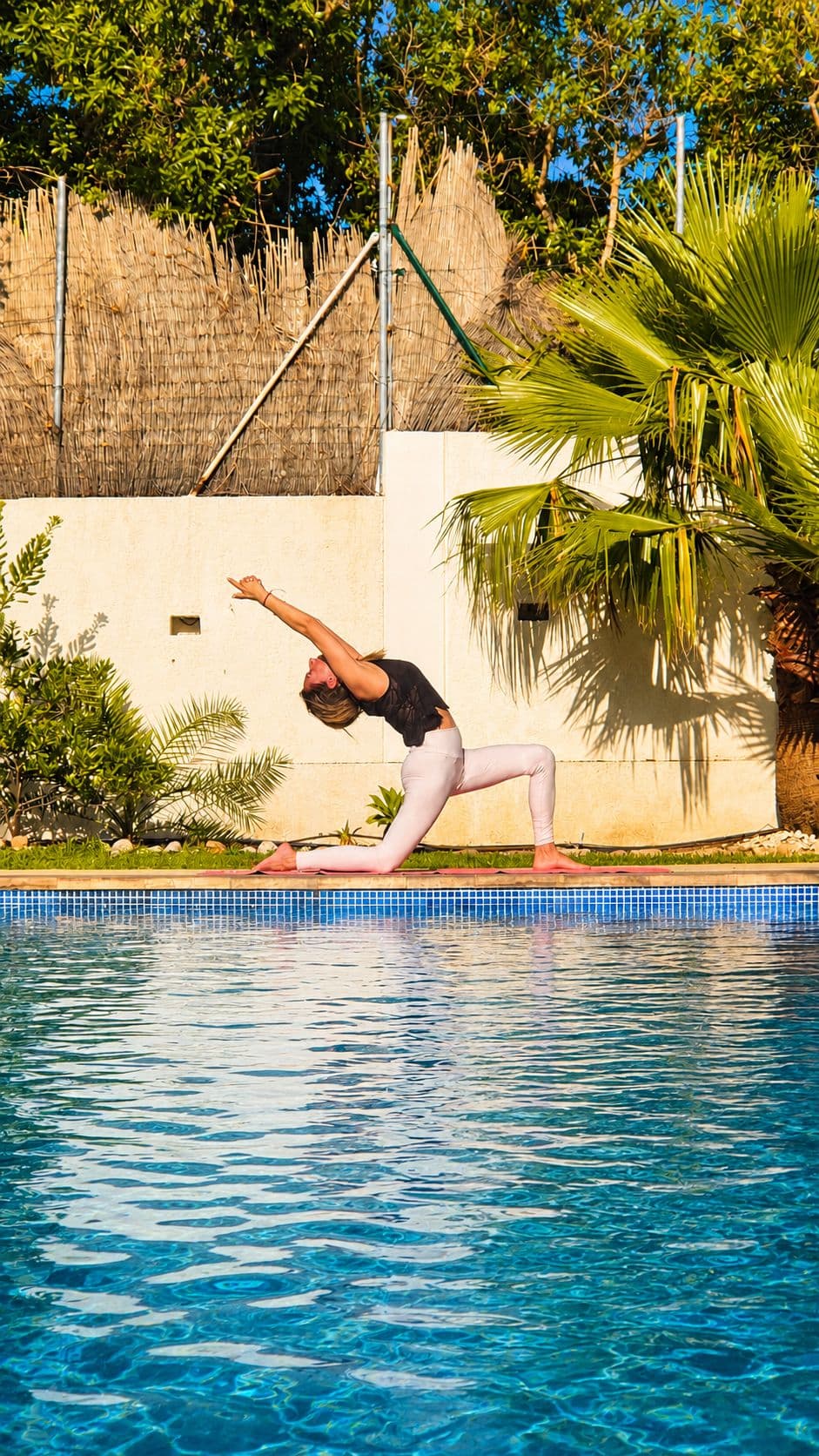
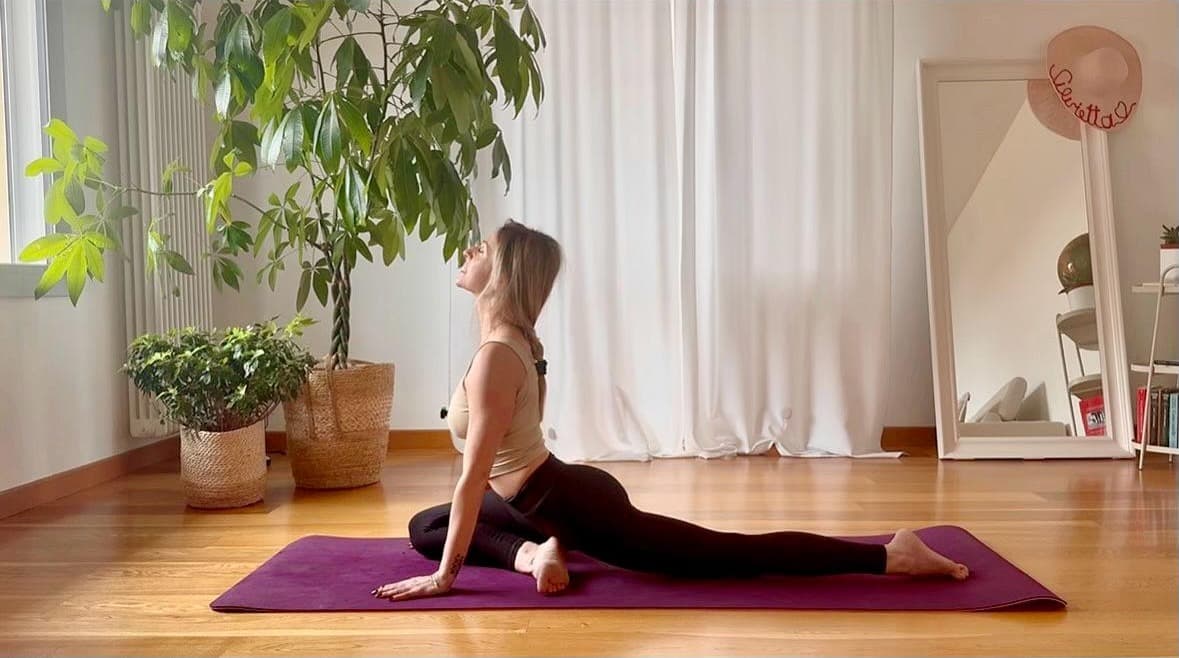
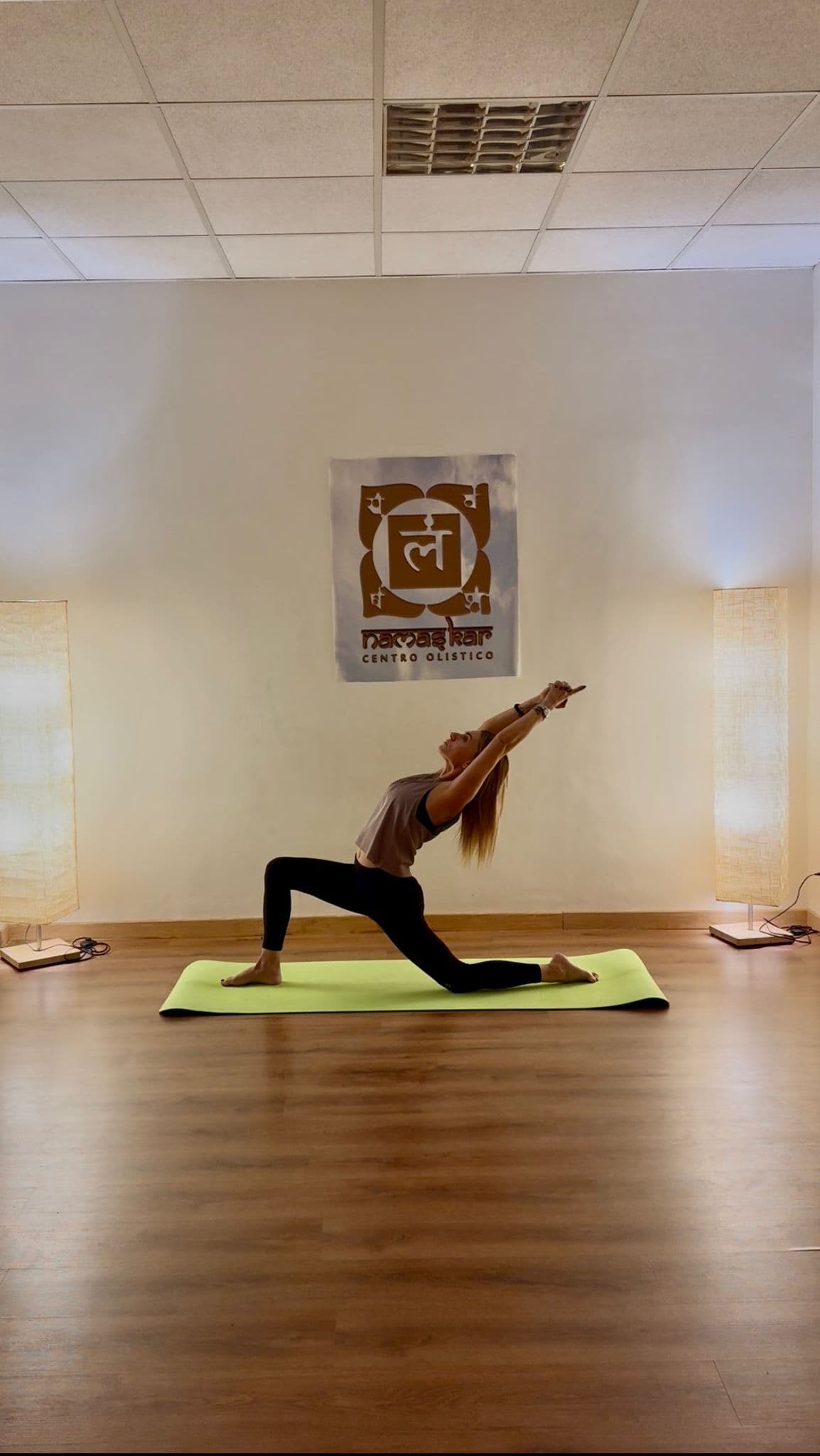
- ●Hanumanasana (Hanuman) — the monkey god of the Ramayana. The pose is the front splits and recalls his prodigious leap across the ocean to Lanka, in search of Sita — the very epic from which Diwali is born. Anjaneyasana, the low lunge, carries another of his names: Anjaneya, «son of Anjana».
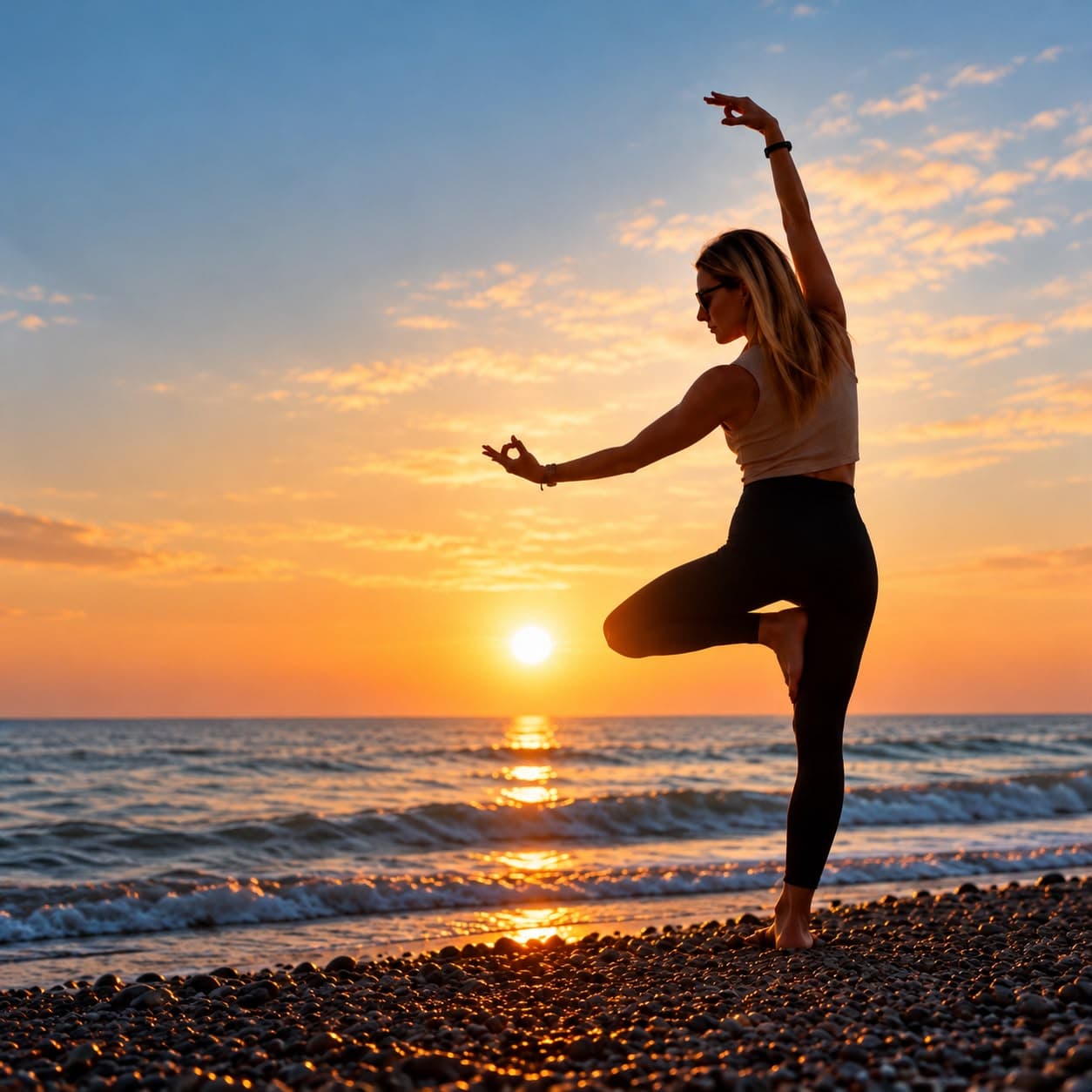
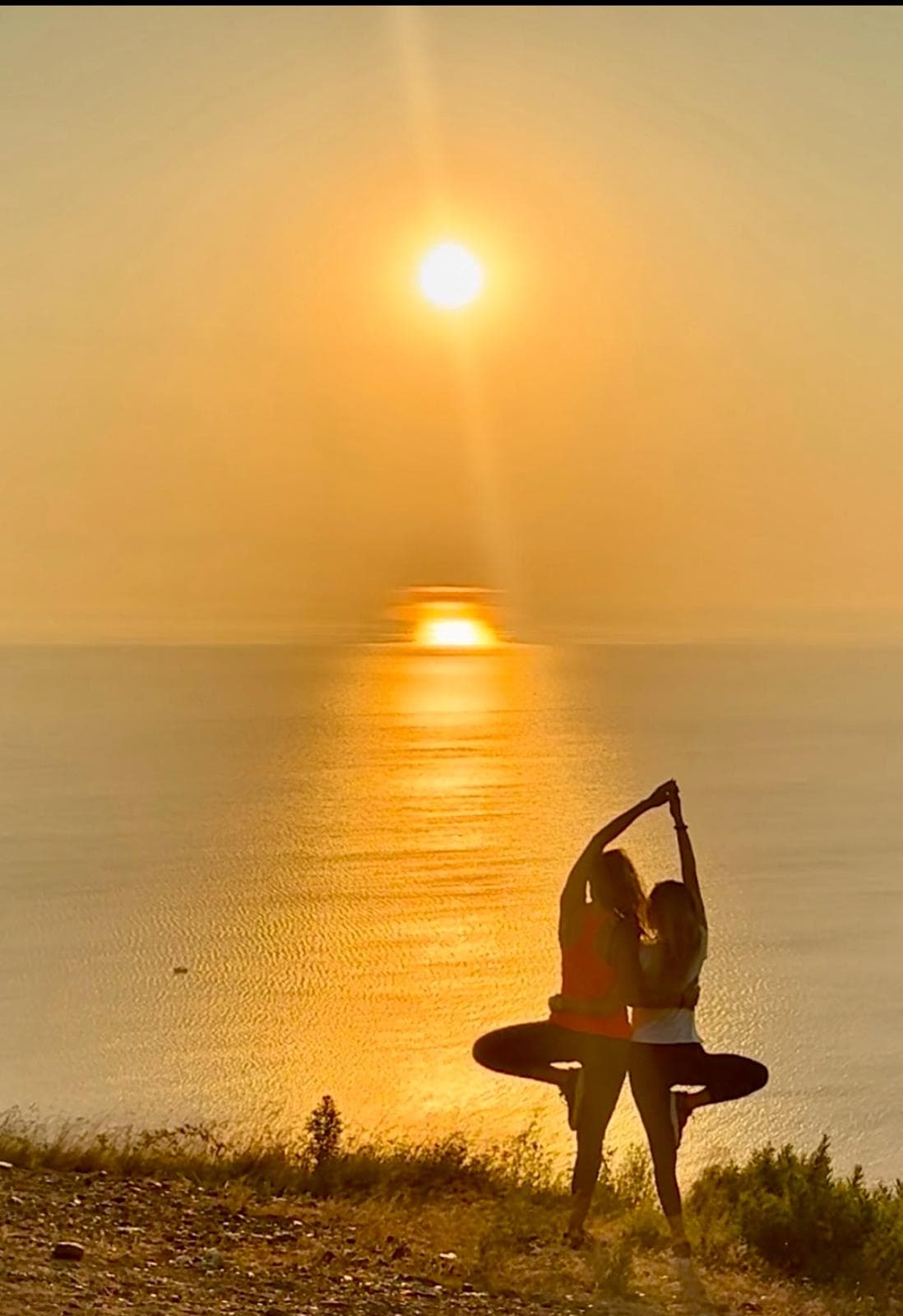
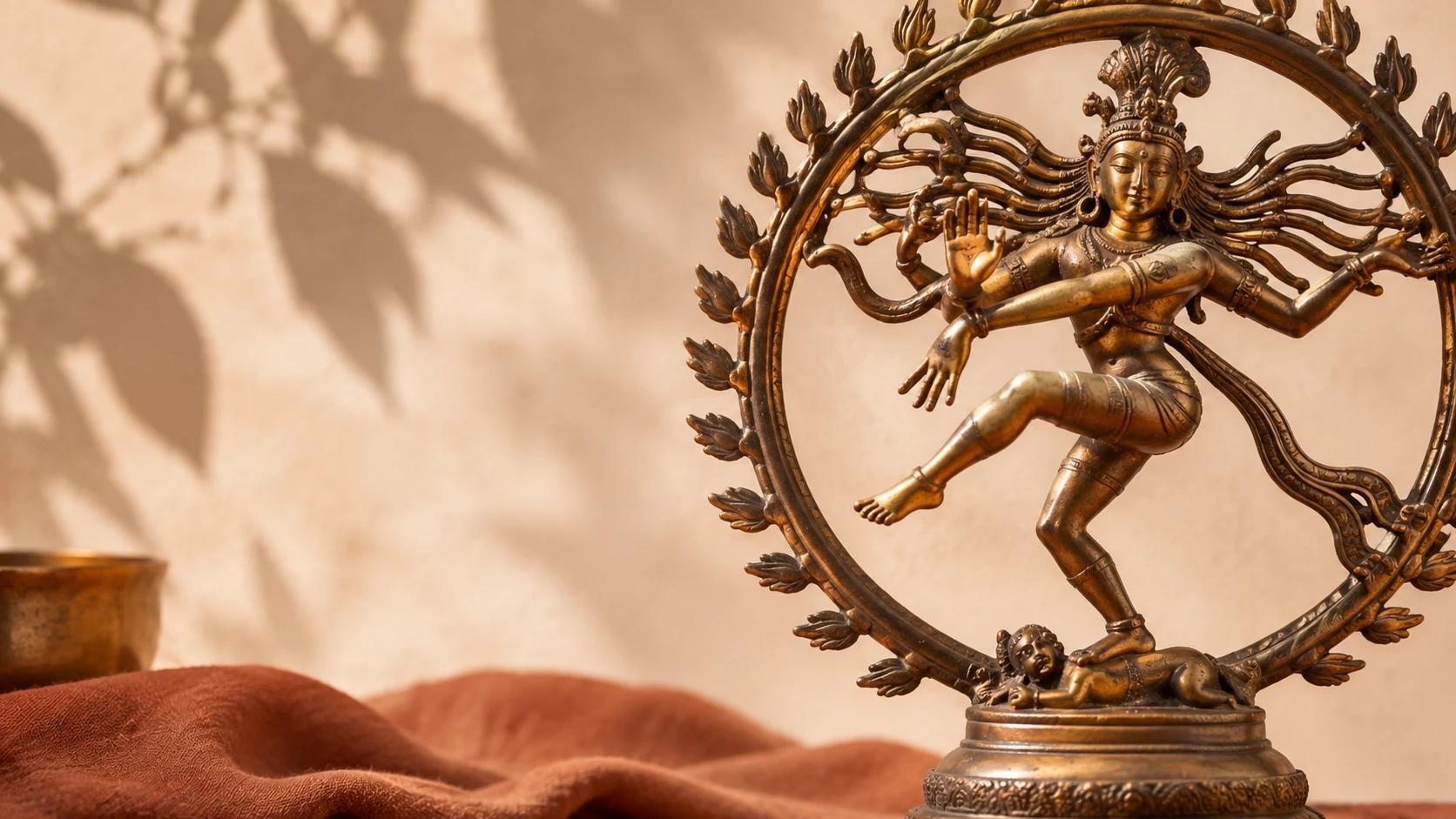
- ●Natarajasana (Nataraja) — from nata (dance) + raja (king): «the king of dance». It's Shiva dancing the creation and dissolution of the universe inside a ring of flames. The dancer's pose — and, as it happens, the very pose of my logo.
- ●Virabhadrasana (Virabhadra) — the mighty warrior created by Shiva. A name that is a whole story: I tell it in the dedicated article.
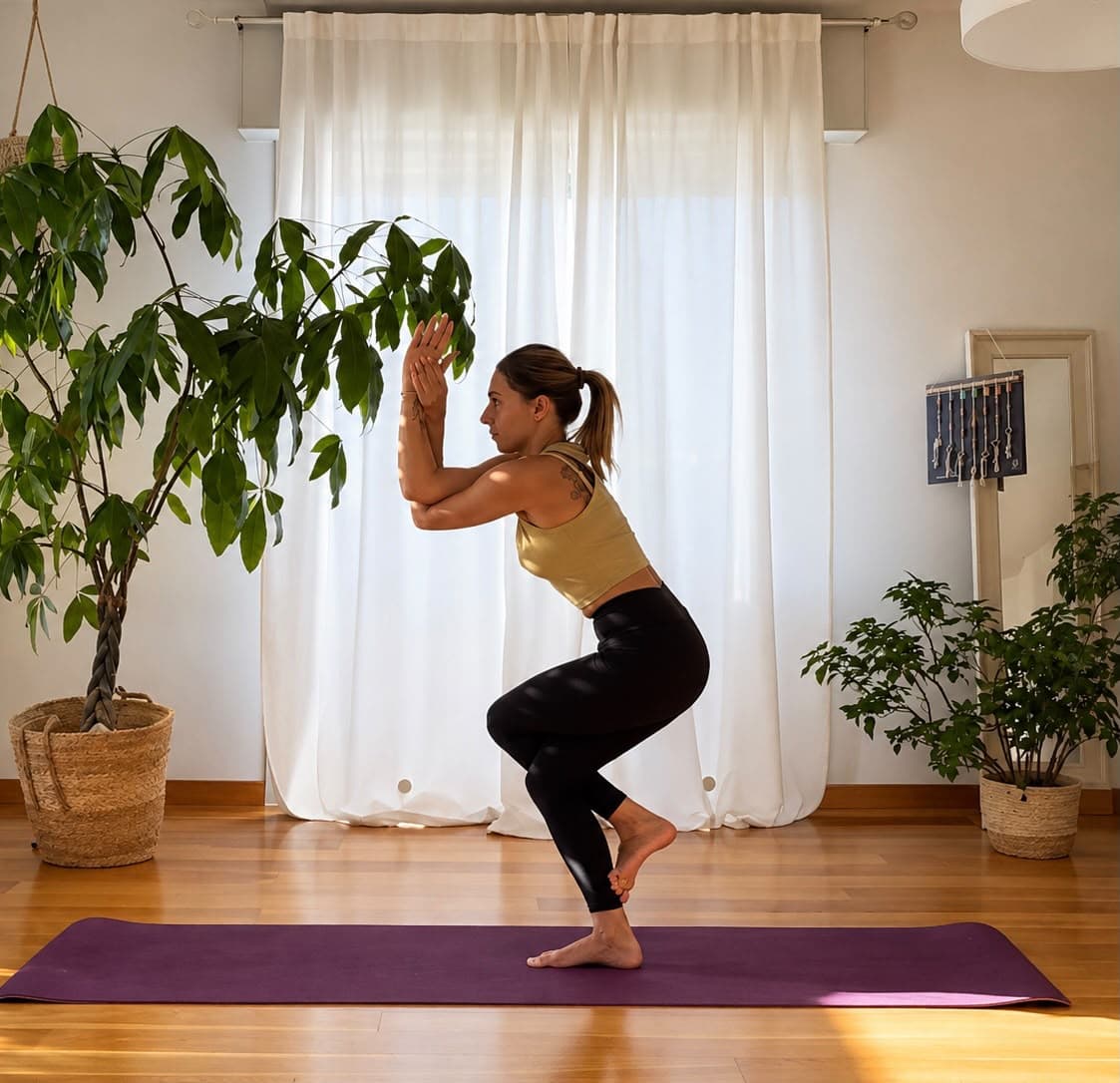
- ●Garudasana (Garuda) — the divine eagle, king of birds and mount of the god Vishnu. A gathered-in balance: here too there's a myth, which I've told separately.
Next time you rise into one of these poses, try to remember who's behind the name. Practising Hanumanasana becomes a small tribute to a leap of courage; staying in Natarajasana, a way for you to dance too — one breath at a time.
A curiosity
Shiva Nataraja, the cosmic dancer, doesn't live only in temples: a large statue of him stands at the entrance of CERN in Geneva, the world's leading physics laboratory. It's a gift from India, and it tells a surprising analogy — Shiva's dance creating and dissolving the universe resembles the dance of the particles that physicists study. Myth and science, in the same gesture.
Continues in the next glossary
One last stage remains. In Part 4 we'll close the glossary with the asanas named after the elements and objects of nature — the tree, the lotus, the mountain, the moon. And then I'll gather everything into a single guide.
Want the asana glossary always with you?
I'm collecting the names of the asanas, word by word, in a small downloadable guide. Write me «ASANA» by email and I'll let you know as soon as it's ready, sending you meanwhile the cheat-sheet of the most useful Sanskrit prefixes to keep on your mat.
Request the protocol →Virabhadra: the warrior born of Shiva's wrath
The full story behind Virabhadrasana — one of the most loved myth-asanas, told pose by pose.
Garuda, the eagle of the god Vishnu
The myth behind Garudasana and how to do it: another name that is, first of all, a story.
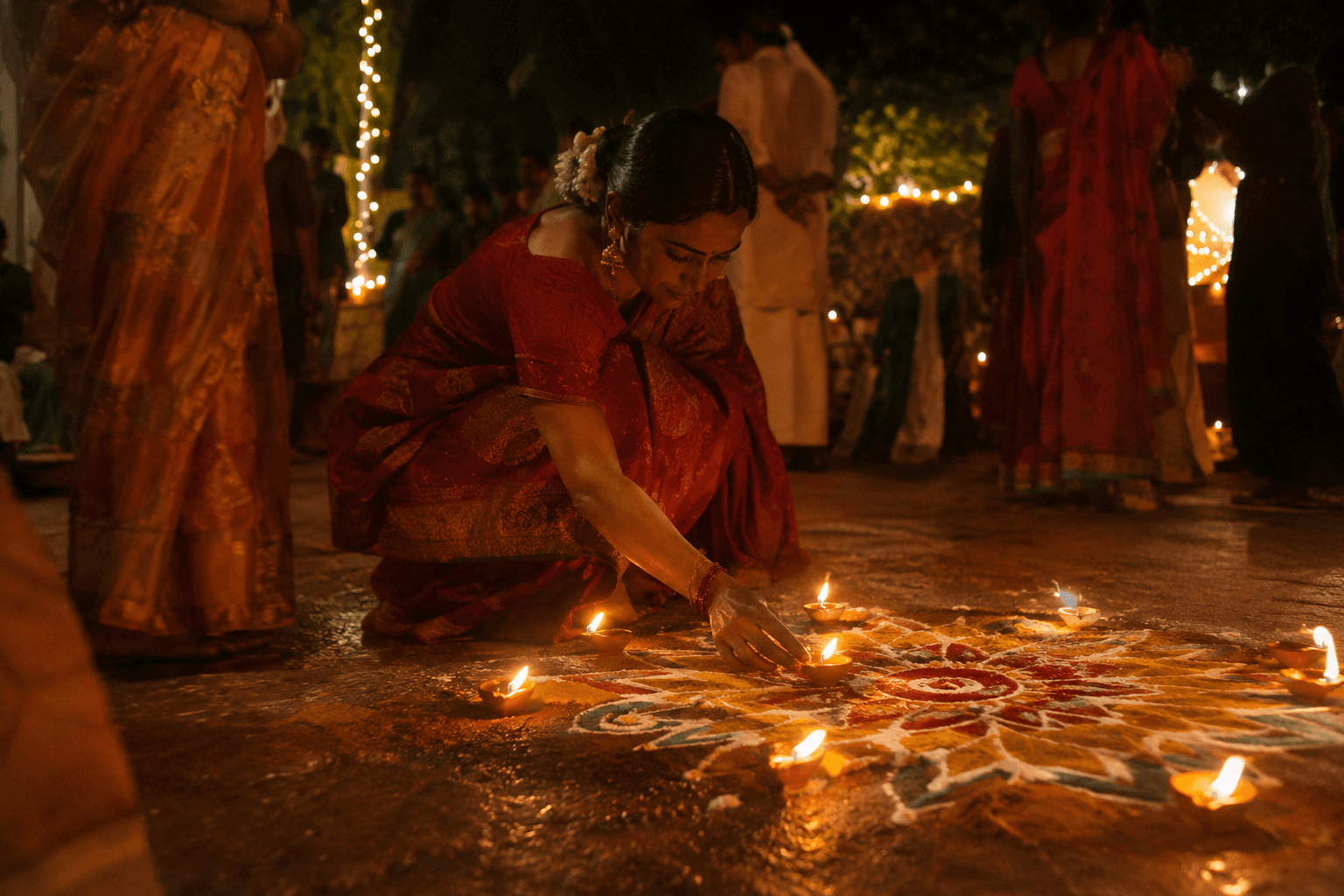
Hanuman, the Ramayana and the festival of lights
Hanuman's leap comes from the same poem as Diwali. Discover the festival of light that overcomes the dark.
Every time you say the name of an asana, you're calling a sage or a god by name. Yoga is also this: an ancient memory that keeps dancing in our bodies. — Silvia
Frequently asked questions
Because the tradition ties that pose to a figure: sometimes through a legend (like the fish that became the sage Matsyendra), sometimes because the shape «tells» one of their gestures (like Hanuman's leap). The name becomes a way to pass on a story.
From nata (dance) and raja (king): «the king of dance». It's the name of Shiva in his form as the cosmic dancer, Nataraja, dancing the creation and dissolution of the universe. In English it's the dancer's pose.
Hanuman is the monkey god of the Ramayana. The pose — the front splits — recalls his extraordinary leap across the ocean to Lanka. It's a pose of great openness and courage.
A sage born with his body bent in eight places (asta = eight, vakra = bent), mocked for his appearance yet become one of the greatest sages. His pose reminds us that wisdom — and practice — don't depend on having a «perfect» body.
From theory to the mat
Want to learn this asana — and many more — the right way? Let's build a practice tailored to you.