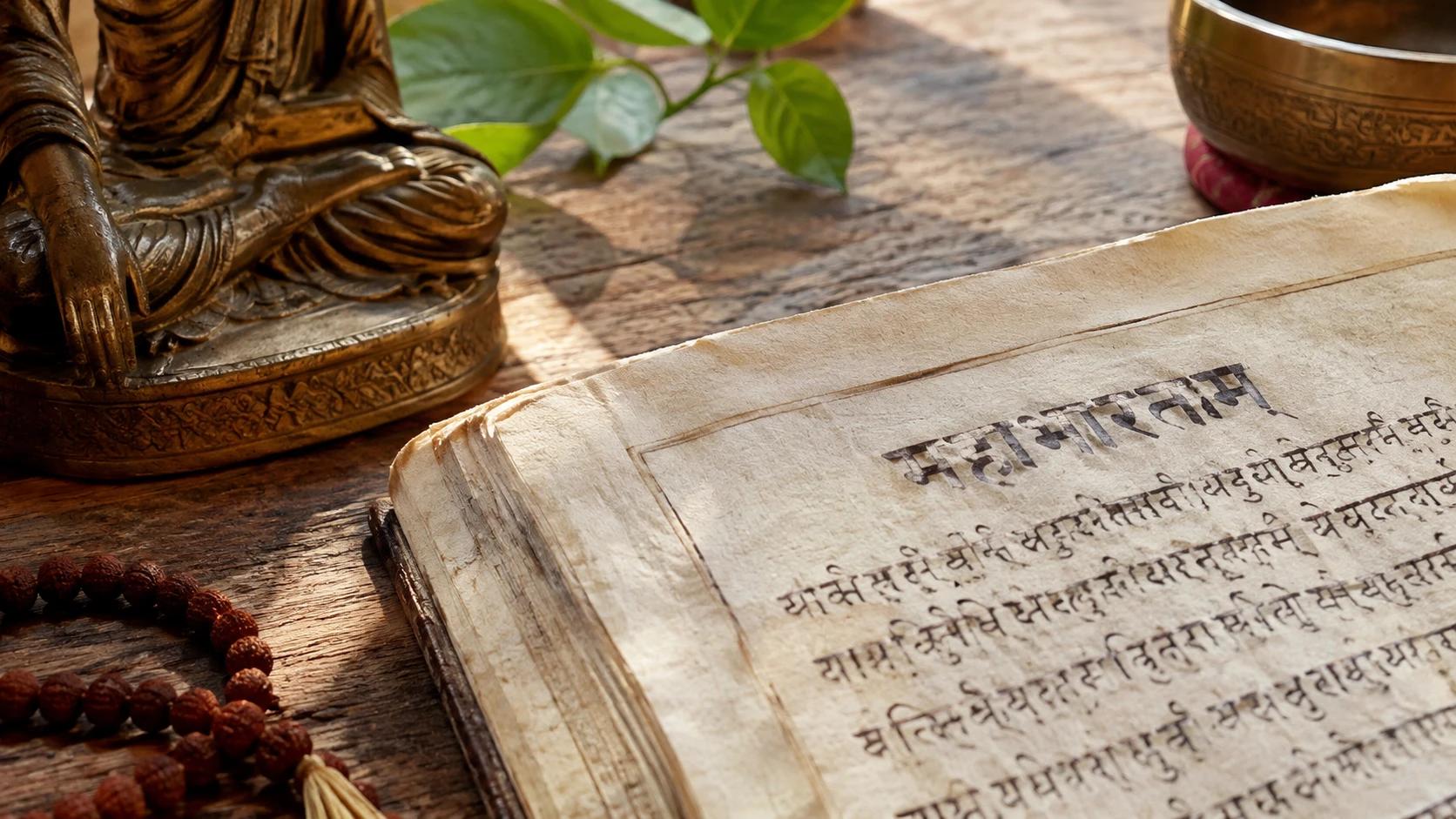
Sanskrit Names of the Asanas: The Elements and Nature — Part 4
·8 min read

Sanskrit Names of the Asanas: The Elements and Nature — Part 4

Silvia Ghigliazza

Silvia Ghigliazza

Yoga Teacher

Share:FacebookWhatsApp

Try looking out of the window and naming what you see: a tree, the moon, a mountain in the distance. Now imagine having to explain to someone how to move the body, long before videos and yoga mats. What would you use to make yourself understood? Exactly this: what's outside the window.

This is the last stage of our glossary. After the basics and the animals (Part 1), the body parts (Part 2) and the sages and deities (Part 3), today we step outdoors: the asanas named after the elements of nature and everyday objects.

Nature: trees, flowers and mountains

Let's start with the landscape. Here the name puts an image straight in front of you, and all you have to do is keep it in mind as you practise.

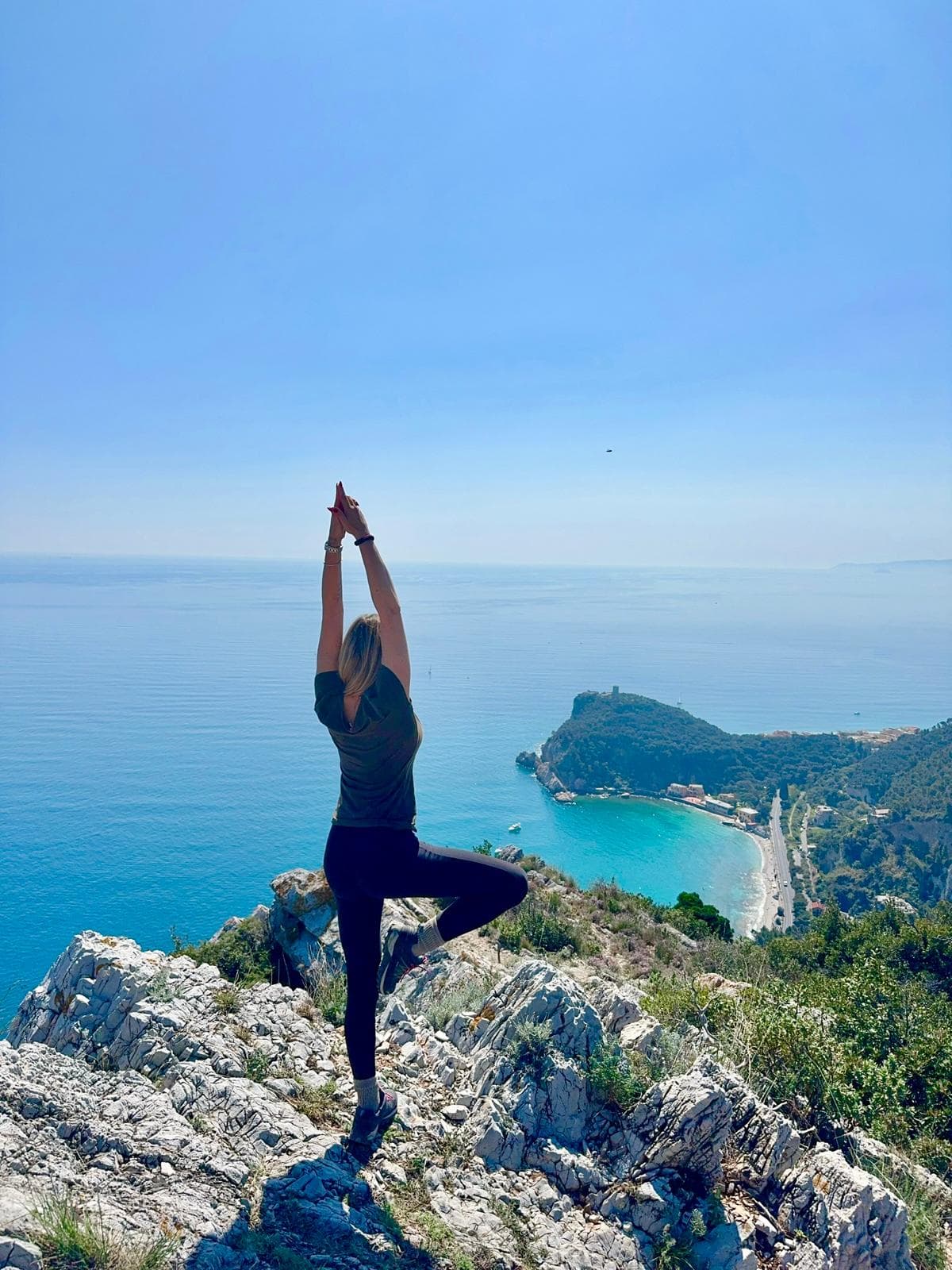
  • ●Vrksasana (Tree) — from vrksa, tree. Solid roots, branches towards the sky: the one-legged balance I told you about in the dedicated article.
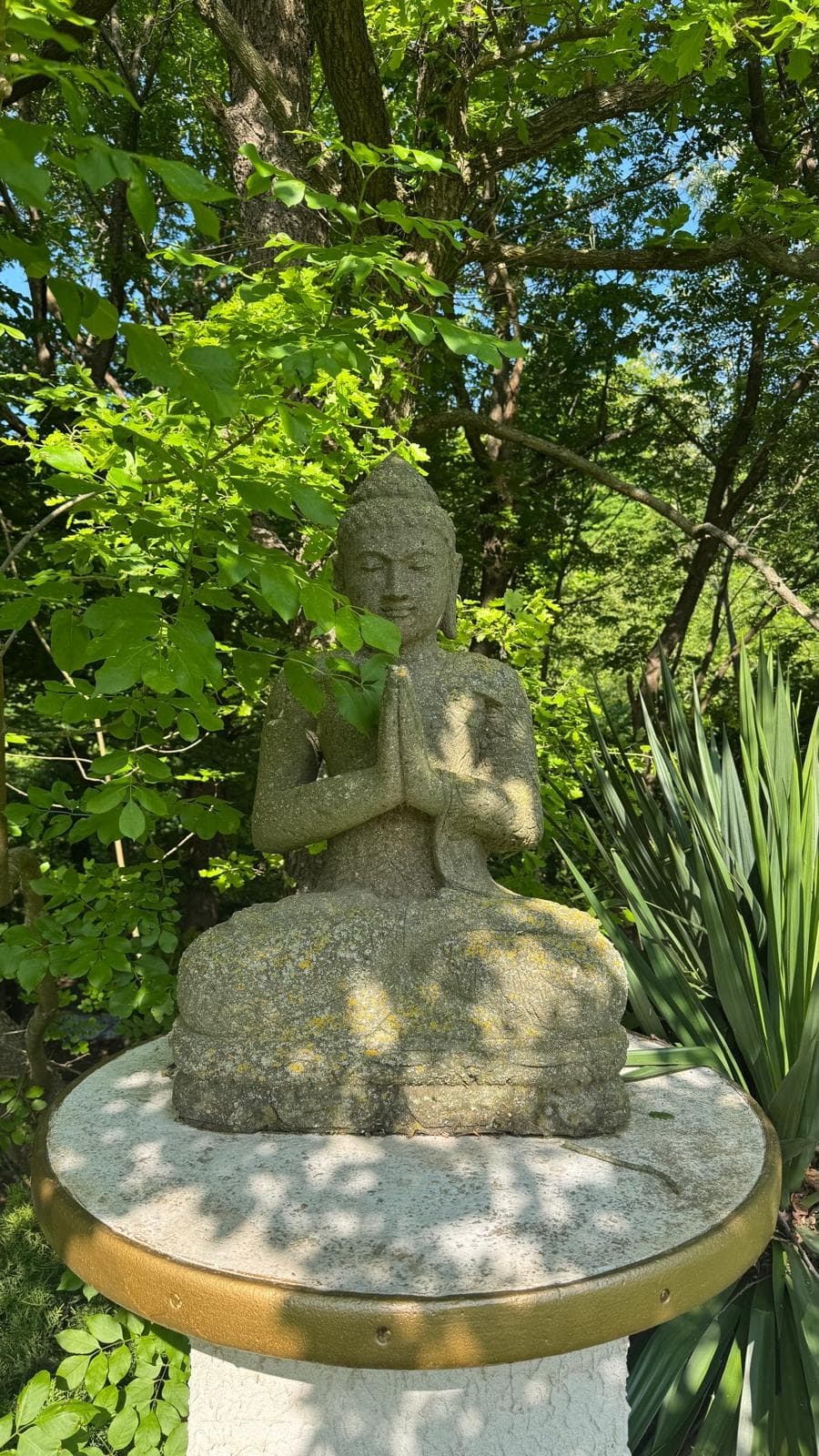
  • ●Padmasana (Lotus) — from padma, lotus. The flower that grows in the mud and opens clean on the water: that's why it's the symbol of purity blossoming even amid difficulty. It's the classic seated pose with crossed legs.
  • ●Tadasana (Mountain) — usually translated «mountain»: the standing pose, still and rooted, from which almost every other begins. An honest caveat: the translation is debated, and according to some interpretations tada instead evokes the palm tree. In Sanskrit names, different schools can give different explanations.
  • ●Parvatasana (Mountain) — from parvata, mountain. The name points to mountain-shaped poses, but it varies from school to school: it's always worth asking your teacher which pose they mean.

The sky: sun, moon and wind

Then the gaze rises. The Indian tradition speaks of five great elements — earth, water, fire, air and space — and says the body is made of the same matter as the world. The sky is full of names for the asanas.

  • ●Surya Namaskara (Sun Salutations) — from surya, sun, and namaskara, salutation: the same namas as in Namaste, a bow, a tribute. Here the tribute is in motion, and it's the same one celebrated at Makar Sankranti.
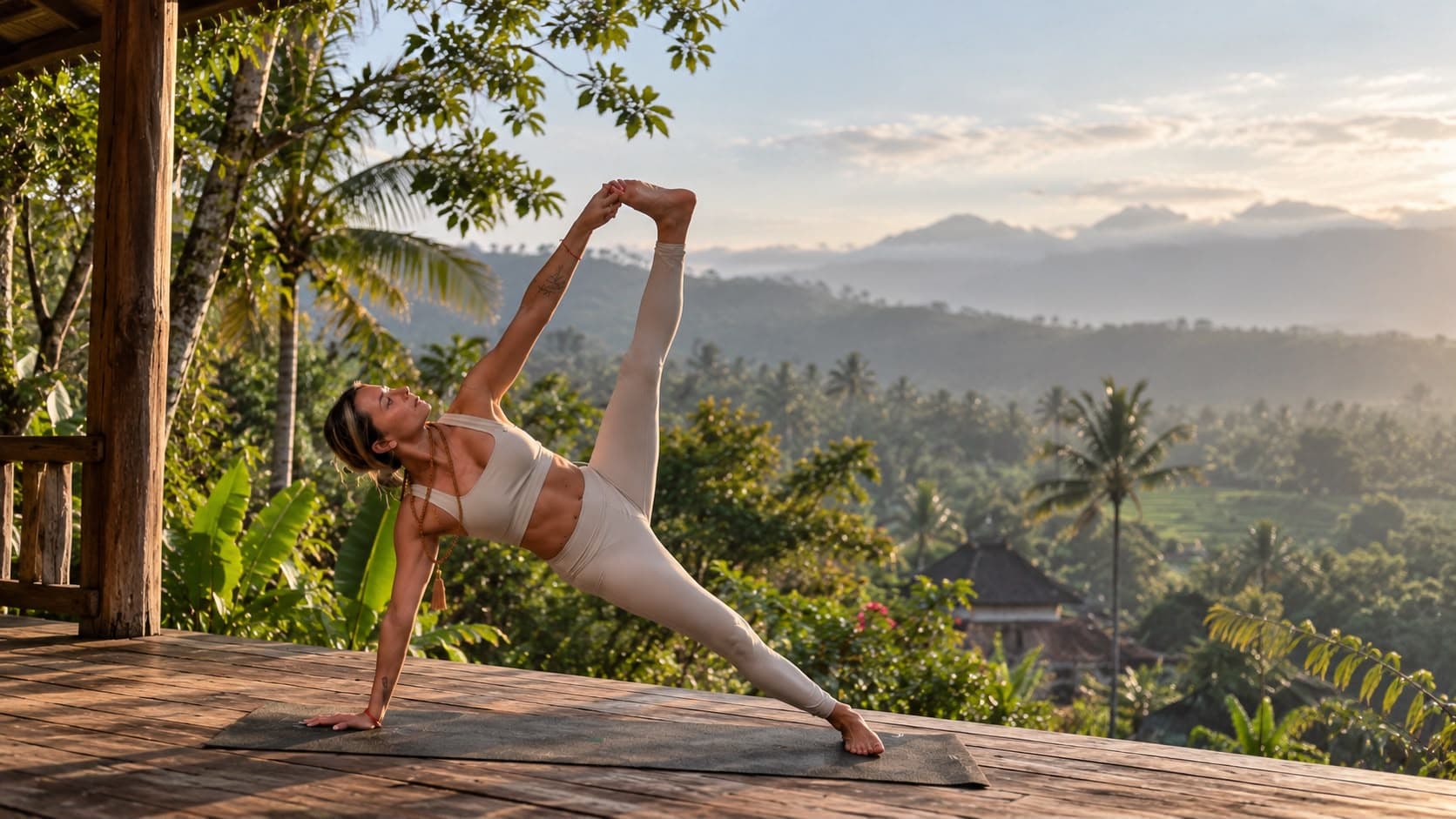
  • ●Chandrasana and Ardha Chandrasana (Moon and Half Moon) — from chandra, moon, and ardha, half. The body opening sideways like a slice of moon: steady and luminous at once.
  • ●Pavanamuktasana — from pavana, wind, and mukta, freed: the «pose that frees the wind». Yes, in a very concrete sense: we'll come back to it shortly.

Everyday objects

Then there are objects: work tools, weapons, boats, bridges. Whoever gave the names looked at the shape of the body and said: this looks like a... And so it stayed.

  • ●Dhanurasana (Bow) — from dhanus, bow. The body arched backwards, hands grasping the ankles like a drawn string.
  • ●Halasana (Plough) — from hala, plough. Lying on your back, feet digging behind your head like the blade in the earth.
  • ●Navasana (Boat) — from nava, boat; the full version is Paripurna Navasana, the «complete boat». The body in a V, balanced on the pelvis, arms and legs raised like a hull.
  • ●Dandasana (Staff) — from danda, staff. Seated with legs stretched out and a long spine, still as a staff: it looks simple, and it's the foundation of countless other poses.
  • ●Vajrasana (Thunderbolt or Diamond) — from vajra, a word meaning both the thunderbolt, the weapon of the god Indra, and the diamond, for its hardness. It's the pose seated on the heels, solid as a precious stone.
  • ●Chakrasana (Wheel) — from chakra, wheel or circle. In some schools it means the great backbend into a wheel (others call it Urdhva Dhanurasana, «upward bow»), in others a backward roll: another case where names change from lineage to lineage.
  • ●Setu Bandhasana (Bridge) — from setu, bridge, and bandha, here in the sense of «construction» or «bond»: the bridge you build with your body, shoulders on the floor and pelvis lifted.

A bridge that reaches an island

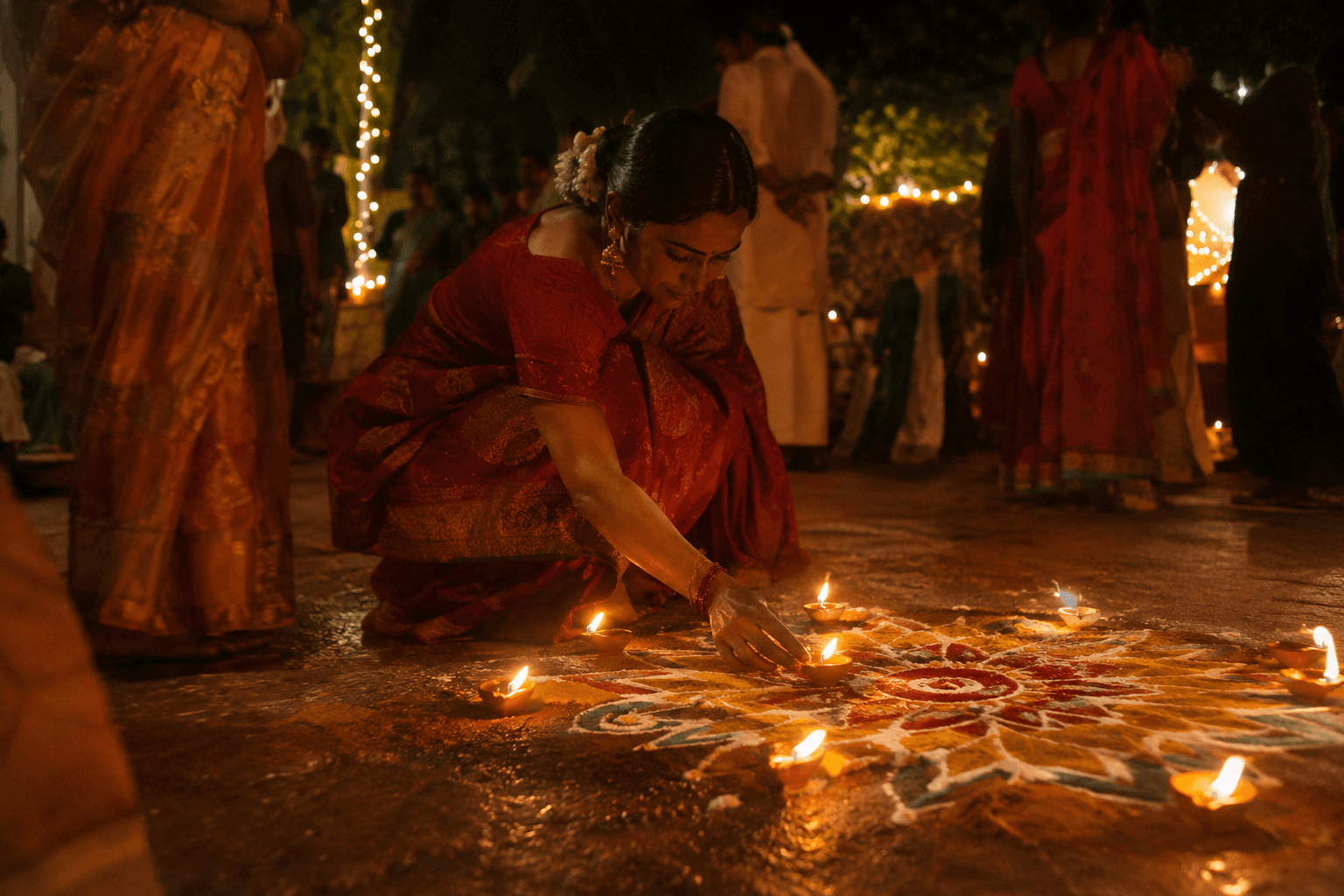
Setu, the bridge, always moves me a little. In the Ramayana — the same poem as Diwali and Hanuman's leap — it's the bridge built to reach Lanka, Ravana's city: the episode is remembered precisely as «the building of the bridge», setu bandhana. And a bridge of sorts exists on the map too: it's called Adam's Bridge, or Rama Setu, a chain of sandbanks and limestone shoals linking southern India to the island of Sri Lanka, which tradition identifies with the bridge of the tale. On that island, you know, I've been.

A curiosity

Back to Pavanamuktasana, my favourite. Pavana is wind, mukta means freed: the «pose that frees the wind». Put more delicately, it helps relieve intestinal gas and bloating, and it's often among the first poses taught to beginners, with a smile. A lovely reminder: ancient yoga wasn't afraid to say things as they are, nor to joke about the body.

How to remember them

  • ●Pick one name a week and practise the pose keeping the image in mind: the bow, the bridge, the lotus.
  • ●Try drawing the shape: a bow, a boat, a half moon. Visual memory does half the work.
  • ●Take the name apart like a little puzzle: word + word + asana. With the prefixes from Part 1 it becomes a game.

The glossary is complete

With this fourth stage the glossary is complete: the basics and the animals, the body parts, the sages and deities, nature and objects. Four doors into the Sanskrit names. I'm gathering everything into a single guide, richer and better organised, to keep with you always: I'll let you know as soon as it's ready.

Want the asana glossary always with you?

I'm collecting the names of the asanas, word by word, in a small downloadable guide. Write me «ASANA» by email and I'll let you know as soon as it's ready, sending you meanwhile the cheat-sheet of the most useful Sanskrit prefixes to keep on your mat.

Request the protocol →
↗

The tree, told in full

Roots, branches, balance: the story and technique of Vrksasana, one of the best-loved nature asanas.

↗

The returning sun

Surya Namaskara is a tribute to the sun: discover the festival that celebrates it, Makar Sankranti.

↗

The Ramayana and the bridge to Lanka

The poem behind Setu Bandhasana is the same as Diwali's: discover the festival of lights and the story of Rama.

↗

Start again from the basics

The prefix decoder and the asanas named after animals: Part 1 of the glossary.

↗

The sages and the deities

Hanuman, Nataraja, Matsyendra: the stories behind the myth-asanas, in Part 3.

The body is a landscape you carry with you: it has trees, bridges, moons and mountains. When you learn to call them by name, you learn to inhabit it. — Silvia

Frequently asked questions

Among the best known: Vrksasana (tree), Padmasana (lotus), Tadasana (mountain), Chandrasana (moon), Surya Namaskara (sun salutation) and Pavanamuktasana (which «frees the wind»). The name almost always gives you an image to keep in mind as you practise.

From padma (lotus) and asana (pose): the lotus pose, seated with crossed legs and feet on the thighs. The lotus, which grows in the mud and opens clean, is a symbol of purity.

From setu (bridge), bandha («construction» or «bond») and asana (pose): the bridge pose, with shoulders on the floor and pelvis lifted.

It's usually translated that way, and it's the most common translation in class. But it isn't certain: according to some interpretations tada evokes the palm tree. What matters is the underlying idea: stability, roots and height together.

They're all on the blog, in the Library of asanas: Part 1 (the basics and the animals), Part 2 (the body parts), Part 3 (the sages and deities) and this Part 4 (the elements and nature).

From theory to the mat

Want to learn this asana — and many more — the right way? Let's build a practice tailored to you.

Share

Instagram: copy the link and paste it in Stories or bio.

Read also

Makar Sankranti: the Festival of the Sun That Reignites the YearPhilosophy & origins
·7 min read

Makar Sankranti

In mid-January, when the days begin to lengthen again, India celebrates the return of the sun. What Makar Sankranti is, and why it speaks to anyone who practises yoga.

Read article →
Sanskrit Names of Asanas: The Sages and the Deities — Part 3The Asana Library
·8 min read

Sanskrit Names of Asanas

Behind names like Hanumanasana or Natarajasana there's no animal and no body part: there's a person, a god, a hero. The glossary steps into the world of stories.

Read article →
Diwali, the Festival of Lights: When Light Overcomes the DarkPhilosophy & origins
·8 min read

Diwali, the Festival of Lights

Rows of little lamps on doorsteps, the darkest night of the year filling with light. What Diwali is, where it comes from, and how to light your own small flame, even from here.

Read article →
Yoga for Better Sleep: Your Evening RoutineBody & wellbeing
·6 min read

Yoga for Better Sleep

Sleeping too little and badly is the ailment of our age. Ten minutes of gentle yoga before bed to switch off the mind and ease into sleep.

Read article →
Garudasana: the Eagle, the Pose That Gathers the MindThe Asana Library
·7 min read

Garudasana

Legs and arms that wrap around, the gaze fixed on one point: Garudasana, the eagle. Meaning, how to do it, mistakes, benefits and variations.

Read article →
Sanskrit, the universal language of yogaThe Asana Library
·7 min read

Sanskrit, the Universal Language of Yoga

At first those words on the mat seemed incomprehensible. Then I understood: it was Sanskrit — the language that has let me practise in every corner of the world.

Read article →
Ustrasana: the camel, the pose that opens the heartThe Asana Library
·7 min read

Ustrasana

A backbend that opens the chest and releases the tension of «indoor» life: Ustrasana, the camel. Meaning, how to do it, mistakes and benefits.

Read article →
Vrksasana: the tree, the pose that teaches balanceThe Asana Library
·7 min read

Vrksasana

Firm roots and branches to the sky: Vrksasana, the tree, is the balance pose. Meaning, how to do it, mistakes to avoid, benefits and variations.

Read article →
Namaste: what it really means (and why it's not just 'hello')Philosophy & origins
·6 min read

What Does Namaste Mean (and Why It's Not Just 'Hello')

We say it at the end of class, we print it on T-shirts — but Namaste doesn't mean 'hello'. Here are its Sanskrit roots and the meaning we've lost.

Read article →
The Sanskrit names of the asanas: the body parts — Part 2The Asana Library
·9 min read

Sanskrit Names of the Asanas

Sirsasana, Janu Sirsasana, Padangusthasana... many poses carry a body part in their name. Here's the decoder and what each name tells you. Part 2 of the glossary.

Read article →
Virabhadrasana: the three warriors of yogaThe Asana Library
·9 min read

Virabhadrasana

Behind the warrior pose lies a myth of fire and grief. Discover Virabhadrasana I, II and III: meaning, how to do them, mistakes and benefits.

Read article →
Rocket Yoga: the style that gets you «there faster»Start here
·8 min read

Rocket Yoga

Dynamic, playful, built to show you you're stronger than you think. But where does Rocket Yoga come from, and why that name? Let me tell you everything.

Read article →
Wanderlust 108 Milan: A Day I'll Never ForgetExperiences & places
·7 min read

Wanderlust 108 Milan

On Saturday 26 September, in CityLife park, I lived Wanderlust 108. I thought I knew what to expect: I hadn't counted on all that emotion.

Read article →
108: The Sacred Number of YogaPhilosophy & origins
·7 min read

What Does 108 Mean in Yoga (and Why It's Everywhere)

You'll find it on the mala, in sun salutations, even on festival stages. But why 108? A little journey into yoga's most beloved number.

Read article →
Yoga on a Plane: the Practice You Carry Even at 30,000 FeetExperiences & places
·7 min read

Yoga on a Plane

Eleven hours in a seat, the body stiffening, the mind switching off. What if part of that time became care? Yoga travels with you — even in the cabin.

Read article →
Why you can't switch off, even on holidayBody & wellbeing
·7 min read

Why You Can't Switch Off on Holiday (and What to Do)

You've been on holiday for days and still can't switch off. It's not your fault: the body has no on/off switch. Here's what it really needs to slow down.

Read article →
5 Yoga Retreat Myths That Are Holding You BackRetreats & travel
·6 min read

5 Yoga Retreat Myths (and the Truth That Sets You Free)

Do you need to be flexible? Experienced? Will you feel out of place? Is it all-day meditation and just salad? Five yoga retreat myths, busted one by one.

Read article →
Have you ever lived a yoga retreat? 7 reasons to gift yourself one at least onceRetreats & travel
·7 min read

Yoga retreat

From a real break from routine to a practice that leaps forward, to authentic bonds: 7 reasons to gift yourself a yoga retreat at least once in your life.

Read article →
Afraid to travel alone? Why a yoga retreat is the perfect tripRetreats & travel
·5 min read

Afraid to travel alone? Why a yoga retreat is the perfect trip

The fear of travelling alone is real and legitimate. Yet a yoga retreat is one of the most beautiful trips to live even without knowing anyone. Here's why.

Read article →
Yoga in Ibiza for the solstice: how a teacher prepares (beyond the sunscreen)Experiences & places
·8 min read

Yoga in Ibiza for the solstice

I'm off to Ibiza for the summer solstice — but before the suitcase comes the inner work. My diary of preparation, sequences and two enchanting places.

Read article →
Summer solstice and yoga: meaning, 108 Sun Salutations and the International Day of YogaPhilosophy & origins
·8 min read

Summer solstice and yoga

What the summer solstice represents in yoga, why we celebrate the 108 Sun Salutations and why 21 June is the International Day of Yoga.

Read article →
Sunrise yoga by the sea: the awakening that changes your dayExperiences & places
·8 min read

Sunrise yoga by the sea

Why practising yoga at dawn by the sea amplifies the benefits: air ionisation, the sound of the waves, a gentle awakening of body and mind, and the priceless connection of a group sharing the same moment.

Read article →
How to prepare for a yoga retreat (especially if it's your first)Retreats & travel
·7 min read

How to prepare for a yoga retreat

What to pack, what to expect and how to arrive in the right spirit at your first yoga retreat, even if you're travelling alone.

Read article →
Yoga in Ibiza: the island of light where practice becomes celebrationExperiences & places
·6 min read

Yoga in Ibiza

Why Ibiza is one of the world's most loved yoga destinations, when to go and what makes practising during the Summer Solstice so special.

Read article →
Yoga in Liguria with a sea view: breathing to the rhythm of the wavesExperiences & places
·6 min read

Yoga in Liguria with a sea view

Why practising yoga by the sea amplifies the benefits, and where to live this experience along the Ligurian Riviera between Savona and Varazze.

Read article →
The origins of yoga: from the Vedas to today, the story few tellPhilosophy & origins
·10 min read

Origins and history of yoga

A journey into the true roots of yoga: from the Vedas to the Yoga Sutras to today's mat. Why in the beginning yoga wasn't about spectacular poses, but about silence.

Read article →
The Sanskrit names of asanas: the glossary to understand what you say on the mat — Part 1The Asana Library
·8 min read

Sanskrit Names of Asanas

Bhujangasana, Adho Mukha Svanasana, Marjariasana... what do they really mean? A clear, curious glossary to decode the Sanskrit names of yoga poses. We start with the animals.

Read article →
Yoga for beginners: the guide to truly getting startedStart here
·6 min read

Yoga for beginners

Everything you need to know to start yoga from scratch: what you need, how to overcome the most common doubts and where to begin.

Read article →
Which style of yoga is right for you?Start here
·8 min read

Hatha, Vinyasa, Ashtanga or Rocket

Hatha, Vinyasa, Ashtanga, Rocket: a clear guide to the differences between the main yoga styles, to understand which one to start from based on your goals.

Read article →
Posterior Chain & Forward Folds — Why They're Essential (and Why You Should Really Work on Them)Body & wellbeing
·9 min read

Posterior Chain & Forward Folds — Why They're Essential (and Why You Should Really Work on Them)

If you feel tension behind your legs, stiffness in your back or struggle with forward folds, you're most likely feeling a shortened posterior chain.

Read article →
Sciatica and Piriformis Syndrome — how to recognise them and how Yoga can truly helpBody & wellbeing
·10 min read

Sciatica and Piriformis Syndrome

Lower back pain radiating down the leg isn't just back pain. Discover what the piriformis is and how yoga can help.

Read article →
Period pain? Turn those days into a moment of true self-listeningBody & wellbeing
·8 min read

Yoga for Menstrual Pain

Gentle yoga poses to relieve menstrual cramps, abdominal bloating and back pain during your cycle.

Read article →
Yoga for anxiety and stress: breathe, you're in the right placeBody & wellbeing
·9 min read

Yoga for Anxiety and Stress

A breathing exercise to do right now, the most effective yoga poses and the breathing that calms your mind: everything to manage anxiety and stress.

Read article →
Stiff back and sky-high stress? Here's why Yoga is your compass (even if you're not flexible!)Body & wellbeing
·8 min read

Yoga for Back Pain

Discover how yoga can release lower back and neck tension with safe, simple poses — even if you're not flexible.

Read article →

Get yoga tips from Silvia

Subscribe for practical tips from the adaptive yoga method.

All exercises in this blog follow Silvia's adaptive method

Discover the Adaptive Method →